Alvin Martin: The West Ham Legend Who Scored Past Three Goalkeepers in One Game
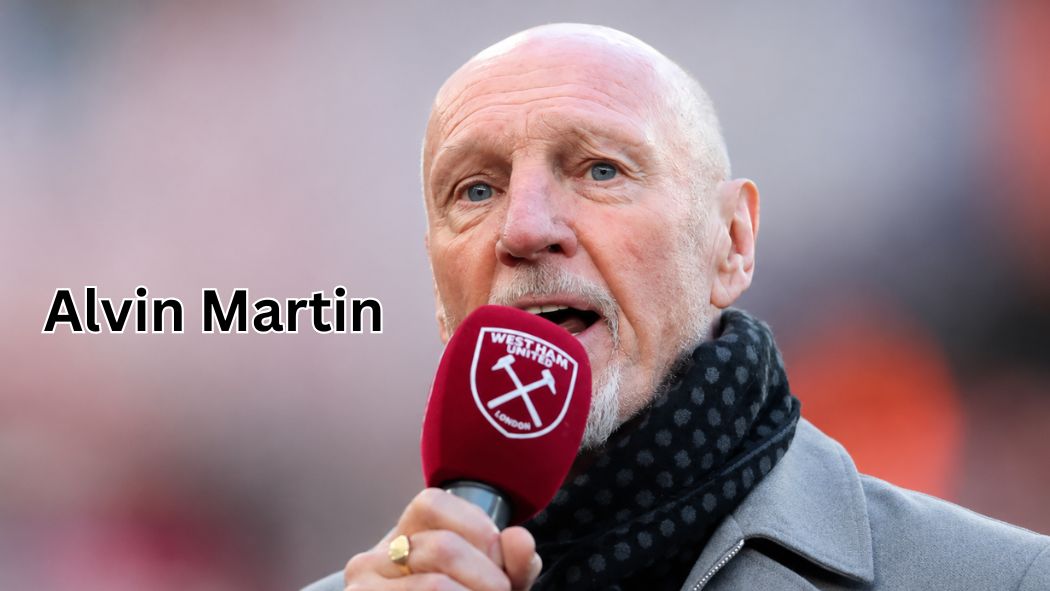
Some footballers are remembered for trophies. Others are remembered for one afternoon so strange that nobody has managed to repeat it in the forty years since. Alvin Martin belongs in both camps, which is a rare thing for a centre-half from Liverpool who spent almost his entire career at a club that rarely troubled the top of the table.
Ask a West Ham supporter of a certain age about Martin and you will get two answers before you get a third. The FA Cup medal. The hat-trick against Newcastle. And then, eventually, the thing that actually defines him: twenty-one years at one club, through promotion, relegation, three managers and a knee that should have finished him twice over.
This is the full picture of Alvin Martin’s career, from a schoolboy Everton did not want to a defender England picked for a World Cup, and on into management, punditry and a family name that keeps turning up on team sheets.
Who Is Alvin Martin?
Alvin Edward Martin was born on 29 July 1958 in Walton, Liverpool, and grew up in one of the most football-obsessed corners of England. He played schools football for Bootle and Lancashire, which in the mid-1970s was a reliable shop window for scouts across the north west. He was tall, comfortable in the air and, by most accounts, unusually calm for a teenage defender.
He played as a centre-back, standing a shade over six feet, and built his game on reading danger early rather than winning collisions late. That is a distinction worth making, because the era he came through rewarded defenders who could kick. Martin could do the physical side when it was needed, but his reputation was built on positioning, timing and organising the people around him.
His career splits neatly into three phases. Eighteen years as a first-team player at West Ham United, a short coda at Leyton Orient, and then a second life in management and broadcasting. Across all of it, one club dominates the story so completely that his name has become shorthand for a particular kind of loyalty that modern football has more or less stopped producing.
From Everton Reject to West Ham Apprentice
The origin story is a good one, and it starts with a rejection. Martin was attached to Everton as a schoolboy, the club he supported, in the city where he lived. In 1974 Everton offered him an apprenticeship on a part-time basis only. He wanted full-time football. He turned it down and walked away at sixteen, which took a fair bit of nerve for a lad with no guarantees waiting for him.
What followed was a fortnight that could have gone very differently. He had a trial with Queens Park Rangers that came to nothing. The very next day he tried again at West Ham United, and this time it worked. He was signed as an apprentice on 19 August 1974 and moved south, several hundred miles from home, at an age when most of his mates were still deciding on A-levels.
The early signs were good. He appeared in the FA Youth Cup final of 1975, and on 29 July 1976, his eighteenth birthday, he signed professional terms. Then came the hard part. West Ham had an experienced back line and no obvious reason to rush a teenager into it, so Martin spent close to two years working on his strength and his positional sense before the call came. His first-team debut arrived on 18 March 1978, as a substitute against Aston Villa.
The 1980 FA Cup Final and the Making of a First-Choice Defender
By the end of the 1970s Martin had gone from squad member to fixture. The timing was fortunate, because West Ham were about to produce one of the great FA Cup upsets, and he was young enough to enjoy it and established enough to be part of it.
On 10 May 1980 West Ham beat Arsenal 1–0 at Wembley. Trevor Brooking’s header settled it, and the result still carries weight because West Ham were a Second Division side at the time, taking on an Arsenal team playing in its third consecutive FA Cup final. Martin spent the afternoon dealing with Frank Stapleton, one of the better centre-forwards in the country, in a game his side had no business controlling.
What that final did for Martin personally was establish him as a defender who did not shrink on big occasions. The medal mattered, but the performance mattered more, because within eighteen months he was being talked about as an England international rather than a promising club player. Nobody at West Ham knew it then, but it would also turn out to be the only major honour of his career. For a player who gave the club twenty-one years, one FA Cup winner’s medal feels like a thin return, and it is a point Martin himself has made with typical dryness over the years.
The Boys of ’86: West Ham’s Greatest Season
If the 1980 FA Cup is West Ham’s most famous day, the 1985/86 season is their best year. John Lyall’s side finished third in the First Division, four points behind champions Liverpool. That remains the club’s highest top-flight finish, and the squad has been known ever since as the Boys of ’86.
Martin was club captain and played 40 games that season, scoring four goals. The side had Frank McAvennie and Tony Cottee scoring at an absurd rate up front, Alan Devonshire creating from midfield, and a defence that gave the whole thing a spine. The title chase went deep into the spring, partly because a fixture backlog left West Ham playing what felt like a match every three days in April.
The near-miss stings more with hindsight than it did at the time. Liverpool won the double that season and West Ham were still mathematically in it late on, which for a club of their resources was extraordinary. Martin has spoken about the squad’s belief that year, and about the sense that a group of players who mostly came through together had hit their peak at exactly the same moment. It never happened again, and forty years on the anniversary is still marked at the London Stadium.
Three Goals, Three Goalkeepers: The Hat-Trick That Cannot Be Repeated
Then there is 21 April 1986. West Ham 8, Newcastle United 1, at Upton Park, in front of a crowd of around 24,000 — a figure that has grown considerably in the retelling, as Martin likes to point out.
Newcastle arrived in trouble. Their first-choice goalkeeper, Martin Thomas, was carrying a shoulder injury and was not properly fit, but their back-up had picked up a knock at Chelsea and was not available. Thomas played anyway. Four minutes in, Martin volleyed home an Alan Devonshire free-kick for the opening goal. Thomas then conceded long-range efforts from Ray Stewart and Neil Orr, plus a Glenn Roeder own goal, and did not come out for the second half.
With no goalkeeper on the bench, midfielder Chris Hedworth pulled on the jersey. He lasted less than half an hour before falling awkwardly and damaging his collarbone, by which point Martin had headed his second past him. That left Peter Beardsley — a forward who would go on to win 59 England caps — standing on the goal line. West Ham won a penalty. Martin wrestled the ball off regular taker Ray Stewart, scored, and became the only player in English top-flight history to score a hat-trick against three different goalkeepers in the same match.
The postscript is the best bit. John Lyall gave him a dressing-down afterwards for taking the penalty at all, on the grounds that it was unprofessional with the title still live. It was the only penalty Martin ever took in his entire career.
England, a World Cup, and the One That Got Away
Martin won 17 caps for England between 1981 and 1986, which undersells how highly he was rated. He came through the England Youth and England B setups, and at his peak he was competing for a shirt against Terry Butcher, Mark Wright and Terry Fenwick in an era stacked with capable centre-halves.
The cruellest chapter came in 1982. Martin was in contention for the World Cup in Spain and injury ruled him out. For a defender in his early twenties who had just won an FA Cup and broken into the international side, missing a tournament like that is the kind of setback that ends some careers by momentum alone.
He got his tournament four years later. Martin was part of Bobby Robson’s squad at the 1986 World Cup in Mexico, the campaign remembered for Gary Lineker’s Golden Boot and Diego Maradona’s two goals in the quarter-final. Making it back after the 1982 disappointment says as much about Martin as any of the medals: he was persistently, stubbornly durable, and that quality shaped the rest of his club career too.
Loyalty Through Relegation and the Long Goodbye
The easy version of Martin’s story stops in 1986. The real one runs another decade, and the harder years are what turned him from a good player into a club institution.
West Ham were relegated from the top flight in 1989. Martin, then thirty and an established international, stayed. He stayed again through the promotion push, through the club’s yo-yo years between divisions, and into the early Premier League seasons under Billy Bonds and then Harry Redknapp. By the time he left he had made 598 appearances and scored 34 goals across twenty-one years, a total that puts him among the most-used players in the club’s history.
He finally departed in 1996 for a short spell at Leyton Orient, retiring in 1997. Modern football makes this kind of career almost impossible: the money, the agents and the contract cycles all push in the other direction. That is precisely why supporters still bring it up. Martin had chances to move during his peak years and did not take them, and he has never dressed the decision up as anything more noble than liking where he was.
After the Boots: Southend United and a Second Career in the Media
Martin moved into management almost immediately. In July 1997 he was appointed manager of Southend United, replacing Ronnie Whelan, at a club already sliding and short of money. It was a difficult first job by any standard.
It did not work out. Southend were relegated again under him, and he left in late March 1999 with the club in the Third Division, his assistant Mick Gooding taking temporary charge before Alan Little arrived. Reports from the time paint a picture of a manager who had given the job everything and been let down by circumstances outside his control, including a badly underfunded squad. Martin left Roots Hall visibly upset, and he never took another managerial position.
What he found instead suited him better. Martin built a long second career in broadcasting, becoming a familiar voice on talkSPORT radio and a pundit on Sky Sports football shows, alongside regular work on the after-dinner and corporate speaking circuit. He is a natural at it — unfussy, funny about his own era rather than reverent, and willing to be critical about West Ham in a way former players often are not.
The Martin Family Legacy
Football has kept running in the family, and it produced one of the most genuinely moving nights in recent West Ham history.
His elder son, David Martin, is a goalkeeper who spent years in the lower leagues and at Millwall before signing for his father’s old club. In December 2019 he made his Premier League debut at Stamford Bridge, kept a clean sheet in a 1–0 win over Chelsea, and went straight into the away end afterwards to find Alvin, both of them in tears. It was David’s first Premier League appearance at the age of 33. He has since moved into coaching, working with goalkeepers in Chelsea’s youth setup.
His younger son, Joe Martin, played as a defender and midfielder and represented England at under-16 and under-17 level, going on to a professional career that included spells at Gillingham, Millwall and Northampton Town. Between them, the three Martins have covered five decades of English professional football, which is a decent claim on a family legacy in a sport that rarely rewards the same name twice.
Conclusion
Alvin Martin’s career resists the tidy summary that modern football likes. He won one major trophy in twenty-one years at a club that mostly hovered somewhere between decent and difficult. He missed one World Cup through injury and made another. He tried management once, it went badly, and he moved on without pretending otherwise.
What he actually built was something less glamorous and more durable: a reputation as a defender you could rely on for the better part of two decades, a captain of the best team West Ham ever put out, and the owner of a record — three goals, three goalkeepers, one afternoon — that will almost certainly stand forever, because the substitution rules that made it possible no longer exist.
That last detail is the perfect Alvin Martin footnote. The most famous thing he ever did was a fluke of circumstance, and he still had to score three times to make it happen.
FAQs
How many games did Alvin Martin play for West Ham United?
He made 598 appearances for West Ham and scored 34 goals across twenty-one years at the club. That total places him among the most-used players in West Ham’s history.
What is Alvin Martin’s famous hat-trick record?
On 21 April 1986, in an 8–1 win over Newcastle United, he scored past three different goalkeepers in the same match — Martin Thomas, Chris Hedworth and Peter Beardsley. No other player has done it in the English top flight.
How many England caps did Alvin Martin win?
Martin won 17 caps for England between 1981 and 1986. He was part of the squad at the 1986 World Cup in Mexico after injury cost him a place at the 1982 tournament.
Did Alvin Martin ever manage a football club?
Yes. He managed Southend United from July 1997 until March 1999, a spell that ended in relegation and was his only job in management.
Are Alvin Martin’s sons professional footballers?
Both are. David Martin is a goalkeeper who played for West Ham and now coaches in Chelsea’s youth setup, and Joe Martin was a defender and midfielder who played for clubs including Gillingham, Millwall and Northampton Town.
More read: Emma Hayes