Edward Rutledge Hawn: The Remarkable Story of Goldie Hawn’s Father
Edward Rutledge Hawn was an American musician and orchestra conductor best remembered as Goldie Hawn’s father, but his own story extends beyond his connection to Hollywood. Known affectionately as Rut Hawn, he built a musical career in Washington, D.C., performing with bands and orchestras, playing at prestigious events, and conducting the Arthur Godfrey Orchestra. His marriage to Laura Steinhoff Hawn and his role as the father of Goldie Hawn and Patricia Hawn are important parts of his family history. Although he maintained a relatively private life, Goldie’s memories of her father have provided a glimpse into the personality, values, and musical influence of the man who helped shape her early years.
Quick Bio
| Category | Details |
|---|---|
| Full Name | Edward Rutledge Hawn |
| Known As | Rut Hawn, Edward Hawn |
| Profession | Musician, violinist, saxophonist, orchestra conductor |
| Nationality | American |
| Birth Date | September 28, 1908, commonly reported |
| Birthplace | Baltimore is reported in his contemporary obituary; other biographies give Little Rock |
| Education | Associated with the Cincinnati Conservatory of Music; graduation is not independently confirmed |
| Spouse | Laura Steinhoff Hawn |
| Marriage | Reportedly married in 1936 |
| Children | Edward Rutledge Hawn Jr., Patricia Patti Hawn, Goldie Hawn |
| Famous Daughter | Goldie Hawn, Academy Award-winning actress |
| Known For | Musical performances and conducting the Arthur Godfrey Orchestra |
| Instruments | Saxophone, clarinet, and violin |
| Death | June 7, 1982 |
| Age at Death | 73 years |
| Cause of Death | Ruptured aorta |
| Last Known Residence | Los Angeles, California |
| Public Presence | Historical photographs, television appearances, and family interviews |
Who Is Edward Rutledge Hawn?
Edward Rutledge Hawn was a professional American musician whose name became widely recognized because of his relationship with actress Goldie Hawn. Unlike his daughter, who developed an internationally successful career in film and television, Edward worked primarily behind the scenes in the American music industry. He was known among Washington-area musicians for his instrumental abilities and involvement with orchestras and public performances. His professional identity was not limited to being a celebrity’s parent; he had an independent career that included playing the saxophone, clarinet, and violin. One of the most notable positions associated with his career was conducting the Arthur Godfrey Orchestra, connected with the popular radio and television entertainer Arthur Godfrey. Edward also performed at presidential inaugurations and embassy gatherings, placing him in musical settings attended by prominent political and public figures. His life is particularly interesting because Goldie later spoke openly about how much her father meant to her, describing their relationship as exceptionally close. These recollections have helped preserve his personal legacy decades after his death.
Background in Music and Entertainment
Edward Rutledge Hawn developed his musical abilities at a time when live orchestras, radio performances, dance bands, and formal entertainment events played an important role in American popular culture. He was a multi-instrumentalist who played the saxophone, clarinet, and violin, allowing him to participate in different musical arrangements and performance settings. Goldie Hawn has recalled that her father was a musician who pursued his ambitions with determination, including making his way toward the Cincinnati Conservatory of Music with his violin. Although this recollection supports a connection with the institution, publicly available evidence does not establish the exact dates of his studies or confirm that he graduated. Edward eventually became involved with professional bands and orchestras in the Washington area, where his work included performing and conducting. His association with the Arthur Godfrey Orchestra is one of the clearest documented highlights of his professional history. Godfrey was a major radio and television personality during the middle decades of the twentieth century, and working with an orchestra connected to his broadcasts placed Edward within an important part of American entertainment culture. His musical work also extended beyond regular broadcasting, as he participated in performances at presidential inaugurations and embassy events. These engagements demonstrate that his professional life included prestigious public occasions, although the available historical records do not provide a complete list of the individual events or dates.
Marriage or Relationship with Laura Steinhoff Hawn
Edward Rutledge Hawn was married to Laura Steinhoff, who became known as Laura Hawn and was the mother of their three children. Their marriage is generally dated to 1936 in biographical records, although a precise marriage certificate has not been established through the sources discussed here. Laura had her own professional interests and was associated with a dance school and jewelry business, giving the household a connection to both music and the performing arts. Her work as a dance instructor and businesswoman provided an important part of the family’s background, while Edward pursued his musical career. Their marriage continued until Edward’s death in 1982, an important detail clarified by a correction published after an error appeared in his contemporary newspaper obituary. The original obituary incorrectly stated that the couple had divorced, but the newspaper subsequently corrected the report and confirmed that they remained married when he died. This correction matters because later biographical accounts have sometimes repeated conflicting information about their relationship. There is limited publicly documented information about their private married life, including how they divided household responsibilities or managed the challenges of raising children while pursuing their respective careers. Nevertheless, their long marriage and shared family history remain central to understanding Edward’s personal life.
Parenthood and Family Life
Edward and Laura Hawn had three children: Edward Rutledge Hawn Jr., Patricia Hawn, and Goldie Hawn. Their first child, Edward Jr., was born in February 1937 and died in infancy the following month, a family loss that is recorded in biographical accounts. Their daughter Patricia, commonly known as Patti Hawn, was born in 1938 and later became associated with entertainment publicity. Their youngest child, Goldie Jeanne Hawn, was born on November 21, 1945, and eventually became an internationally recognized actress. The family lived in the Washington, D.C., region, particularly in the Takoma Park and Maryland area, where Goldie spent much of her childhood. Growing up in a household connected to music and dance gave the children exposure to creative activities from an early age. Laura’s involvement with a dance school and Edward’s professional musical background created an environment in which artistic interests were familiar rather than unusual. Goldie began dance lessons as a young child and eventually developed the performance skills that helped launch her entertainment career. While it would be inaccurate to attribute every part of her success directly to her father, his profession clearly formed an important part of her childhood environment. Edward’s identity as a musician also provided Goldie with a personal example of someone pursuing creative work professionally. Patricia followed a different path and became known for her work in entertainment publicity, while Edward Jr.’s life was tragically brief. Together, these family details provide a fuller picture of Edward Hawn beyond his famous younger daughter.
Supporting Goldie Hawn’s Early Ambitions
Edward’s influence on Goldie Hawn can be understood through her recollections of their relationship and the encouragement she received while developing her own ambitions. Goldie has described herself as a daughter who shared a particularly close bond with her father, remembering him as a creative, humorous, and encouraging person. His experience as a working musician gave him an understanding of the effort involved in building a career around artistic interests. Goldie began studying ballet and tap dancing when she was young, and her early interest in performance eventually developed into professional opportunities in dance, television, and film. Her parents provided a household in which creative work was familiar, although their individual personalities and approaches were different. Goldie has described her father as whimsical and her mother as more practical and business-minded, suggesting that she benefited from different forms of parental influence. Edward also encouraged her to maintain perspective rather than allowing professional recognition to define her entire identity. In a later conversation about her father, Goldie recalled that he encouraged her to consider directing and expressed pride in what she had achieved. His words remained meaningful to her long after his death. These memories suggest that Edward’s contribution to his daughter’s life was not simply financial or practical support; it also included emotional encouragement, humor, and an appreciation for creative independence.
Life After Moving to Los Angeles
Edward spent many years in the Washington, D.C., area, where he developed his musical career and raised his family. In 1972, he left Washington and moved to Los Angeles, California, where he lived during the final decade of his life. The move placed him closer to Goldie as her entertainment career continued to grow, although publicly available records do not establish the full reasons behind his relocation or provide a detailed account of his everyday activities in California. By this period, Edward was described as a retired musician in his contemporary obituary. His professional life had already included decades of musical performances, orchestra work, and appearances at important public events. His later years were therefore different from the active performance period that had defined much of his earlier adulthood. He continued to be remembered within his family as an important source of encouragement and affection. Goldie’s later comments about him show that their relationship remained emotionally significant, even as she became one of Hollywood’s best-known performers. His final years were also a period during which his daughter was building a substantial film career, making his death particularly difficult for her. Although there is little reliable public information about his activities between 1972 and 1982, his move to Los Angeles and his continued connection with Goldie’s life are documented parts of his later biography.
Career Highlights and Public Recognition
Edward Rutledge Hawn’s professional recognition came primarily through his work as a musician and orchestra conductor rather than through independent celebrity status. His involvement with the Arthur Godfrey Orchestra stands out because Godfrey was one of the best-known American radio and television entertainers of his era. Orchestra musicians were essential to the sound and presentation of many broadcasts, and Edward’s conducting work placed him in that professional environment. His ability to play several instruments also made him a versatile performer. The saxophone and clarinet were closely associated with popular dance and jazz-influenced music, while the violin allowed him to contribute to different orchestral arrangements. His reported performances at presidential inaugurations and embassy parties further demonstrate the range of settings in which he worked. Another interesting part of his public history is his appearance alongside Goldie in entertainment productions. He is associated with the 1971 television production Pure Goldie, which provides an additional connection between his musical background and his daughter’s developing television career. However, surviving public records do not provide enough information to establish a complete filmography or a comprehensive list of his television appearances. His career is best understood as that of a working musician whose professional achievements were meaningful in their own right, even though his name became more widely searched because of his family connection.
Edward Hawn’s Appearance Alongside Goldie Hawn
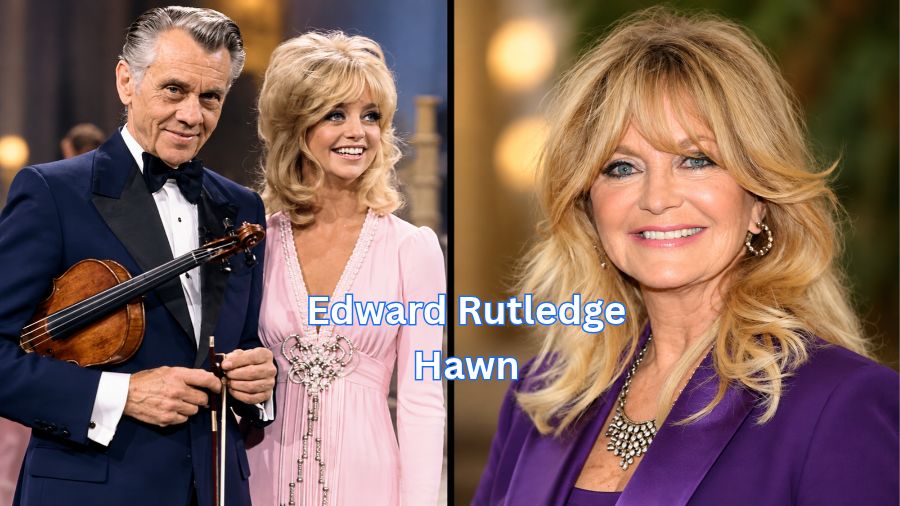
Historical photographs provide another way to understand Edward’s connection with his daughter. One widely circulated black-and-white photograph shows the older musician standing beside a young Goldie, holding a violin while she wears an elegant performance outfit. The photograph captures the contrast between Edward’s established musical identity and Goldie’s growing presence in entertainment. Their appearance together also reflects how music and performance were connected to their family life. Another documented family-related image from around 1960 shows Goldie sitting at a piano with her father at their Maryland home, looking over sheet music. Such photographs are valuable because relatively little detailed material about Edward’s private life has been published. They offer visual evidence of his involvement in Goldie’s early musical environment without requiring assumptions about conversations or events that were never recorded. Goldie later appeared in television entertainment, and her father’s musical experience made their shared artistic background particularly meaningful. The surviving images help preserve a connection that written biographies often summarize in only a few sentences. They also remind readers that Edward was a father and musician with his own life, rather than simply a supporting figure in the story of a famous actress.
Why People Search for Edward Rutledge Hawn
Most modern searches for Edward Rutledge Hawn begin with a question about Goldie Hawn’s family background. People researching the actress often want to know who her parents were, what her father did professionally, and whether her childhood was connected to the entertainment industry. Edward is particularly interesting because he was already an established musician before Goldie became famous. His association with the Arthur Godfrey Orchestra, his instrumental abilities, and his performances at major public occasions give his biography a distinct historical dimension. Searches also commonly involve Laura Hawn, Patricia Hawn, and Edward Hawn because readers want to understand the family relationships surrounding Goldie. His marriage to Laura, his daughter Patti’s career in publicity, and the early death of his son are important parts of that family history. Another reason for interest is Goldie’s affectionate public discussion of her father, including her memories of his humor and encouragement. His death in 1982 also raises questions about how he was remembered by his daughter and whether he witnessed the full development of her career. These questions make Edward’s biography relevant to readers interested in celebrity families, American entertainment history, and the personal influences behind successful performers. His story is not especially well documented compared with Goldie’s, which makes careful separation of confirmed information and uncertain details particularly important.
Privacy, Accuracy and Public Information
Although Edward Rutledge Hawn was connected to a famous actress, he was not a public figure whose private life was extensively documented, so some biographical details remain uncertain. His contemporary obituary identifies Baltimore as his birthplace, while several later online biographies give Little Rock, Arkansas, creating a discrepancy that should not be presented as settled fact. September 28, 1908, is a commonly reported birth date, but the available sources do not provide a definitive original birth record. Similarly, Goldie’s recollection connects her father with the Cincinnati Conservatory of Music, but this alone does not establish a graduation credential. His marriage to Laura is supported by the newspaper’s published correction confirming that they were still married when he died, while the commonly reported 1936 marriage date comes from biographical records. Claims that Edward was a direct descendant of Edward Rutledge, the Declaration of Independence signer, also require caution. Genealogical research published by Geneanet has challenged that popular family connection, so it should not be repeated as an established fact without stronger documentation. Details about his parents, including the names Otto Delphia Hawn and Claire Estelle Johnson, appear in genealogical databases, but they are not as firmly supported by contemporary biographical reporting. A responsible account therefore focuses on his documented musical work, family relationships, public recollections, and death while clearly identifying unresolved details. This approach respects both historical accuracy and the privacy of family members who did not maintain extensive public profiles.
Conclusion
Edward Rutledge Hawn lived a life shaped by music, family, and a long career in American entertainment. As a saxophonist, clarinetist, violinist, and orchestra conductor, he developed a professional identity that existed independently of his daughter’s Hollywood success. His work with the Arthur Godfrey Orchestra and performances at presidential inaugurations and embassy events remain notable parts of his musical history. His marriage to Laura Steinhoff Hawn and his role as the father of Patricia and Goldie Hawn provide the personal context behind his biography. Most importantly, Goldie’s affectionate memories show that Edward’s influence continued long after his death in 1982. He encouraged her ambitions, shared his creative outlook, and remained an important figure in her understanding of family and personal achievement. Although some details of his early life and ancestry remain uncertain, the available historical record presents Edward Rutledge Hawn as a dedicated musician and a deeply remembered father whose story deserves recognition beyond his connection to a famous daughter.
FAQs
1. Who was Edward Rutledge Hawn?
Edward Rutledge Hawn was an American musician and orchestra conductor best known as the father of actress Goldie Hawn and husband of Laura Hawn.
2. Who was Edward Rutledge Hawn’s wife?
Edward Rutledge Hawn was married to Laura Steinhoff Hawn, a dance school owner and businesswoman. Their marriage reportedly began in 1936.
3. How many children did Edward Rutledge Hawn have?
Edward and Laura Hawn had three children: Edward Jr., who died in infancy, Patricia Patti Hawn, and Hollywood actress Goldie Hawn.
4. What did Edward Rutledge Hawn do for a living?
Edward was a professional musician who played saxophone, clarinet, and violin. He also conducted the Arthur Godfrey Orchestra during his career.
5. When did Edward Rutledge Hawn die?
Edward Rutledge Hawn died on June 7, 1982, aged 73, in Los Angeles, California, reportedly from a ruptured aorta.
6. Was Edward Rutledge Hawn related to the Declaration of Independence signer?
His alleged descent from founding father Edward Rutledge has been disputed by genealogical research, and a direct ancestral connection remains unverified.
More read: Cindy Gruden