Military Calisthenics: Exercises, Benefits and Beginner Training Guide
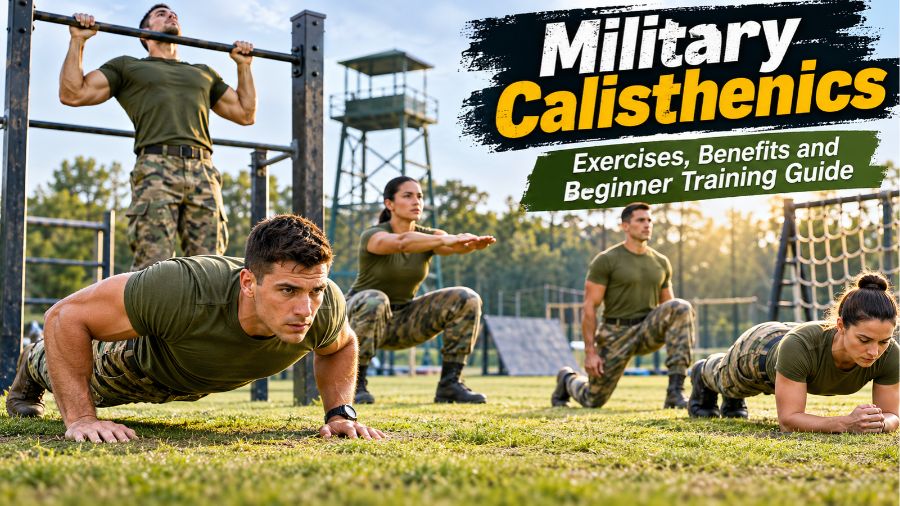
Military Calisthenics is a bodyweight training approach inspired by military physical conditioning, designed to develop strength, muscular endurance, stamina, coordination, and overall athletic performance. It combines traditional exercises such as push-ups, pull-ups, squats, lunges, planks, and running drills to build a stronger, more capable body without depending on expensive gym equipment. Whether someone wants to improve general fitness, prepare for military fitness assessments, develop functional strength, or establish a consistent home workout routine, military-style training offers a practical starting point. Understanding its exercises, training principles, benefits, limitations, and progression methods can help beginners and experienced athletes build a balanced fitness routine.
What Is Military Calisthenics?
Military calisthenics refers to a style of physical conditioning that uses bodyweight movements to improve physical readiness and overall performance. Its exercises are commonly associated with military physical training because they can be performed in outdoor spaces, training grounds, barracks, and other locations without requiring sophisticated equipment. Traditional routines emphasize controlled movements, repeated exercise sets, cardiovascular conditioning, and consistent physical effort. Push-ups develop upper-body strength, squats improve lower-body capacity, and running builds aerobic endurance, while core exercises support stability and movement control. However, military calisthenics is not one universally standardized workout program. Different armed forces use different training methods according to their operational requirements, fitness assessments, and personnel needs.
The Origins and Purpose of Military-Style Training
Military physical conditioning developed around the practical need to prepare personnel for physically demanding duties. Soldiers may need to carry equipment, move over difficult terrain, climb obstacles, maintain balance, and perform demanding activities over extended periods. These requirements encouraged training systems that combine muscular strength, cardiovascular endurance, coordination, mobility, and muscular stamina rather than focusing exclusively on appearance or muscle size. Modern military conditioning has evolved beyond traditional group exercises and repetitive drills. The United States Army’s Holistic Health and Fitness framework, commonly known as H2F, reflects this broader approach by considering physical readiness alongside nutrition, sleep, and other aspects of performance. This demonstrates why contemporary military fitness is more comprehensive than simply completing large numbers of push-ups and sit-ups.
Essential Military Calisthenics Exercises
Military-style bodyweight workouts use movements that challenge different muscle groups and physical abilities. The most useful routines combine upper-body pushing and pulling exercises, lower-body movements, core stabilization, and cardiovascular conditioning. Selecting exercises that work together helps create a more balanced program and reduces the tendency to overtrain one particular muscle group. Although some traditional military workouts emphasize repetition and timed challenges, beginners should prioritize proper technique and manageable training volumes before attempting demanding circuits.
Push-Ups
Push-ups are among the most recognizable military calisthenics exercises because they develop upper-body strength without requiring weights or specialized equipment. The movement primarily targets the chest, triceps, and anterior shoulder muscles while engaging the abdominal muscles to stabilize the body. A standard push-up begins in a high plank position, with the hands positioned approximately shoulder-width apart and the body maintained in a relatively straight line. The individual lowers the chest toward the floor before pressing back to the starting position. Beginners can start with incline or knee push-ups and gradually progress toward standard repetitions as their strength improves.
Pull-Ups
Pull-ups develop upper-body pulling strength and challenge the back, biceps, forearms, and grip muscles. They are particularly valuable because they complement pushing exercises such as push-ups, creating a more balanced upper-body training routine. The exercise involves hanging from a stable overhead bar with an appropriate grip and pulling the body upward until the chin reaches bar height or passes it, depending on the selected standard. Beginners who cannot complete a full repetition can practice assisted pull-ups, controlled negative repetitions, or inverted rows. A suitable pulling movement is important because push-ups alone cannot develop all the major upper-body muscle groups equally.
Bodyweight Squats
Bodyweight squats are fundamental lower-body exercises that strengthen the quadriceps, glutes, and supporting muscles around the hips and legs. They also encourage coordination and control through the lower-body movement pattern. To perform a standard squat, stand with the feet approximately shoulder-width apart, bend the hips and knees, and lower the body while maintaining a controlled position. The heels should remain grounded, and the knees should move in a direction consistent with the feet. Beginners can use a comfortable depth and gradually improve their movement quality before attempting more demanding variations, including jump squats and single-leg progressions.
Lunges
Lunges strengthen the legs while challenging balance, coordination, and single-leg stability. They primarily involve the quadriceps and glutes, with additional contributions from the hamstrings and supporting muscles. A forward lunge begins from a standing position, followed by a controlled step forward and a lowering movement through both knees. The individual then pushes through the front foot to return to the starting position. Alternating legs helps distribute the workload between both sides of the body. Reverse lunges and walking lunges offer additional variations that can be introduced as movement control and strength improve.
Planks and Core Exercises
Core training plays an important role in military-style conditioning because the abdominal and trunk muscles help maintain stability during running, lifting, carrying, and other physical activities. Planks challenge the abdominal muscles and other stabilizing muscles by requiring the body to maintain a controlled position against gravity. Other useful exercises include dead bugs, reverse crunches, and controlled leg raises. Rather than performing excessive repetitions with poor technique, individuals should focus on controlled movements, consistent breathing, and appropriate exercise duration. A stronger core supports movement efficiency, although it does not independently guarantee improved performance in every military fitness activity.
Burpees and Mountain Climbers
Burpees and mountain climbers introduce a more demanding conditioning element into bodyweight workouts. A burpee combines a squat, plank position, and standing movement, with optional jumping depending on the variation. Mountain climbers involve alternating knee drives from a supported plank position, challenging coordination, core stability, and cardiovascular capacity. Both movements can increase workout intensity when performed continuously, but they require appropriate movement control. Beginners should start with slower versions and reduce the number of repetitions if their technique deteriorates. These exercises are useful additions to a balanced routine, rather than compulsory movements for every training session.
Major Benefits of Military Calisthenics
Military calisthenics offers several practical advantages for individuals who want to improve physical fitness using accessible training methods. Bodyweight movements can develop muscular endurance, improve movement coordination, and build foundational strength without requiring a conventional gym membership. Combining strength exercises with running and conditioning drills can also support cardiovascular fitness. Another advantage is flexibility: workouts can be adjusted according to available space, current ability, and personal training objectives. Consistent exercise may contribute to better overall health, physical confidence, and daily movement capacity. However, results depend on training quality, progressive difficulty, nutrition, recovery, and individual circumstances rather than the military-style label attached to a workout.
How to Start Military Calisthenics as a Beginner
Beginning military-style training does not require an advanced fitness level or the ability to complete dozens of repetitions immediately. A sensible starting point involves learning basic movement patterns, identifying current physical limitations, and establishing a manageable weekly schedule. Beginners can start with two or three non-consecutive strength-focused sessions per week, allowing recovery between demanding workouts. Each session should include a gradual warm-up, a combination of upper-body and lower-body exercises, and a short cool-down. Exercise variations should match the individual’s ability, with incline push-ups, supported squats, and assisted pulling movements providing useful starting options. Increasing repetitions, sets, or exercise difficulty gradually is more sustainable than copying demanding military training routines without preparation.
A Practical Military Calisthenics Workout Plan
A beginner workout can combine push-ups, bodyweight squats, lunges, planks, and an appropriate pulling exercise such as assisted pull-ups or inverted rows. Start with two sets of approximately 6–10 push-ups using a suitable variation, 10–15 bodyweight squats, 8–10 lunges per leg, and 15–30 seconds of plank work. Add 5–8 assisted pull-ups or 8–12 inverted rows if suitable equipment is available. Rest between sets as necessary to maintain good technique, and finish with a comfortable walking session if additional conditioning is appropriate. These figures are starting suggestions rather than official military standards. As the exercises become easier, gradually increase the workload while maintaining movement quality and sufficient recovery.
Military Calisthenics and Cardiovascular Conditioning
Strength exercises alone do not provide a complete military-style fitness program. Cardiovascular conditioning is equally important for developing the ability to sustain physical activity over time. Running, brisk walking, interval training, and appropriately paced cycling can complement bodyweight exercises by improving aerobic capacity. Shorter, faster intervals may also develop high-intensity conditioning, although they place different demands on the body compared with steady-paced endurance work. A balanced routine should include both strength-focused and aerobic activities instead of attempting to perform every exercise at maximum intensity during every session. The appropriate combination depends on fitness level, training experience, recovery, and individual objectives.
Military Calisthenics vs Traditional Gym Training
Military calisthenics and conventional gym training share the goal of improving physical performance, but they use different approaches to resistance and exercise selection. Calisthenics primarily relies on bodyweight movements, making it accessible and convenient for outdoor or home workouts. Traditional gym training offers greater control over external resistance through barbells, dumbbells, machines, and other equipment. Gym exercises can make it easier to apply small, measurable increases in load, which is useful for developing maximal strength and muscle size. Calisthenics can also become progressively challenging through harder exercise variations, additional repetitions, slower movements, and external resistance. Neither method is automatically superior. Combining both approaches can be particularly useful for people who want balanced strength, endurance, and general physical development.
How to Progress in Military Calisthenics
Progressive overload is an important principle for improving strength and muscular endurance over time. The body gradually adapts to repeated physical demands, meaning the same workout may eventually become less challenging. Progression can involve increasing repetitions, adding another set, choosing a more difficult exercise variation, improving movement control, or introducing resistance where appropriate. For example, someone who begins with incline push-ups can progress to knee push-ups and eventually standard push-ups. Similarly, assisted pull-ups can develop into unassisted repetitions. Progress should be measured through consistent performance rather than attempting to beat previous records during every workout. Gradual increases allow muscles, joints, and connective tissues to adapt more effectively to changing training demands.
Nutrition and Recovery for Military-Style Fitness
Training is only one part of developing physical fitness. Proper nutrition, hydration, and recovery support the body’s ability to adapt to exercise and maintain performance. A balanced diet should provide sufficient protein, carbohydrates, healthy fats, vitamins, and minerals according to individual energy requirements. Protein supports muscle repair and maintenance, while carbohydrates provide an important energy source for demanding physical activity. Hydration becomes particularly important during outdoor training, hot weather, and extended exercise sessions. Sleep also matters because insufficient recovery can affect coordination, motivation, and exercise performance. Individuals following military-style workouts should avoid treating rest as a weakness; recovery is a necessary part of a sustainable training program.
Common Mistakes to Avoid During Military Calisthenics
One common mistake is focusing on high repetition counts instead of performing exercises correctly. Completing 50 poorly controlled push-ups is not necessarily more beneficial than performing a smaller number with consistent technique. Another problem is training at maximum intensity every day, which can leave insufficient time for recovery and increase the likelihood of overuse injuries. Some beginners also neglect pulling exercises, mobility work, and aerobic conditioning while concentrating almost entirely on push-ups and sit-ups. Copying advanced military workouts without considering individual fitness levels can create unnecessary physical stress. A better approach is to establish a foundation, use appropriate exercise variations, maintain balanced training, and increase difficulty gradually.
Potential Risks and Training Limitations
Military calisthenics can be demanding, particularly when workouts involve repeated jumping, running, high-volume push-ups, or exercises performed under fatigue. Inadequate preparation, poor technique, unsuitable training surfaces, and excessive workload may contribute to muscle strains, joint discomfort, and overuse injuries. The US Army’s physical readiness guidance emphasizes progression, individual conditioning levels, and appropriate risk management during training. Another limitation is that bodyweight exercises do not always provide enough resistance for advanced strength development, particularly when someone has already adapted to basic movements. Pulling exercises may also require access to a suitable bar or alternative equipment. People with existing injuries, significant health concerns, or prolonged inactivity should seek appropriate professional guidance before starting demanding exercise programs.
Who Should Try Military Calisthenics?
Military-style bodyweight training can suit beginners, recreational athletes, home fitness enthusiasts, and people preparing for physically demanding occupations. Beginners can use easier exercise variations to develop foundational strength, while experienced athletes can introduce more challenging movements and conditioning circuits. Individuals preparing for military recruitment may also find this approach useful because it develops several abilities relevant to physical fitness assessments. However, the exact preparation required depends on the country, armed forces, recruitment category, and official assessment standards. Military calisthenics should not be treated as a guaranteed way to pass a military selection test. People interested in recruitment should identify their specific fitness requirements and train accordingly rather than relying on a generic workout routine.
Modern Military Fitness and Holistic Physical Readiness
Modern military fitness programs increasingly recognize that operational readiness requires more than muscular endurance. The United States Army’s Holistic Health and Fitness system provides an example of this broader philosophy by integrating physical preparation with nutrition, sleep, and other readiness considerations. Its physical training framework addresses multiple fitness qualities, including muscular strength, muscular endurance, aerobic endurance, anaerobic endurance, and power. The Army also uses structured assessments to evaluate physical capabilities rather than relying exclusively on traditional calisthenics exercises. This distinction is important for readers because military calisthenics represents one useful training approach within a much larger physical readiness system, not a complete replacement for all aspects of modern military conditioning.
How Often Should You Train?
Training frequency should reflect an individual’s experience, recovery ability, and overall exercise workload. Beginners may benefit from two or three bodyweight strength sessions each week, with walking or manageable aerobic exercise on other days. More experienced individuals can follow a structured schedule that alternates strength-focused workouts with endurance and conditioning sessions. Training the same muscle groups intensely on consecutive days is generally unnecessary for most beginners, particularly when soreness or fatigue affects movement quality. The World Health Organization recommends that adults accumulate 150–300 minutes of moderate-intensity aerobic activity or 75–150 minutes of vigorous-intensity activity weekly, alongside muscle-strengthening activities involving major muscle groups on at least two days. These are general health recommendations, not specific military training requirements.
Conclusion
Military calisthenics offers an accessible and practical way to develop strength, endurance, coordination, and general physical readiness through bodyweight exercises and cardiovascular conditioning. Its combination of push-ups, pull-ups, squats, lunges, planks, and running provides a useful foundation for people who want to improve fitness without depending on expensive gym equipment. However, effective training requires more than completing high repetitions or following demanding military-inspired challenges. Proper technique, progressive overload, balanced exercise selection, nutrition, hydration, and recovery all contribute to sustainable improvement. By understanding individual fitness levels and following a structured approach, beginners and experienced athletes can use military-style calisthenics to build a stronger and more capable body.
FAQs
What is military calisthenics used for?
Military calisthenics develops functional strength, muscular endurance, coordination, and cardiovascular fitness through structured bodyweight exercises commonly associated with military physical conditioning.
Can beginners do military calisthenics?
Yes, beginners can start with easier exercise variations, manageable repetitions, and shorter sessions before gradually increasing training intensity and movement difficulty.
Can military calisthenics build muscle?
Yes, bodyweight exercises can stimulate muscle growth when movements provide sufficient resistance, training volume increases appropriately, and nutrition supports recovery.
Do you need equipment for military calisthenics?
Most exercises require no equipment, although a pull-up bar or suitable alternative can improve upper-body pulling development and provide additional exercise options.
How many days a week should you train?
Beginners can start with two or three strength sessions weekly, allowing recovery between demanding workouts while gradually developing cardiovascular fitness.
Is military calisthenics better than gym workouts?
Neither approach is universally better; calisthenics offers convenience and functional movement practice, while gym training provides more precise external resistance and loading options.
More read: Ruschek