Jack Daniel Byrne: The Gifted Blues Guitarist of The Dough Rollers
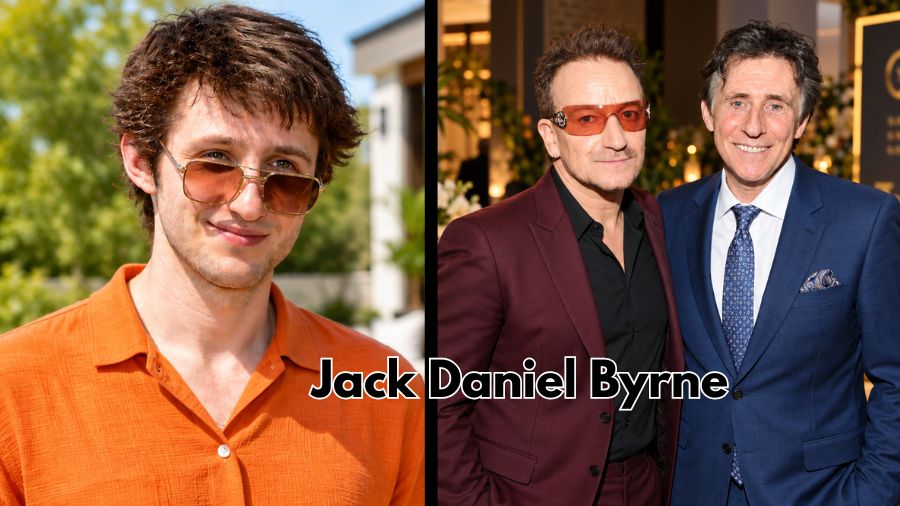
Jack Daniel Byrne is the American blues and roots guitarist who co-founded The Dough Rollers, and the reason most people arrive at his name is a piece of family trivia rather than a guitar solo. He is the son of Irish actor Gabriel Byrne and American actress Ellen Barkin, which places him in a small category of people whose surname arrives in a room before they do. What makes his story worth telling is that he did almost nothing with that advantage. Between roughly 2008 and 2015 he built a working band from the ground up, toured hard, released records on Jack White’s Third Man Records, and then stopped, without a farewell statement or a final interview. Readers searching for him today are usually trying to answer two questions: what did he actually do, and where did he go. The first has a clear, documented answer. The second does not, and this article will be straightforward about that rather than filling the silence with guesses.
Quick Bio
| Detail | Information |
|---|---|
| Full Name | Jack Daniel Byrne |
| Known As | Jack Byrne |
| Profession | Musician, guitarist, songwriter |
| Nationality | American (Irish heritage through his father) |
| Birthplace | United States; raised between the US and Ireland |
| Birth Year | 1989 (exact date not reliably documented) |
| Father | Gabriel Byrne, Irish actor |
| Mother | Ellen Barkin, American actress |
| Sibling | Romy Marion Byrne, sister, reported born 1992 |
| Known For | Co-founding and playing lead guitar in The Dough Rollers |
| Band Formed | 2008, with Malcolm Ford |
| Record Label | Third Man Records |
| Notable Releases | Self-titled debut (2009), Someday Baby, Little Lily 7″ (2013), Gone Baby Gone EP (2014) |
| Toured With | Bob Dylan, Queens of the Stone Age, Billy Idol |
| Education | Not publicly disclosed |
| Spouse or Partner | Not publicly disclosed |
| Children | Not publicly disclosed |
| Current Residence | Not publicly disclosed |
| Current Status | No verified public activity since approximately 2015 |
| Public Presence | None verified; no confirmed active social media accounts |
Who Is Jack Daniel Byrne?
Jack Daniel Byrne is best described as a working guitarist who happened to have famous parents, rather than a celebrity child who happened to pick up a guitar, and the distinction matters because it shapes everything that followed. Born in 1989 and raised across the United States and Ireland, he grew up inside a household where performance was the family trade, yet he never made a serious move toward acting. His interest ran instead toward pre-war American blues, the recorded catalogue of players like Robert Johnson and Son House, and the specific mechanics of getting those sounds out of a guitar. That is an unglamorous thing to be interested in at seventeen, and it is not a shortcut to anything. By the time he was in his early twenties he was the lead guitarist of a band with a real touring schedule, a real record label, and a sound that had been argued over and rebuilt more than once. His public profile was always modest, built on music press rather than celebrity coverage, and it faded almost entirely after the middle of the last decade. There is no verified information about what he does now, where he lives, or whether he still plays, and anyone claiming otherwise is guessing.
Background in Music and the American Blues Revival
Byrne came up during a particular moment in American music when a generation of young players was digging backward into the country blues, string-band music, and early rock recordings that had been out of fashion for decades. His entry point was the guitar itself and the older repertoire attached to it, the traditional material that had been passed down through field recordings and reissue compilations rather than through radio. This was not a costume for him in the way it was for some acts of the period, because the earliest Dough Rollers material was drawn largely from traditional sources with only a few originals mixed in, which is what you do when you are still learning the grammar of a form before trying to write in it. What eventually distinguished his playing, according to the musicians and writers who covered the band, was restraint. He took the vocabulary of the old blues players without becoming a museum piece, and when the band’s sound later grew louder and dirtier he carried that economy into a rock setting rather than abandoning it. The transition from reverent revivalism to something with its own snarl took several years and a great deal of touring, and it is the clearest evidence that Jack Daniel Byrne was treating music as a craft to be developed rather than a phase to be enjoyed.
The Dough Rollers: Formation and Early Years
The Dough Rollers began in 2008 in New York City when Byrne met Malcolm Ford, the son of Harrison Ford and screenwriter Melissa Mathison, and the two discovered a shared obsession with blues records. Byrne was still in high school; Ford had recently left college. Byrne taught Ford to play guitar, and by most accounts the friendship turned into a band almost immediately, with Ford eventually taking the frontman role and Byrne settling in as lead guitarist and occasional vocalist. The earliest incarnation was a three-piece that included fiddler and singer Julia Tepper, and this lineup recorded a self-titled album released in late 2009 built mostly from traditional American material with a handful of originals. The group later contracted back to the Byrne and Ford duo, who used their time on the road to develop their own writing, before expanding again with Josh Barocas on bass and Kyle Olson on drums. Interview Magazine, covering them in 2013, described the visual and sonic shift plainly: the neatly pressed suits of the early years had been traded for jeans and t-shirts and visible tattoos, and the southern blues influence now sat inside something closer to rock than rockabilly. It was, by their own framing, a second version of the same band.
Family Background: Gabriel Byrne, Ellen Barkin and Romy Marion Byrne
The family context is the reason most searches for Jack Daniel Byrne exist, so it is worth setting out accurately and then setting aside. His father, Gabriel Byrne, is one of Ireland’s most recognised actors, with a career spanning decades of film, television, and stage work from The Riordans onward. His mother, Ellen Barkin, is an American actress with a substantial body of film and television work behind her. The two were married during the years in which Jack and his younger sister, Romy Marion Byrne, reported born in 1992, were children, and they later divorced. Both parents remained involved in their children’s lives and, according to Irish press reporting, supported Jack’s decision to pursue music rather than follow them into acting. Beyond these outlines, very little about the family’s private life has been reliably documented, and the children were kept largely out of public view during childhood. There is a symmetry worth noting in the fact that Byrne’s closest musical collaborator, Malcolm Ford, came from an almost identical situation, and the two seem to have bonded partly over the shared experience of having a surname that arrives with expectations attached. Neither of them chose the family business.
Third Man Records and the Josh Homme Sessions
The most visible chapter of Jack Daniel Byrne’s career came through Jack White’s Nashville label, Third Man Records. After several years of touring, the band travelled to Nashville in 2013 to record a seven-inch single, Little Lily, as part of Third Man’s Blue Series, the label’s showcase for one-off sessions cut quickly and pressed to vinyl. Third Man’s own description of the band credited the years of road work with loosening and darkening their sound, and noted that they had toured with Bob Dylan and Queens of the Stone Age. The QOTSA connection proved consequential. Byrne explained in interviews that the band had already recorded with a musician connected to Queens of the Stone Age’s bassist, which led to two tours supporting the group, and that connection eventually produced the band’s best-known release: the Gone Baby Gone EP, recorded with Josh Homme producing. Third Man described the resulting record as one of the finest guitar performances the label had pressed. The title track was picked up by Rolling Stone. For a band that had started in a New York apartment five years earlier with a borrowed guitar and a stack of old records, it was a substantial arrival, and it is the high-water mark of Byrne’s documented career.
Life After The Dough Rollers
After 2015, the trail goes cold, and it goes cold abruptly. The band posted footage from a Los Angeles show that year and then stopped, with no new recordings, no tour announcements, and no statement explaining the pause. Social media accounts fell quiet and stayed quiet. There was no breakup announcement, no farewell tour, and no interview in which any member explained what had happened, which is unusual enough that it has become the main thing people ask about him. It should be said clearly that no reliable source has established why the band stopped or what Jack Daniel Byrne has done since. Speculation is abundant online and rests on nothing. What can be said is that the silence has been consistent and total for roughly a decade, which is generally the behaviour of someone who has deliberately stepped away rather than someone temporarily between projects. His current occupation, location, relationship status, and whether he still plays music are all undisclosed, and the honest position is to leave those blanks empty rather than fill them with plausible-sounding invention.
Career Highlights and Public Recognition
Measured against the length of his active career, Byrne’s list of credits is unusually strong. He co-founded a band at nineteen that within five years had released a self-titled debut in 2009, a follow-up album titled Someday Baby, a Third Man Records seven-inch in 2013, and the Homme-produced Gone Baby Gone EP in 2014. He toured with Bob Dylan, played two tours with Queens of the Stone Age, and travelled through Europe and the UK supporting Billy Idol, an experience he described in interviews as a chance to stretch out on a large stage after years of playing small rooms. He gave interviews to Interview Magazine, Blues Rock Review, and Performer Magazine, in each case talking about guitar playing and touring rather than his family. Recognition came from within the music community rather than from celebrity press, and it is fair to say that the opportunities the band received required an actual working live act; established artists do not hand over support slots on the strength of a surname alone. The catalogue is small, which limits any final assessment of where the music might have gone, but the work that exists holds up.
Why People Search for Jack Daniel Byrne
Search interest in Jack Daniel Byrne is driven by a combination of curiosity and absence, and the two reinforce each other. People find his name through Gabriel Byrne or Ellen Barkin, discover that he was a musician rather than an actor, and then find that the story stops abruptly with no ending attached. Unresolved narratives generate searches. Compounding this, the second wave of interest comes from listeners who encounter Gone Baby Gone or the Third Man releases years later and want to know what the guitarist did next. The unfortunate consequence is that a genuine information gap has been filled by a large volume of low-quality content: a great many recently published pages about him are near-identical, recycling the same handful of 2013 and 2014 interviews, padding them with invented detail, and presenting speculation about his private life as established fact. Some circulate an exact birth date that no primary source supports. Some attribute activities to him that trace back to documents hosted on entirely unrelated websites. Anyone researching him should treat the volume of available text as a poor proxy for the amount of actual information.
Privacy, Accuracy and Public Information
There is a meaningful distinction between a person’s public work and their private life, and in this case the line is unusually clear. Byrne’s music career was public by his own choice: he released records, toured, and gave interviews, and all of that is fair material for documentation and discussion. What followed was equally clearly a choice in the other direction. He has not sought attention, has made no public statements, maintains no confirmed public accounts, and has given no indication that he wishes to be a subject of ongoing coverage. This article has therefore recorded what is verifiable and stated plainly where the record ends, which means several conventional biography categories have been left empty rather than furnished with guesswork. Readers encountering other sources should be alert to a specific pattern: confident assertions about his present-day life, precise personal details that no reporting supports, and emotional narratives about why he left music. None of that is documented. A person who deliberately stepped out of public view is entitled to have the resulting gaps described as gaps.
Conclusion
Jack Daniel Byrne’s story is a short one told well, which is rarer than a long one told badly. He had every structural advantage available to a young person entering the entertainment industry and chose to spend it on pre-war blues records and years in a van, building a band with a friend who had inherited exactly the same complicated advantage. The result was a modest but genuine body of work, a Third Man Records catalogue entry, an EP produced by one of rock’s more discerning producers, and the respect of musicians who had no reason to offer it out of politeness. Then he stopped, on his own terms and without explanation, and has stayed stopped for a decade. The interesting thing about Gabriel Byrne’s son is not the surname at all, but that he treated it as largely beside the point, both when he was making music and when he decided to stop. What he does now is not publicly known, and the most accurate thing anyone can write about his present life is that it is his own.
FAQs
Who is Jack Daniel Byrne?
Jack Daniel Byrne is an American guitarist and songwriter, born in 1989, best known for co-founding the blues and roots-rock band The Dough Rollers with Malcolm Ford in 2008.
Is Jack Daniel Byrne really Gabriel Byrne’s son?
Yes. He is the son of Irish actor Gabriel Byrne and American actress Ellen Barkin. His younger sister, Romy Marion Byrne, was reported born in 1992.
What band was Jack Daniel Byrne in?
He played lead guitar in The Dough Rollers, releasing records including Someday Baby, the Little Lily seven-inch, and the Gone Baby Gone EP produced by Josh Homme.
Did Jack Daniel Byrne ever act?
No. Despite both parents being established actors, he never pursued a professional acting career, choosing music instead and building his public identity entirely around guitar playing.
Which artists did The Dough Rollers tour with?
The band toured with Bob Dylan and Queens of the Stone Age, and supported Billy Idol across Europe and the United Kingdom during their most active touring years.
What is Jack Daniel Byrne doing now?
This has not been publicly disclosed. He has had no verified public activity since approximately 2015, and no reliable source has confirmed his current work or location.
More read: Erin Trussell