James Benamor: Net Worth, Career, Family and Amigo Loans Story
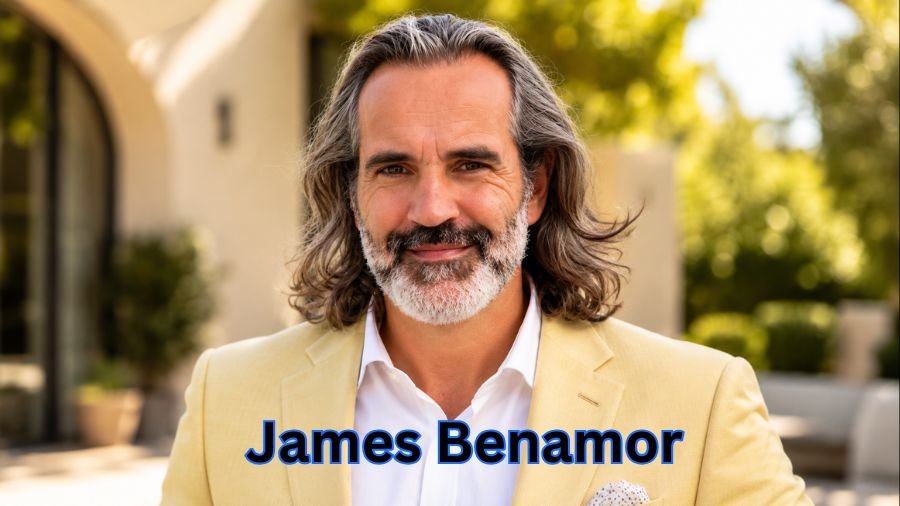
James Benamor is a British businessman and entrepreneur best known for founding the Richmond Group and Amigo Loans. Born in Bournemouth in May 1977, Benamor built his career in financial services after starting out with very limited resources and eventually developed a business group with interests extending beyond consumer lending. Companies House records his full name as Rachid James Benamor and confirms that he remains closely associated with Richmond Group Limited, where he has significant control.
What makes James Benamor’s story particularly interesting is the contrast between his early circumstances and the scale of the businesses he later built. His own accounts of his youth describe a family that was not wealthy, while his mother developed a business from their home. Benamor has also spoken publicly about leaving school after his GCSEs and entering his twenties without conventional corporate experience.
Rather than following a traditional route through university, banking or a major financial institution, Benamor learned by building businesses. That practical approach became a defining feature of his career. His early success with the Richmond Group eventually gave him the platform to launch Amigo, which became one of the most recognisable names in the UK’s guarantor-loan market.
His career has also included controversy. The rapid growth of his financial businesses attracted criticism, regulatory scrutiny and intense media attention. For that reason, understanding James Benamor requires more than looking at his wealth. His story is also about entrepreneurship, risk, consumer finance, business ownership and the difficult consequences that can accompany rapid growth.
James Benamor Age, Birthplace and Early Life
James Benamor was born on 18 May 1977 in Bournemouth, Dorset. As of 2026, he is 49 years old. Companies House independently records his date of birth as May 1977 and his nationality as British.
His family background played an important role in the way he later viewed business. In posts published on his LinkedIn profile, Benamor has described his mother as having moved to the United Kingdom from Libya and starting a beauty business from the family’s home. She developed a hair-removal business based around sugaring and eventually trained and supplied women operating businesses under the Zahra name.
That experience appears to have influenced Benamor’s understanding of entrepreneurship at an early age. Instead of seeing business as something restricted to large offices or established companies, he saw it operating inside his own home. His mother’s example showed him that a small idea could become a much larger enterprise when combined with persistence and a willingness to take risks.
Benamor has also been unusually open about his education and early career development. In one account, he said that he left school immediately after GCSEs and later found himself responsible for a company with almost 100 employees despite having never worked in a conventional office. He described feeling out of his depth and eventually turning to business books and the experience of other successful CEOs to improve his management skills.
This part of his biography is important because it helps explain his later approach. Benamor was not built through a conventional finance career. He learned largely through entrepreneurship itself, which became both his advantage and, at times, a source of criticism.
How James Benamor Started the Richmond Group
James Benamor started the business that became the Richmond Group in 1999 when he was 21. One of the most frequently repeated stories about his early career is that he had just £100 available to launch the business. Without the advertising budget of an established company, he relied heavily on direct marketing and personally distributed thousands of leaflets.
According to accounts of his early business journey, Benamor walked roughly 300 kilometres while distributing around 30,000 leaflets during the company’s first month. Whether viewed simply as an unusual marketing tactic or as a reflection of his personality, the story captures the practical approach that characterised his early entrepreneurship.
The initial business focused on loan brokerage and financial services. The company grew as Benamor identified opportunities in markets where traditional financial institutions were less willing to serve customers. That strategy helped the Richmond Group develop a reputation for operating in non-standard credit and related financial markets.
The growth was substantial. The Richmond Group later appeared in several Sunday Times growth and workplace rankings, while Benamor received an Ernst & Young Entrepreneur of the Year award in 2010, according to biographical records.
The group’s evolution also demonstrates an important feature of Benamor’s business philosophy: he has generally looked for markets where an established system leaves room for a different approach. That mindset would become especially significant when he developed the idea behind Amigo Loans.
The Rise of Amigo Loans
James Benamor founded Amigo Holdings in 2005, building a business around guarantor loans. The basic concept was relatively straightforward. A person who might struggle to obtain conventional credit could apply for a loan with another individual, usually a family member or friend, acting as guarantor.
The idea was partly informed by Benamor’s own experience of struggling to access mainstream finance. Amigo’s historical annual report explains that its founder had been turned down by banks because of his poor credit score and had received help from a family member when he needed money to lease a computer for his business. That experience helped shape the thinking behind Amigo.
Amigo grew rapidly and became a major player in the UK guarantor-loan market. By 2018, the company had reached a valuation of approximately £1.3 billion when it floated on the London Stock Exchange. At the height of the company’s success, Benamor’s personal paper wealth also surged dramatically because of his interest in the business.
The business model was attractive because it created an alternative for people who were often unable to borrow from mainstream banks. However, guarantor lending also carried significant risks. The borrower had to make repayments, but the guarantor could become responsible for the debt if the borrower failed to pay.
That structure made affordability and responsible lending especially important. As Amigo expanded, questions surrounding affordability assessments, customer treatment and compensation claims eventually became central to the company’s future.
James Benamor and the Amigo Boardroom Battle
The later Amigo story was very different from the company’s rapid-growth years. Benamor stepped away from the company’s board in March 2020 after returning briefly as a director in late 2019. Amigo’s 2020 annual report records that he was appointed as a director on 9 December 2019 and resigned on 4 March 2020.
At the time, the relationship between Benamor and Amigo’s leadership became increasingly strained. Richmond Group had held a large stake in the listed company, and Benamor sought changes to the board and senior management. When those efforts failed, Richmond Group moved to sell its remaining interest.
The dispute attracted substantial media coverage because Amigo was facing increasing regulatory and financial pressure. The situation showed the downside of being a founder in a publicly traded company: ownership, management control and the interests of other shareholders do not always point in the same direction.
Ultimately, Benamor’s connection with Amigo became primarily historical rather than operational. Companies House records show that his former appointments connected with Amigo Loans and related entities have ended, with Amigo Loans Ltd now listed as being in liquidation.
For anyone researching James Benamor today, this distinction matters. He should not be described as the current owner or operator of Amigo Loans. His significance to the brand is as its founder and former major shareholder.
What Happened to Amigo Loans?
Amigo’s decline was driven by a combination of regulatory problems, compensation liabilities and the difficulty of restarting the business under sustainable conditions. The company eventually stopped new lending in March 2023.
The end of lending marked a major change from the company that had once dominated the UK guarantor-loan market. Amigo had once been valued at around £1.3 billion, but its later history was dominated by attempts to manage legacy customer complaints and compensation claims.
Amigo Loans Ltd subsequently entered liquidation in 2025 after the business went through the process of dealing with compensation claims. Current descriptions of the company therefore need to be careful: Amigo is no longer an active guarantor lender operating in the way it did during Benamor’s peak years.
This part of Benamor’s career is important for understanding the difference between entrepreneurial success and long-term business sustainability. Amigo solved a genuine problem for a particular group of borrowers, but the company also operated in a highly regulated sector where mistakes in affordability or customer treatment could have significant consequences.
The Amigo experience ultimately became one of the defining chapters of Benamor’s business career, alongside the creation and continued development of the Richmond Group.
James Benamor and the Richmond Group Today
While Amigo remains the business most people associate with James Benamor, the Richmond Group is arguably more relevant to his current career. Companies House records show that Benamor remains a person with significant control of Richmond Group Limited, holding 75% or more of its shares and voting rights and having the right to appoint or remove directors.
The group has also continued to have interests beyond traditional consumer lending. Its corporate structure includes businesses connected with financial services, technology and property. Companies House currently lists Benamor as a director of Richmond Group Property Holdings Limited, and he was appointed to Kingsley Housing Development Limited in January 2026.
This reflects a broader shift in the way Benamor’s business interests are presented. Rather than relying on one large consumer-credit company, the Richmond Group operates as a broader investment and business-building platform.
That approach can provide greater diversification. A company builder can invest in different industries, support founders and allocate capital to opportunities without depending entirely on the performance of one consumer-facing brand.
The Richmond Group’s current position therefore offers a more useful picture of Benamor’s present business career than Amigo alone. He is no longer best understood simply as a subprime-loan entrepreneur; he is better described as an investor and business builder whose career began in credit and expanded into other areas.
James Benamor Net Worth in 2026
James Benamor’s wealth has changed dramatically over the course of his career. During Amigo’s 2018 stock-market flotation, the value of his stake briefly pushed his estimated wealth into billionaire territory on paper. However, that figure did not remain stable after Amigo’s share price fell and the company’s financial difficulties intensified.
More recent wealth estimates place him back among Britain’s very wealthy entrepreneurs rather than describing him as a current billionaire. The 2026 Sunday Times Rich List has been reported as estimating his wealth at approximately £683 million.
It is important to understand what a Rich List figure actually represents. Net worth estimates are not the same as cash held in a bank account. They generally reflect estimated values of company holdings, investments, property and other assets, minus relevant liabilities.
For Benamor, private-company ownership makes the calculation particularly difficult. His continuing control of Richmond Group means the value of his wealth is closely connected to assets that are not necessarily traded on a public stock exchange every day.
For that reason, £683 million should be presented as an estimated 2026 wealth figure, not as a verified amount of money Benamor has available to spend. His position on a wealth ranking can also change as private-company valuations, property values and other investments move.
James Benamor Family and Mother
Family is an important part of James Benamor’s personal story, although he has generally kept many aspects of his private life away from the mainstream media. Public information about his wife and marriage is limited, so claims about his spouse should be treated carefully unless they can be supported by a reliable primary or high-quality secondary source.
His relationship with his mother, however, is much more clearly documented because Benamor himself has written about her. He has described her as an important influence on his attitude toward entrepreneurship and independence.
According to Benamor’s own account, his mother came to Britain from Libya, married his father at a young age and later built a beauty business from the family’s home. Her business eventually expanded to train and supply more than 1,000 women operating businesses under the Zahra name.
That story offers an interesting explanation for why Benamor became comfortable with unconventional business ideas. He grew up watching a parent create a commercial operation from limited resources rather than simply following a conventional career path.
Benamor has also spoken publicly about his children. In one personal account, he described travelling with his son Jamal and emphasised his determination to make sure his son could participate in experiences despite physical limitations.
These personal stories add context to the public image of a businessman who is often discussed only through his wealth and companies. They show a side of Benamor that is less visible in financial reporting.
James Benamor on The Secret Millionaire
In 2008, James Benamor appeared on Channel 4’s The Secret Millionaire. The programme placed wealthy businesspeople in disadvantaged communities while they lived undercover and looked for people or organisations they wanted to support.
Benamor’s episode took him to Moss Side in Manchester. During the programme, he interacted with local community organisations and people facing difficult circumstances. His involvement brought a different kind of public attention to him because viewers saw him outside the world of financial services.
The programme also explored his own teenage years. Benamor discussed having experimented with drugs and becoming involved in petty crime before changing direction. That history became part of his public biography and contributed to the narrative of a businessman who had moved a long way from his youth.
His involvement did not end entirely when the television episode finished. Accounts of the programme describe him continuing to support people and organisations connected with the Manchester community, including work-experience opportunities for disadvantaged young people.
The appearance is still relevant to his biography because it demonstrates that Benamor’s public identity has never been solely about making money. Charity and social impact have periodically featured alongside his commercial activities.
James Benamor’s Business Style and Entrepreneurial Lessons
One of the clearest lessons from James Benamor’s career is the value of identifying underserved markets. Both the early Richmond Group and Amigo were built around customers who were not always well served by traditional financial institutions.
Another lesson is the importance of speed. Benamor started his first business at a young age and relied on direct action rather than waiting until he had the perfect resources, credentials or corporate network. His early leaflet-distribution story is a simple example of that mindset.
At the same time, his career illustrates why opportunity and risk need to be considered together. Financial services businesses can grow quickly, but they operate under strict regulatory expectations. A business can become commercially successful while still accumulating risks that emerge years later.
His experience also demonstrates the difference between founder wealth and operating income. The dramatic increase in his paper wealth during Amigo’s public-market years was linked to the market value of his shareholding. When the company’s value fell, so did the apparent value of that holding.
For entrepreneurs, perhaps the biggest takeaway is diversification. Benamor’s post-Amigo career has increasingly involved the Richmond Group rather than one dominant consumer brand. That creates a more diversified business model and allows capital to be deployed across different opportunities.
Is James Benamor Still in Business?
Yes. James Benamor remains involved in business through the Richmond Group and other corporate entities. Companies House records show active positions connected with property and investment-related businesses, while Richmond Group Limited continues to list him as its controlling person.
His current activities are less visible to consumers than Amigo Loans was. That is partly because private investments and property businesses do not generate the same level of public attention as a large consumer lending brand.
Companies House records also show that Benamor has held numerous directorships over the years, although some companies connected with his earlier ventures have since been dissolved or entered liquidation. This is normal for an entrepreneur who has built and reorganised multiple corporate structures, but it also shows why individual company records should be checked before making claims about his current business interests.
As of 2026, the most accurate description is that Benamor remains a British entrepreneur and investor with Richmond Group at the centre of his business activities.
Why James Benamor Remains a Notable British Entrepreneur
James Benamor’s career is unusual because it combines rapid financial success, public controversy, television exposure and a significant transition from one business model to another.
He started with a small loan-brokerage operation and eventually created Amigo, one of Britain’s best-known guarantor-loan businesses. The company’s stock-market debut created enormous paper wealth for its founder, but its later difficulties also demonstrated the risks involved in highly regulated consumer finance.
At the same time, Benamor did not disappear after leaving Amigo. His continued involvement with Richmond Group shows that his entrepreneurial career was never entirely dependent on one company.
His biography is therefore more complicated than a simple “self-made millionaire” story. There are impressive examples of persistence and business-building, but there are also legitimate questions surrounding the consumer-credit model and the consequences of rapid expansion.
That combination is precisely what makes James Benamor an interesting figure in British business. His story covers entrepreneurship, finance, wealth creation, corporate governance, regulation and reinvention.
Conclusion
James Benamor has built one of the more distinctive business careers to emerge from Bournemouth. Starting with the Richmond Group in 1999, he developed experience in financial services before founding Amigo Loans in 2005. Amigo’s rapid growth eventually took the company to the London Stock Exchange and temporarily made Benamor a billionaire on paper.
The later collapse of Amigo’s lending business changed the direction of his public career. Today, his business identity is more closely connected with the Richmond Group and its wider investment and property interests. Companies House continues to record Benamor as a controlling figure within Richmond Group Limited, confirming that he remains active in business.
His personal story is equally distinctive. His mother’s entrepreneurial example, his unconventional education and his early willingness to take risks all helped shape the businessman he became. At the same time, the Amigo experience demonstrates why financial success must be considered alongside regulation, customer outcomes and long-term sustainability.
For readers searching for James Benamor’s net worth, family, wife, age, career or business history, the most important point is that his story did not end with Amigo. In 2026, he remains a wealthy British entrepreneur whose focus has shifted toward broader investment and business-building activities.
FAQs
Who is James Benamor?
James Benamor is a British entrepreneur and investor best known as the founder of the Richmond Group and Amigo Loans. He was born in Bournemouth in 1977 and remains closely associated with Richmond Group Limited.
How old is James Benamor?
James Benamor was born on 18 May 1977, making him 49 years old in 2026. Companies House confirms his birth month and year.
What is James Benamor’s net worth?
His estimated wealth is reported at around £683 million in the 2026 Sunday Times Rich List. Net worth figures are estimates and can change with private-company and investment valuations.
Is James Benamor still involved with Amigo Loans?
No. Benamor is no longer running Amigo Loans, and Amigo Loans Ltd is now in liquidation. His current business interests are more closely associated with Richmond Group and other ventures.
Is James Benamor married?
Publicly available information about James Benamor’s marriage and wife is limited, so specific claims about his spouse should not be treated as confirmed without a reliable source. Benamor has, however, spoken publicly about his mother and children in personal posts.
More read: Nicks Masonry