Lynette Nusbacher Biography: Military Historian, Strategist and Author
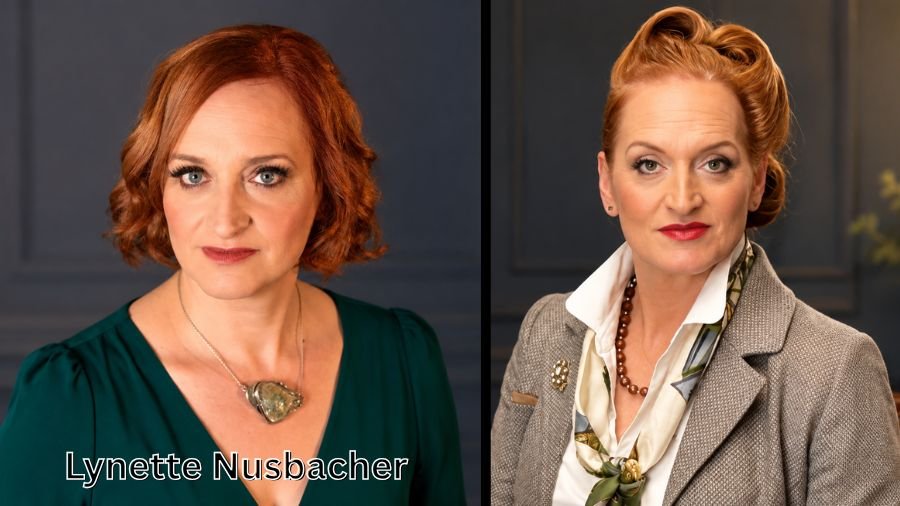
Lynette Nusbacher is a military historian, strategist, author, and former intelligence professional whose career has connected academic research with national security, strategic planning, military education, and television. Readers often search for her because of her long association with the Royal Military Academy Sandhurst, her work with British and Canadian military organisations, her role in UK government strategy, and her appearances as a military expert on historical television programmes. Her academic background includes a BA in History and Economics from the University of Toronto, an MA in War Studies from the Royal Military College of Canada, and a doctorate in Modern History from the University of Oxford.
Quick Bio
| Fact | Verified information |
|---|---|
| Full Name | Dr. Lynette Nusbacher |
| Known As | Lynette Nusbacher |
| Profession | Military historian, strategist, author, lecturer, analyst and consultant |
| Birth Date | 17 December 1966 |
| Birthplace | New York City, New York, United States |
| Education | University of Toronto; Royal Military College of Canada; University of Oxford |
| Academic Qualifications | BA (Honours) History and Economics; MA War Studies; doctorate in Modern History |
| Spouse/Partner | Previously married to Melanie Bright |
| Marriage | Married Melanie Bright in 1998; the marriage ended in divorce in 2010 |
| Children | Two children are publicly reported, but further details are not necessary to establish her professional biography |
| Known For | Military history, strategy, intelligence, national security and historical television |
| Relationship to Military History | She has taught War Studies, written about warfare and appeared as a military expert on television |
| Military Background | Served as an intelligence officer in the Canadian and British armies |
| Government Work | Held senior intelligence and strategic roles connected with the UK Cabinet Office |
| Current Status | Continues professional work in strategy, leadership, consultancy and educational media |
The birth date and marriage details are recorded by IMDb, while the academic and professional credentials are supported by institutional biographies from Windsor Leadership Dialogue and Canada’s Department of National Defence.
Who Is Lynette Nusbacher?
Lynette Nusbacher is a scholar and practitioner whose career has developed at the intersection of military history, strategic analysis, intelligence and organisational leadership. Rather than being known only for television appearances, she has spent much of her professional life working in fields where historical knowledge is applied to contemporary questions about conflict, security and decision-making. Her academic training began with History and Economics at the University of Toronto before progressing to War Studies at the Royal Military College of Canada and doctoral research in Modern History at Oxford. This combination of historical scholarship and military education helped establish the foundation for her later work in government, academia and strategic consulting.
Her public profile grew significantly through teaching and television. At the Royal Military Academy Sandhurst, she became known for teaching War Studies, while her appearances on programmes such as Time Commanders introduced her expertise to a much wider audience. The Canadian Department of National Defence describes her career as including service as an intelligence officer in both the Canadian and British armies, work as a Devil’s Advocate to the Joint Intelligence Committee, and senior academic responsibilities at Sandhurst. These experiences help explain why searches for Lynette Nusbacher often combine apparently different subjects such as military history, intelligence, national security and television.
Background in Military History
Lynette Nusbacher’s connection with military history is grounded in formal academic study as well as practical experience. Her MA in War Studies at the Royal Military College of Canada gave her specialist training in warfare and military affairs, while her doctoral work at Oxford focused on modern history. Her later teaching career at Sandhurst placed her in an institution closely associated with the professional education of British Army officers, giving her an environment in which historical analysis and military practice naturally overlapped.
Her published work has also contributed to her identity as a military historian. Bibliographic records commonly associate her with The Battle of Bannockburn 1314, London’s Civil War: Oliver Cromwell’s Battle for the Capital 1642–46, and War and Conflict. These subjects demonstrate the breadth of her historical interests, from medieval warfare to the English Civil War and broader discussions of conflict. Her work is particularly relevant to readers interested in how historians reconstruct campaigns, logistics, military decisions and the wider political circumstances surrounding warfare.
The title of military historian therefore describes only one part of her professional identity. Her career has also involved strategy and intelligence, areas in which historical understanding can inform assessments of present and future security challenges. The Royal Military College of Canada has described her more recently as a speaker capable of addressing the future of multi-domain warfare, showing how her expertise has extended beyond historical events into contemporary strategic questions.
Marriage or Relationship with Melanie Bright
Lynette Nusbacher was previously married to Melanie Bright, with public records identifying their marriage as beginning in June 1998 and ending in divorce in 2010. IMDb lists Melanie Jane Bright as Nusbacher’s former spouse and records two children from the marriage. Because Melanie Bright is not herself a public figure to the same degree, information about her private life should be treated cautiously, particularly where claims come from biography websites rather than primary or institutional sources.
The relationship is frequently mentioned in online searches about Nusbacher, largely because readers want to understand her family background alongside her professional biography. However, the most reliable approach is to distinguish documented facts from repeated internet claims. The marriage dates and existence of two children are publicly recorded, but detailed stories about the relationship, private conversations, family circumstances or alleged motivations are not established by strong primary sources and should not be presented as fact. There is also no reliable current public evidence in the sources reviewed establishing a present spouse or partner, so her current relationship status is best described as not publicly disclosed.
Parenthood and Family Life
Public records indicate that Lynette Nusbacher and Melanie Bright have two children, but Nusbacher has generally maintained a boundary between her professional public life and the private lives of her family members. That distinction is important when writing a responsible biography because the children’s identities and personal circumstances do not contribute materially to understanding Nusbacher’s work as a military historian, strategist or intelligence professional.
Consequently, there is limited authoritative information that should be repeated about Nusbacher’s children. Some entertainment and biography websites publish names or additional claims, but these details are not necessary for establishing the core facts of her life and career, and they are not supported equally by institutional sources. A useful biographical account can therefore acknowledge that she is a parent of two children while avoiding unnecessary personal information about people who have not built public careers themselves. This approach also keeps the focus on the areas for which Lynette Nusbacher is actually known: scholarship, strategy, military education, intelligence and public history.
Supporting Through Gender Transition
One of the most searched aspects of Lynette Nusbacher’s biography concerns her transition and the public change from her former name and presentation to Lynette Nusbacher. Historical sources document that her professional identity became publicly associated with Lynette Nusbacher during the 2000s, while later television appearances reflected her identity as a woman. The LGBT History UK archive records her transition in connection with the later BBC Time Commanders period, although many detailed claims circulating online about exact dates or medical procedures are not supported by equally authoritative evidence.
The transition is relevant to her public biography because it occurred while she was already established professionally as a lecturer and military historian. Rather than ending her academic and analytical career, her work continued across teaching, strategy, intelligence-related activity and television. The Independent’s Pink List recognised Nusbacher in 2011, 2012 and 2013, reflecting her public visibility as a transgender professional as well as her work in strategy and national security. The 2013 entry described her as a strategic thinker associated with Nusbacher Associates and noted her previous roles in military education and government intelligence.
It is important, however, not to reduce her biography to her transition. Her professional record existed before, during and after the period in which her public identity changed. Her qualifications, military experience, government work, teaching and historical television appearances remain the central evidence for understanding why Lynette Nusbacher became a recognised military historian and strategist.
Life After Her Public Transition
Following the period in which Nusbacher became publicly known by her current name, her professional activity continued across strategy, consulting, education and broadcasting. Her work demonstrates a broader career trajectory than the television clips that often dominate search results. Windsor Leadership Dialogue currently describes her as a strategist who works with leaders on organisational strategy and leads a boutique consultancy, while also noting her experience in government, military intelligence, academia and educational television.
Her continued public work has also included appearances in newer historical productions. IMDb’s current credits list her as a military historian in Suez: 24 Hours That Broke the British Empire in 2026 and as a historian in Chernobyl: 48 Hours to Escape, alongside her continuing expert appearances in Nazis: Threads of Evil. These more recent credits demonstrate that her relationship with television history has continued well beyond her original Time Commanders appearances.
Her professional activity has also expanded into leadership and advisory work. Her current professional profile describes services including strategic planning, executive coaching, corporate training, public speaking and business consulting. An NHS Sussex declaration of interests from January 2026 also identifies her as Chief Executive and Director of Nusbacher and Associates Ltd., a strategy and leadership consultancy.
Career Highlights and Public Recognition
A defining feature of Lynette Nusbacher’s career is the range of institutions in which she has worked. Her public service career included roles as a Senior Intelligence Advisor in the Cabinet Office and work connected with the Strategic Horizons Unit. Windsor Leadership Dialogue says she created the unit, while the Department of National Defence describes her as having served as Devil’s Advocate to the Joint Intelligence Committee. These positions placed her closer to strategic assessment and national security than the conventional image of an academic historian might suggest.
Her military background is equally significant. Canada’s Department of National Defence states that she served as an Intelligence Officer in both the Canadian and British armies, including special projects in Ottawa, Kosovo and Germany. That practical experience provides important context for her later interest in strategy, military operations and intelligence analysis. It also helps explain why her television commentary tends to combine historical narrative with questions about operational choices and strategic consequences.
Academic teaching represents another major part of her career. She taught War Studies at the Royal Military Academy Sandhurst and has also lectured in Intelligence Studies at Brunel University London and Strategic Studies at the University of Reading, according to her Windsor Leadership Dialogue biography. Her academic work and military service therefore developed alongside each other rather than existing as completely separate careers.
Television subsequently broadened her reach. IMDb credits Nusbacher as a military expert, strategist and military historian on Time Commanders, while later credits include Weaponology, World War II: Secrets from Above, Nazis: Threads of Evil and 2026 historical programming. Her television role is best understood as public education: translating military events, strategy and historical evidence into explanations accessible to a general audience.
Her public recognition has not been limited to entertainment. The Independent’s Pink List included her at number 53 in 2011, number 68 in 2012 and number 77 in 2013. The 2012 listing called her a military strategist and lecturer and noted her government work on national security strategies, while the 2013 entry highlighted her strategic work and association with Nusbacher Associates.
Her continuing professional relevance was also evident in 2025, when the Royal Military College of Canada invited her to deliver the annual Haycock Lecture on “World War 3.0.” The Defence Department said the lecture would address the near future of multi-domain warfare across multiple theatres and the spectrum of conflict. That invitation illustrates how her expertise has evolved from studying historical warfare to discussing emerging strategic challenges.
Why People Search for Lynette Nusbacher
Search interest around Lynette Nusbacher comes from several overlapping parts of her life. Some readers discover her through Time Commanders or other history documentaries and want to know who the military expert was behind the analysis. Others encounter her name through discussions of British national security, military strategy or Sandhurst and want to understand her professional qualifications. A third group searches for biographical information about her education, marriage to Melanie Bright, children and transition. These different search motivations explain why her name appears across history, television, military and biography-related searches.
Her academic credentials are another reason for sustained interest. A doctorate from Oxford, a War Studies master’s degree from the Royal Military College of Canada and an honours degree in History and Economics from the University of Toronto create a clear academic foundation for her work. Her experience as an intelligence officer and government strategist adds a practical dimension that differentiates her from historians whose careers have remained exclusively within universities.
People also search for Nusbacher because her career crosses professional categories that are usually treated separately. She has been a military historian and lecturer, but also a strategist, intelligence professional, consultant and television contributor. Her recent television credits and strategic work show that this combination remains relevant rather than being limited to an earlier period of her career.
Privacy, Accuracy and Public Information
A reliable biography of Lynette Nusbacher should separate documented professional information from speculation about her private life. Her education, military service, government roles, academic work, public lectures and television credits can be supported through institutional biographies, government records, professional profiles and established media archives. By contrast, many websites repeat unverified claims concerning her family, relationships, finances, residence and transition, sometimes presenting the same unsourced information as though repetition itself proves accuracy.
For that reason, details such as a current spouse, exact residence, private family arrangements and financial worth should not be stated as established facts unless supported by a strong current source. The available evidence confirms that Nusbacher was married to Melanie Bright from 1998 until their divorce in 2010 and that they have two children, but it does not provide a reliable basis for publishing extensive details about those children’s private lives.
The same principle applies to claims about her transition. Her public identity and professional history are well documented, but internet sources frequently provide conflicting dates and highly specific descriptions of private medical matters. Those details are not required to understand her career and should not be treated as verified simply because they appear on multiple biography websites. The strongest public record instead shows continuity: Nusbacher remained active in military history, strategy, intelligence-related work, education and television.
Conclusion
Lynette Nusbacher has built an unusual career that combines military history with practical strategy, intelligence, education and public communication. Her academic path through the University of Toronto, Royal Military College of Canada and Oxford established a strong historical foundation, while her service in Canadian and British military environments and work connected with the UK Cabinet Office brought practical experience in intelligence and national security. Her years teaching War Studies at Sandhurst and her television appearances then made that expertise accessible to audiences beyond military and academic institutions. Her marriage to Melanie Bright and parenthood form part of her personal history, but the strongest evidence of her lasting public significance remains her professional record. Recent strategic appointments, public lectures and television credits show that Lynette Nusbacher continues to work across history, strategy and contemporary security rather than being remembered solely for an earlier television career.
FAQs
Who is Lynette Nusbacher?
Lynette Nusbacher is a military historian, strategist, author and former intelligence professional known for academic teaching, government strategy and historical television appearances.
What is Lynette Nusbacher known for?
She is known for military history, War Studies teaching, intelligence work, strategic analysis and television programmes including Time Commanders and later documentaries.
Was Lynette Nusbacher married to Melanie Bright?
Yes. Public records identify Melanie Bright as Lynette Nusbacher’s former spouse, with their marriage beginning in 1998 and ending in divorce in 2010.
Does Lynette Nusbacher have children?
Public records indicate that Lynette Nusbacher and Melanie Bright have two children, although responsible biographies should avoid unnecessary details about their private lives.
Where did Lynette Nusbacher study?
She earned an honours BA in History and Economics at Toronto, an MA in War Studies at RMC Canada, and a doctorate from Oxford.
Is Lynette Nusbacher still a military historian?
Her current work spans strategy, leadership consultancy and educational media, while recent television credits continue to identify her as a military historian and historian.
More read: Chris Chittell