Marilyn Kroc Barg: The Verified Facts About Ray Kroc’s Only Daughter
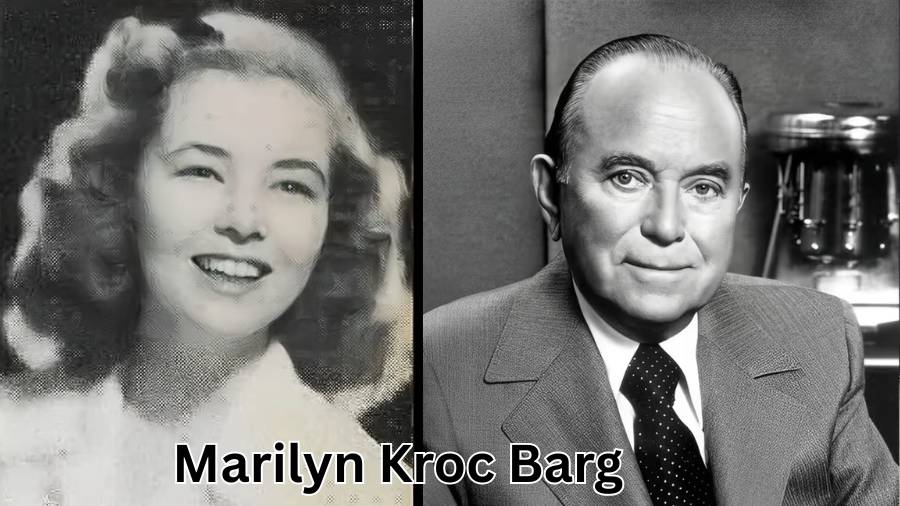
Marilyn Kroc Barg was the only child of Ray Kroc, the salesman-turned-executive who built McDonald’s into the largest fast food company in the world, and she remains one of the most searched yet least documented figures connected to that story. People look her up for an understandable reason: the McDonald’s origin story has been told in books, a Hollywood film and dozens of documentaries, yet the woman at the centre of Ray Kroc’s private life is barely mentioned in any of them. What makes her case unusual is not that the information is hidden, but that the internet has quietly filled the silence with invented detail — board appointments she never held, charities she never founded, careers she never had. This article separates the small body of verifiable fact from the much larger body of repetition, and explains why a woman who lived a deliberately private life in suburban Illinois still draws thousands of searches half a century after her death.
Quick Bio
| Detail | Information |
|---|---|
| Full Name | Marilyn Janet Kroc Barg |
| Known As | Lynn |
| Profession | Not publicly documented; no verified career record exists |
| Nationality | American |
| Birthplace | Chicago, Cook County, Illinois, United States |
| Date of Birth | 15 October 1924 |
| Education | Not publicly disclosed |
| Father | Raymond Albert Kroc (1902–1984), McDonald’s businessman |
| Mother | Ethel Janet Fleming, Ray Kroc’s first wife |
| Siblings | None; she was an only child |
| Spouses | Sylvester Nordly Nelson (married c. 1949); Walter James “Bingo” Barg (married 1960) |
| Children | None listed in publicly available records |
| Known For | Being the only child of McDonald’s figurehead Ray Kroc |
| Relationship to Ray Kroc | Daughter and sole biological child |
| Date of Death | 11 September 1973, Arlington Heights, Cook County, Illinois |
| Resting Place | Memorial Park Cemetery, Skokie, Cook County, Illinois |
| Public Presence | None; no known interviews, memoirs or public appearances |
Who Is Marilyn Kroc Barg?
Marilyn Kroc Barg was born in Chicago on 15 October 1924, roughly two years after her parents, Ray Kroc and Ethel Janet Fleming, married, and she grew up in an Illinois household that had nothing to do with hamburgers or franchising for the first three decades of her life. Her father was then a paper cup salesman, a jobbing pianist and later a travelling representative for a milkshake mixer manufacturer — work that kept him on the road for long stretches and produced a comfortable but unremarkable middle-class living rather than a fortune. Genealogical records list her full name as Marilyn Janet Kroc, later Barg by marriage, and note that she was commonly called Lynn within her family. She was an only child, and she stayed one: neither of Ray Kroc’s two subsequent marriages produced further children, which means that every biological descendant question about the Kroc line runs through her. What distinguishes her from most children of famous American businessmen is the near-total absence of a public footprint. She gave no interviews that survive in accessible archives, wrote no memoir, and appears in no photograph collection of any size. The record of her life is essentially a civil one — birth, marriage, residence, death — and any honest biography has to begin by acknowledging that.
Background and the Question of a Documented Career
Search results routinely describe Marilyn Kroc Barg as a businesswoman, a philanthropist, a competitive equestrian and a McDonald’s board member, and none of these descriptions can be traced to a primary source. No verified record places her in any operational or leadership role at McDonald’s Corporation, and her name does not appear in the standard corporate histories of the company, including John F. Love’s McDonald’s: Behind the Arches, which remains the most detailed institutional account of the firm’s early decades. The equestrian claim, the art collecting claim and the medical research funding claim all originate from a cluster of recently published, largely unattributed biography websites that copy one another, and they cannot be corroborated against newspaper archives, corporate filings or the published Kroc biographies. This does not prove she had no working life or no interests outside the home — a woman in her position may well have had both — but it does mean that anyone stating those things as fact is guessing. Where a serious biographical record would list education, employment and professional affiliations, the honest entry for Marilyn Kroc Barg is that these details have not been publicly disclosed. Readers should treat any site that fills those gaps confidently as a warning sign rather than a source.
Marriage to Sylvester Nelson and Walter James “Bingo” Barg
Marilyn Kroc Barg married twice, and it is her second marriage that gave her the surname most people now search for. Genealogical records indicate she first married Sylvester Nordly Nelson around 1949, when she was in her mid-twenties, and that the marriage later ended; the length of that union and the circumstances of its end are not documented in any accessible public source. In 1960 she married Walter James Barg, referred to across records by the nickname “Bingo,” and she remained married to him until her death thirteen years later. The timing here is worth noticing, because it places her second marriage in the exact window when her father’s professional life was transforming: Ray Kroc had begun franchising the McDonald brothers’ system in 1955 and bought the company outright in 1961 for $2.7 million, the year after her wedding. Whatever the internal dynamics of the family were during that period, they were not conducted in public, and no reliable account describes how she and her husband related to the business her father was assembling. Records associate the couple with the Chicago area, specifically Evanston and later Arlington Heights, both suburbs within easy reach of the city where she was born.
Parenthood and Family Life
Publicly available records do not list any children from either of Marilyn Kroc Barg’s marriages, and the responsible position is to leave that as a gap rather than to fill it. Several websites assert flatly that she was childless; others hint at descendants without naming any; neither approach is supported by documentation that a reader can check. What can be described with confidence is the shape of the family around her. Her parents, Ray Kroc and Ethel Fleming, had met in 1919 and married in 1922, and their marriage lasted until 1961 — meaning it ended, after nearly four decades, in the same year her father completed the McDonald’s buyout and at a point when Marilyn herself was thirty-six and newly remarried. Ray Kroc married Jane Dobbins Green in 1963 and divorced her in 1968, then married Joan Mansfield Smith in 1969. Joan Kroc would become one of the most consequential philanthropists in American history, but she entered the family only four years before Marilyn’s death, and the nature of the relationship between the two women has never been documented. The frequent online confusion between Marilyn Kroc Barg and Joan Kroc — two entirely different people, a generation apart — is one of the most persistent errors in this subject area.
Living With Illness and the Circumstances of Her Death
Marilyn Kroc Barg died on 11 September 1973 in Arlington Heights, Illinois, at the age of forty-eight, and was buried at Memorial Park Cemetery in Skokie. The date, place and burial location are consistent across cemetery records and genealogical databases and can be treated as settled. The cause of death is a different matter. A large number of secondary websites state that she died from complications of diabetes, and some specify Type 1 diabetes, but that claim has not been verified against a death certificate or a contemporaneous obituary, and it should be reported as widely repeated rather than confirmed. There is one piece of circumstantial context that makes the diabetes account plausible without proving it: the Kroc Foundation, established by her father, funded research, treatment and education across several conditions including diabetes, alongside alcoholism, arthritis and multiple sclerosis. A foundation’s research priorities can reflect a family’s private experience, but they can equally reflect a philanthropist’s broader interests, and inferring a diagnosis from a grant portfolio is not evidence. For anyone researching this seriously, Chicago-area newspaper archives from mid-September 1973 are the place where a genuine obituary would be found.
Life After the McDonald’s Buyout: The Years She Actually Lived Through
Understanding what Marilyn Kroc Barg’s final decade looked like from the outside requires understanding where McDonald’s stood at the time, because the popular image of the Kroc family belongs almost entirely to a period she did not live to see. When she died in September 1973, her father had just retired from running the company that year; he would not buy the San Diego Padres until 1974, would not publish his memoir Grinding It Out until 1977, and would not die until January 1984, outliving his only child by more than a decade. The Kroc fortune that people associate with the family name — a personal estate of roughly $600 million at his death, and the multi-billion-dollar philanthropic estate that Joan Kroc distributed in 2003 — accumulated largely after Marilyn was gone. This chronology matters because it dismantles a common assumption embedded in the searches themselves: that she lived as a fast food heiress. She spent her childhood in a household of modest means, her middle years alongside a father who was building something rather than enjoying it, and she died before the wealth and public recognition reached their peak. She was, in a real sense, a person from an earlier chapter of the story than the one most readers have in mind.
Claims About Marilyn Kroc Barg That Do Not Hold Up
Because so much circulating material about Marilyn Kroc Barg is unreliable, the most useful thing a biography can offer is a clear list of what to discard, and the founding of Ronald McDonald House Charities sits at the top of it. That claim is chronologically impossible: the first Ronald McDonald House opened in Philadelphia in 1974, a year after her death, and it came about through the efforts of Philadelphia Eagles player Fred Hill, whose daughter was being treated for leukaemia, paediatric oncologist Dr Audrey Evans, team executive Jimmy Murray and local McDonald’s franchise operators. The Kroc Foundation is credited with helping establish the organisation institutionally, and it is likely that the family name in that credit is what mutated, through repetition, into Marilyn’s supposed authorship of it. Other claims fail on internal inconsistency rather than chronology. One widely syndicated page gives her birth date as 22 April 1928 and reverses the order of her two husbands; several assign her a precise net worth figure at death with no source of any kind; others describe her hair colour, eye colour, personality and dress sense in confident detail that could not possibly be documented for a woman who left no public record. When multiple pages contradict each other on facts as basic as a birth date, none of them should be trusted on anything subtler.
Why People Search for Marilyn Kroc Barg
The search interest in Marilyn Kroc Barg is driven less by curiosity about her than by curiosity about the gap she represents in a story people already know well. The Founder, the 2016 film starring Michael Keaton, brought Ray Kroc’s ruthlessness and ambition to a large audience and made his personal life a subject of interest, but the film gives his daughter no meaningful presence — and viewers who go looking afterwards find almost nothing. A second driver is genealogical: because she was Ray Kroc’s only biological child, questions about who inherited what, and whether any direct Kroc descendants exist, inevitably route through her name. A third is the well-documented public appetite for the private cost of extraordinary business success, the sense that a man who standardised the American meal must have had a family life worth examining. What readers usually want, in other words, is a fuller picture of Ray Kroc’s daughter than the official histories provide. The uncomfortable answer is that the fuller picture may not exist in any accessible form, and the sites promising it are supplying fiction to meet demand rather than research.
Privacy, Accuracy and Public Information
There is an ethical dimension to writing about Marilyn Kroc Barg that separates her from most people who attract this volume of search traffic, and it deserves stating plainly. She was not a public figure. She held no office, sought no platform, ran no company and courted no coverage, and the era she lived in — she died in 1973, before the internet, before celebrity-adjacent people were expected to have a documented existence — offered a degree of privacy that simply no longer applies. A private person does not forfeit that privacy because a relative became famous, and the appropriate standard for writing about her is therefore stricter, not looser, than it would be for a public figure. That means reporting the civil record accurately, attributing everything else, marking unverified claims clearly as unverified, and declining to invent inner life, personality or motive to make an article feel more complete. Anyone conducting genuine research on her would be better served by Lisa Napoli’s 2016 book Ray and Joan, by Ray Kroc’s own Grinding It Out, and by contemporaneous Chicago newspaper archives than by any of the biography pages currently ranking for her name, this one included.
Conclusion
Marilyn Kroc Barg’s life resists the shape that biography usually wants to give it, and that resistance is itself the most honest thing that can be said about her. She was born in Chicago in 1924 to Ray Kroc and Ethel Fleming, married twice, lived in the northern suburbs of the city she was born in, and died at forty-eight in September 1973, buried at Memorial Park Cemetery in Skokie — and beyond that skeleton, the verified record thins to almost nothing. The temptation, faced with a name attached to one of the most recognisable corporate stories in the world, is to build outwards from the skeleton until the reader feels satisfied. Dozens of websites have done exactly that, and the result is a body of confident, mutually contradictory invention that has now largely displaced the truth in search results. Ray Kroc’s daughter deserves better than that, and so does anyone trying to learn about her. The accurate account is shorter and less satisfying, but it has the advantage of being true: a private woman, an unremarkable public footprint, a life that ended before the fortune and the fame it is now associated with had fully arrived.
FAQs
Who was Marilyn Kroc Barg?
She was the only child of McDonald’s businessman Ray Kroc and his first wife, Ethel Fleming, born in Chicago in 1924 and known privately as Lynn.
When did Marilyn Kroc Barg die?
She died on 11 September 1973 in Arlington Heights, Illinois, at the age of 48, and was buried at Memorial Park Cemetery in Skokie.
Did Marilyn Kroc Barg work at McDonald’s?
No verified record places her in any McDonald’s role. Claims that she sat on the board or led company projects appear only on unsourced websites.
Who were Marilyn Kroc Barg’s husbands?
Genealogical records list Sylvester Nordly Nelson, whom she married around 1949, and Walter James Barg, known as Bingo, whom she married in 1960 and remained with.
Did Marilyn Kroc Barg found Ronald McDonald House Charities?
No. The first Ronald McDonald House opened in Philadelphia in 1974, a year after her death, through work by Fred Hill, Audrey Evans and Jimmy Murray.
Did Marilyn Kroc Barg have children?
Publicly available records do not list any children from either marriage. Because nothing has been confirmed, it would be wrong to assume or speculate either way.
More read: Tallulah Ruth Dash