Robert Attenborough: David Attenborough’s Son and Academic Career
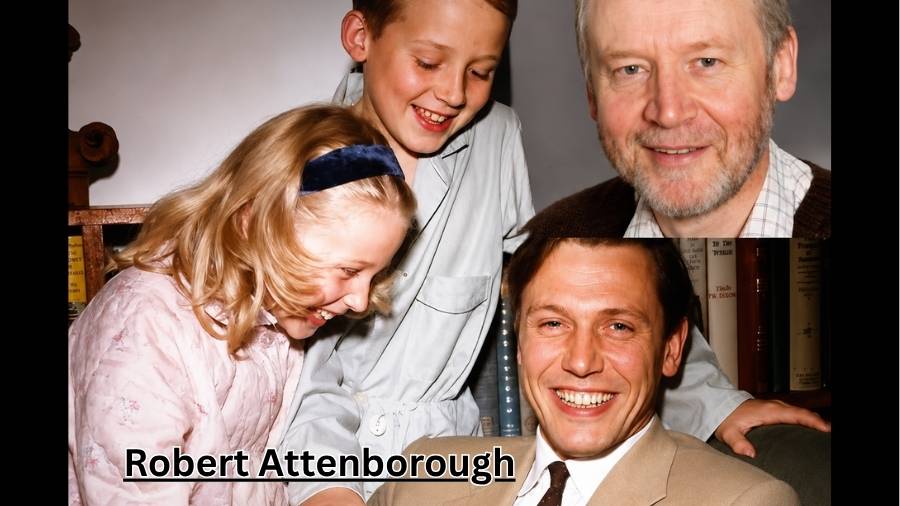
Robert Attenborough is a British biological anthropologist and academic researcher best known to the public as David Attenborough’s son, but his own professional career has developed largely away from television and celebrity culture. His academic work has concentrated on human population biology, health, evolutionary anthropology and the peoples of New Guinea, particularly Papua New Guinea. He has been associated with the Australian National University (ANU) and the University of Cambridge, where his research interests include human population biology, health, human evolutionary and behavioural ecology, and biological anthropology.
Quick Bio
| Fact | Verified Information |
|---|---|
| Full Name | Robert Attenborough |
| Known As | Dr Robert Attenborough |
| Profession | Biological anthropologist, academic and researcher |
| Field | Human population biology, health and evolutionary anthropology |
| Nationality | British |
| Birth Year | Not reliably disclosed by an authoritative public source |
| Birthplace | Not reliably disclosed by an authoritative public source |
| Father | Sir David Attenborough |
| Mother | Jane Elizabeth Ebsworth Oriel |
| Sibling | Susan Attenborough |
| ANU Position | Honorary Senior Lecturer, ANU College of Arts and Social Sciences |
| Cambridge Position | Senior Fellow, McDonald Institute for Archaeological Research |
| Research Focus | Human population biology and health, especially in New Guinea |
| Academic Region of Interest | Oceania and the Pacific |
| Public Profile | Primarily academic rather than celebrity-focused |
Who Is Robert Attenborough?
Robert Attenborough is an academic whose professional identity is rooted in biological anthropology rather than broadcasting. The Australian National University identifies him as an Honorary Senior Lecturer in the College of Arts and Social Sciences, while the University of Cambridge lists him as a Senior Fellow of the McDonald Institute for Archaeological Research. Cambridge’s official profile places his work within biological anthropology and identifies his research expertise as human population biology and health, particularly in New Guinea, alongside human evolutionary and behavioural anthropology.
For many people, however, the first reason they encounter the name Robert Attenborough is his family connection. He is the son of David Attenborough, the internationally recognised broadcaster, natural historian and environmental communicator. Robert and his sister Susan are the two children of David and his late wife, Jane Elizabeth Ebsworth Oriel. Public reporting has consistently described both children as considerably more private than their famous father, meaning that comparatively little verified information about Robert’s personal life is available.
That relative privacy makes Robert’s academic record particularly important when assessing his life and career. Rather than relying on his family name, his professional profile can be traced through university records and research publications, which document a sustained interest in human populations, health and the biological and cultural history of New Guinea.
Background in Biological Anthropology
Robert Attenborough’s professional work sits at the intersection of biological anthropology, human evolutionary studies and population research. Cambridge describes his expertise in terms of human population biology and health and human evolutionary and behavioural ecology, with Oceania and the Pacific identified as a geographical area of special interest. This places his work within a discipline concerned with understanding human biological variation, adaptation, population history and the interaction between humans and their environments.
New Guinea has been particularly significant in his research. His academic output includes the 2007 chapter “Health changes in Papua New Guinea: from adaptation to double jeopardy?”, published in Health Change in the Asia-Pacific Region: Biocultural and Epidemiological Approaches by Cambridge University Press. The work considers changing health patterns in Papua New Guinea, including the relationship between infectious disease, nutrition, modernization, development and changing lifestyles.
Another example is his 2010 chapter “Genes, languages and agriculture in New Guinea population history,” published by Pacific Linguistics in a volume honouring linguist Andrew Pawley. The publication illustrates the interdisciplinary character of his research, bringing together biological and cultural evidence when considering the history of New Guinea’s populations.
Marriage or Relationship with a Partner
Reliable public sources do not provide sufficient information to establish Robert Attenborough’s current or historical marital status, spouse or long-term partner with confidence. Some biography websites make contradictory claims about whether he is married or has children, but those claims are not supported by the official university profiles or authoritative academic records available for Robert. For that reason, a responsible biography should not present an unnamed or disputed spouse as established fact.
This lack of information is consistent with Robert’s generally low public profile. Unlike David Attenborough, whose professional life has involved decades of television appearances, interviews, books and public environmental campaigns, Robert’s public footprint is principally connected with universities and scholarly research. Consequently, information about his private relationships has not been documented to the same standard as his academic affiliations. Where information has not been reliably disclosed, it is more accurate to say so than to repeat unsupported biographical claims.
Parenthood and Family Life
Robert Attenborough grew up in the family of David Attenborough and Jane Elizabeth Ebsworth Oriel, alongside his sister Susan Attenborough. Family-history records identify Robert and Susan as the couple’s two children, while contemporary reporting also identifies them as David’s children. However, detailed information about Robert’s own family life, including the identities of any spouse or children, has not been reliably established through authoritative public sources and should therefore be treated as undisclosed.
His connection with David Attenborough nevertheless provides an interesting family context for his career. David became one of Britain’s most recognisable natural-history broadcasters, while Robert pursued an academic path concerned with humans, evolution and population biology. The two careers are different, but both are connected to the study and understanding of the natural world. Public accounts of David’s family have also noted that the demands of his broadcasting career meant he was frequently away when his children were young, something he later discussed as a personal regret.
Life After the Death of Jane Elizabeth Ebsworth Oriel
The death of Robert’s mother, Jane Elizabeth Ebsworth Oriel, was a significant event in the Attenborough family. Jane married David Attenborough in 1950, and the couple remained together for more than four decades before her death in 1997. Public accounts state that she died following a brain haemorrhage. David later wrote and spoke about the profound effect her death had on him, including how returning to work helped him cope with the loss.
For Robert specifically, however, there is not enough reliable public material to describe his personal response to his mother’s death in detail. This distinction matters because accounts of David’s grief are much more extensively documented than Robert’s experience. A fact-focused biography should therefore avoid attributing emotions, decisions or private experiences to Robert unless he has publicly described them himself.
Career Highlights and Public Recognition
Robert Attenborough’s most important professional achievement is the body of academic research that has established him as a specialist in biological anthropology and human population studies. ANU describes his most recent research focus as health, nutrition and demography in Papua New Guinea, while Cambridge continues to list him among its Senior Fellows at the McDonald Institute for Archaeological Research.
His published work demonstrates the breadth of this academic interest. His 2007 research on health changes in Papua New Guinea examined whether conventional models of modernization and epidemiological transition adequately explain changing patterns of health in the country. The study considered the continuing importance of communicable diseases alongside increasing lifestyle-related and ageing-associated health problems.
His 2010 contribution on genes, languages and agriculture in New Guinea population history similarly reflects an interdisciplinary approach. Rather than treating population history as a purely genetic question, the research connects biological evidence with language and agricultural history.
Cambridge’s current profile also confirms that his work extends beyond a single subject area. His listed expertise includes human population biology and health as well as human evolutionary and behavioural ecology, with biological anthropology and human evolutionary studies forming important parts of his academic classification.
His recognition is therefore primarily scholarly rather than celebrity-based. While the Attenborough surname naturally attracts public interest, Robert’s university affiliations and research publications provide the strongest evidence for assessing his professional contribution.
Why People Search for Robert Attenborough
Interest in Robert Attenborough is largely driven by the question of who David Attenborough’s son is and what he does away from his father’s extraordinary broadcasting career. Searchers often encounter Robert’s name while researching David Attenborough’s children, family background or private life, but his academic career provides a more substantial story than his famous parentage alone.
Robert is particularly interesting because he followed a scientific and research-oriented path rather than becoming a television personality. His association with ANU and Cambridge, together with his work on Papua New Guinea, gives him an independent professional identity. The contrast is notable: David became famous for communicating natural history to millions of viewers, whereas Robert’s work has largely involved academic investigation of human populations, health and evolutionary anthropology.
The family connection also explains why relatively modest academic references can generate considerable public interest. Robert himself has not built a celebrity profile around being David Attenborough’s son. Instead, the available institutional evidence points to a long-standing academic career whose subject matter is sufficiently distinctive to stand on its own.
Privacy, Accuracy and Public Information
Robert Attenborough’s biography illustrates why public-interest family stories should be separated from verified personal information. His relationship to David Attenborough, his parents and sister, and his academic affiliations can be supported by public sources, but details such as an exact birth date, current residence, spouse, children, personal finances and private activities are either unavailable or inconsistently reported. Some online biography pages provide specific claims that cannot be independently confirmed through the stronger sources available.
For that reason, this profile prioritises university records and documented academic publications over low-authority biography sites. Cambridge’s official directory confirms Robert’s Senior Fellow position and research areas, while ANU confirms his Honorary Senior Lecturer status and research focus. His published chapters provide additional evidence of his scholarly work. These sources offer a much stronger foundation for understanding Robert Attenborough than speculative details about his private life.
Conclusion
Robert Attenborough is much more than a name connected to one of Britain’s most famous broadcasters. As David Attenborough’s son, he naturally attracts curiosity about the Attenborough family, yet his own career has developed in a distinctly academic direction. His work in biological anthropology, human population biology, health and evolutionary anthropology—especially his research relating to New Guinea—has established an independent scholarly identity. His continuing association with ANU and the University of Cambridge provides authoritative evidence of that career, while his limited public presence means that responsible reporting must distinguish confirmed facts from speculation.
FAQs
Who is Robert Attenborough?
Robert Attenborough is a British biological anthropologist and academic researcher associated with ANU and Cambridge, and he is the son of broadcaster David Attenborough.
Is Robert Attenborough David Attenborough’s son?
Yes. Robert is one of two children of David Attenborough and his late wife, Jane Elizabeth Ebsworth Oriel; his sister is Susan Attenborough.
What does Robert Attenborough do?
Robert Attenborough works in biological anthropology, with research interests including human population biology, health, evolutionary anthropology and New Guinea.
Where does Robert Attenborough work?
ANU identifies Robert as an Honorary Senior Lecturer, while Cambridge lists him as a Senior Fellow at the McDonald Institute for Archaeological Research.
What is Robert Attenborough known for?
He is known academically for research involving human population biology, health and New Guinea, while the wider public mainly recognises him through his relationship with David Attenborough.
Is Robert Attenborough married?
Reliable authoritative sources do not publicly establish Robert Attenborough’s current marital status or spouse, so specific claims about his marriage should be treated cautiously.
More read: Maria Keegan