Teruko Nakagami: The Quiet Strength Behind Billy Dee Williams’ Marriage
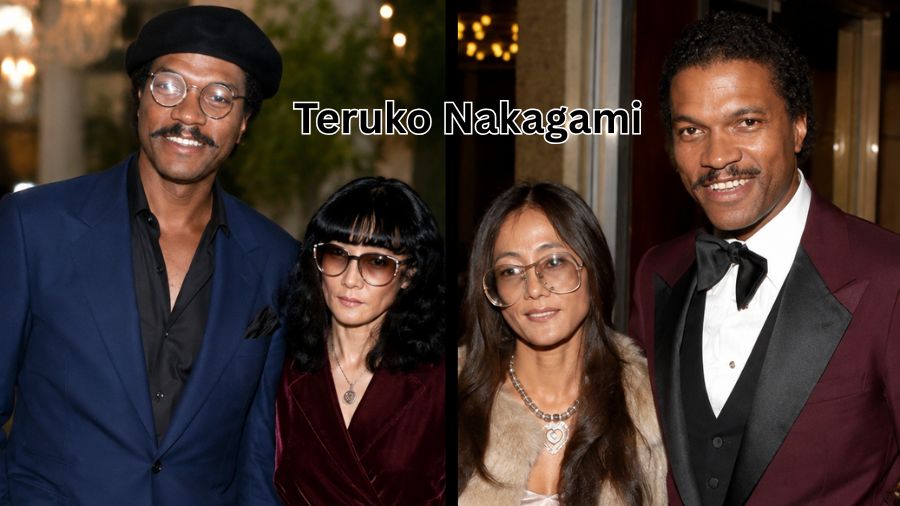
Teruko Nakagami has spent more than sixty years standing beside two of America’s most recognisable artists while deliberately refusing to become a public figure herself, and that contradiction is exactly why so many people look her up. She is best known as Billy Dee Williams’ wife, the woman the Star Wars actor married in December 1972 and has remained legally bound to ever since, but her story reaches back further than Hollywood. Before she met Williams, she was married to Wayne Shorter, the saxophonist and composer whose Blue Note recordings helped define modern jazz, and her face appears on one of the most celebrated album covers of the 1960s. Readers searching for Teruko Nakagami usually want to know who she actually is, how her marriage survived a divorce filing, and what became of her two daughters. This article answers those questions using verifiable public information, and it is equally clear about the many details of her life that have never been publicly disclosed.
Quick Bio
| Detail | Information |
|---|---|
| Full Name | Teruko Nakagami (also written as Teruka Nakagami) |
| Also Known As | Irene Nakagami, a name reported in multiple published profiles and in Wayne Shorter biographies |
| Profession | Not publicly documented; she has never pursued a public-facing career |
| Nationality | American, of Japanese descent |
| Birthplace | Not confirmed by any authoritative source; widely reported as Chicago, Illinois |
| Birth Year | Not publicly confirmed |
| Education | Not publicly disclosed |
| First Marriage | Wayne Shorter, whom she met in 1961; the couple separated in 1964 |
| Current Marriage | Billy Dee Williams, married on 27 December 1972 |
| Children | Miyako Shorter, born 1962, and Hanako Williams, born 1973 |
| Grandchildren | Two, named by Williams in interviews as Finnegan and Lucy |
| Known For | Her long marriage to Billy Dee Williams and her appearance on the cover of Shorter’s album Speak No Evil |
| Relationship to Billy Dee Williams | Third wife, and the longest of his three marriages |
| Current Residence | Not confirmed; the family has been based in the Los Angeles area for decades |
| Public Presence | No verified social media accounts; extremely rare public appearances |
Who Is Teruko Nakagami?
Teruko Nakagami is a Japanese American woman who has been married to actor, painter and author Billy Dee Williams since 1972, and who was previously married to jazz saxophonist Wayne Shorter. That two-sentence summary is, honestly, close to the limit of what can be stated with confidence, and it is worth saying so plainly at the outset because the internet is full of confident-sounding detail about her that no reliable source supports. She has never given an interview, never published a memoir, never sat for a profile, and never built a public career that would generate a documentary record. What exists instead are traces: a marriage date recorded in reference works, a photograph credit on a 1966 Blue Note record sleeve, dedications attached to jazz compositions, a handful of paparazzi photographs from Hollywood premieres in the 1970s and 1980s, and passing mentions in her husband’s interviews and his 2024 memoir. Piecing those traces together produces a real and coherent picture of a woman who chose privacy at a moment when almost everyone around her was chasing visibility, but it does not produce the tidy biography that search engines reward. Understanding Teruko Nakagami properly means accepting that the interesting part of her story is partly the silence itself, and that the honest version of her life has gaps in it.
Background in the Arts World Without a Public Career
Nakagami’s background has never been documented in the way a public figure’s would be, and no verified account of her upbringing, schooling, or working life exists in any reliable source. Numerous celebrity biography websites state that she was born in Chicago in 1946, that her original given name was Irene, and that she and a twin sister were sent to a Japanese American internment camp in California as young children. These claims circulate widely, but they repeat each other rather than any original documentation, and the internment detail does not survive basic scrutiny, since the camps were closed by 1946. A separate claim, that she was a Japanese film actress who appeared in productions such as The Yakuza and Lady Snowblood, appears to be a straightforward case of mistaken identity and is not supported by any cast record. What can be said is that by 1961 she was moving in New York’s jazz circles, which is where Shorter met her, and that by the early 1970s she was part of the Los Angeles film world through Williams. Her connection to the arts, then, is documented and genuine, but it is a connection by proximity and marriage rather than through a career of her own. Any article claiming detailed knowledge of her profession, income, or education is inventing it.
Marriage and Relationship with Billy Dee Williams
Teruko Nakagami married Billy Dee Williams on 27 December 1972, becoming his third wife after model Audrey Sellers, whom he married in 1959, and actress Marlene Clark, whom he married in 1968 and divorced in 1971. The timing matters: 1972 was the year Lady Sings the Blues turned Williams into a national sex symbol opposite Diana Ross, and the marriage began just as his fame was about to become overwhelming. It has lasted far longer than either of his previous marriages and longer than most Hollywood unions of that era, though not without serious rupture. Williams filed for divorce in 1993, and his representatives described it at the time as an amicable parting rather than a contested one. Standard reference sources record that the couple reconciled and were living together again by 1997, while a 2024 PEOPLE interview tied to his memoir framed it differently, saying he separated from her in 1993 but remained legally married. Both accounts agree on the essential outcome, which is that the divorce was never finalised and that Nakagami has been Billy Dee Williams’ wife continuously since 1972. Williams has also been candid, particularly in What Have We Here?: Portraits of a Life, that infidelity featured in all three of his marriages and that his arrangement with Nakagami was at times an open one. Asked in a 2024 interview how the marriage had lasted, he answered with characteristic dryness that even at home “she lives in her quarters and I live in mine.”
Parenthood and Family Life
Family is the one area where Teruko Nakagami’s influence is clearly visible in the public record, because both of her daughters are documented and both have had their names attached to enduring work. Miyako Shorter, born in 1962, is her daughter with Wayne Shorter, and Shorter dedicated the compositions “Miyako” and “Infant Eyes” to her; some of his catalogue is even copyrighted under the name Miyako Music, which means his daughter’s name is embedded in the legal architecture of a major jazz songbook. Hanako Williams, born in 1973, is her daughter with Billy Dee Williams, and reporting from the memoir period indicates Hanako has worked in the Los Angeles art world. When Nakagami married Williams, the household became a blended one that also included Corey Dee Williams, his son with Audrey Sellers, born in 1960. Williams has spoken warmly about that period of fatherhood, describing his daughter’s arrival as a gift, and a family photograph from 1973 showing him with Nakagami and a newborn Hanako appears in his memoir. The family has since extended to two grandchildren, whom Williams named in a 2024 interview as Finnegan, then approaching seventeen, and Lucy, then thirteen, whom he described as a talented painter. Nakagami’s role across these decades appears to have been the stabilising one, though it is worth noting she has never described it in her own words.
Supporting a Marriage Through Hollywood’s Most Turbulent Decades
The stretch between 1972 and the mid-1990s placed extraordinary pressure on the marriage, and the public record shows both the strain and the endurance. Williams became one of the most visible Black leading men in American film during the 1970s, followed that with Lando Calrissian in The Empire Strikes Back and Return of the Jedi, added a long-running run of Colt 45 advertisements in the 1980s, and later appeared as Harvey Dent in Tim Burton’s Batman. Fame on that scale rarely leaves a household untouched. Contemporary reporting from the period described a couple who avoided the Hollywood party circuit in favour of quiet evenings at home, and who raised their family in an unpretentious house rather than a showpiece, though Williams did buy a contemporary home in the Trousdale Estates area of Beverly Hills in 1984 and kept it until 2012. In 1996, the year after the divorce filing, Williams was arrested following an allegation by a live-in girlfriend; the woman later said the incident was her fault and hoped the case would be dropped, and he ultimately agreed to counselling sessions in a plea arrangement. He has since said he never abused women. Nakagami made no public statement at any point during these events, before, during, or after, which is entirely consistent with how she has handled every other chapter of her public association with him.
Life After the 1993 Divorce Filing
The most commonly misunderstood part of Teruko Nakagami’s story is what happened after 1993, and it is worth separating what is known from what is repeated. Many biography sites state that the couple divorced and then remarried in 1997. There is no evidence of a second wedding ceremony, and no reliable source records one. What the sources actually support is that a divorce petition was filed after roughly twenty-three years of marriage, that the process was never completed, and that by 1997 the couple were living under the same roof again. Williams himself later put a more pragmatic gloss on it, indicating that staying legally married made financial sense. Whichever framing is closer to the private truth, the practical result has held for close to three decades: as of 2026 the marriage remains legally intact, making it one of the longest-standing marriages in Hollywood and by far the longest of Williams’ three. What is striking is how little Nakagami’s public profile changed across that entire arc. She did not give a post-separation interview, did not appear in the tabloid ecosystem that thrives on exactly this kind of story, and did not use the moment to build a platform. She simply continued, which in an attention economy is its own kind of statement.
Cultural Recognition and the Speak No Evil Album Cover
Although Teruko Nakagami never sought recognition, she holds a permanent and genuinely notable place in jazz history through a single photograph. The cover of Wayne Shorter’s Speak No Evil, recorded in December 1964 and released by Blue Note in June 1966, features a portrait of Nakagami, and the album is regularly ranked among the finest records in the Blue Note catalogue and among Shorter’s best work. That means her image sits on a sleeve that has been reissued, framed, referenced and reprinted continuously for sixty years, familiar to listeners who have no idea whose face they are looking at. It is a form of fame almost perfectly inverted from her husband’s. One clarification is needed here, because a claim has spread that Shorter’s 1964 album JuJu was named after a nickname of hers. No credible source supports this. The dedications that are actually documented are “Miyako” and “Infant Eyes,” both written for their daughter, and the title JuJu is generally understood as a reference to West African folk magic. Getting this right matters, because the verifiable connection between Nakagami and Shorter’s music is remarkable enough on its own without embellishment.
Why People Search for Teruko Nakagami
Search interest in Teruko Nakagami tends to spike around three moments, and understanding them explains what readers are really looking for. The first is any renewed wave of Star Wars attention, since Billy Dee Williams’ return as Lando Calrissian in The Rise of Skywalker introduced him to a generation who then wanted to know about his personal life. The second is the release of his 2024 memoir What Have We Here?, which generated an unusual volume of coverage about his marriages and his own admissions regarding fidelity, sending readers looking for the woman at the centre of the longest of them. The third is jazz interest, particularly following Wayne Shorter’s death in March 2023, when listeners revisiting Speak No Evil began asking who the woman on the cover was. Underneath all three is a simpler curiosity: people are drawn to the idea of someone who was married to two cultural giants across six decades and never once traded on it. That is genuinely unusual, and it is the reason a woman with no public career has a durable search footprint at all.
Privacy, Accuracy and Public Information
Anyone writing or reading about Teruko Nakagami has an obligation to be careful, because she is a private individual who has never invited public scrutiny, and because the existing online material about her is unusually unreliable. She has no Wikipedia entry of her own, which means the aggregator sites that dominate search results for her name have no authoritative summary to draw from, and have instead copied one another for years. That is how an internally contradictory birth-and-internment timeline, an incorrect filmography, and an invented album dedication all became widely repeated. This article therefore takes a deliberate position: where a fact is documented in a reliable source, it is stated; where it is not, that absence is stated instead. Her exact date and place of birth, her education, her professional life, her current address, her health, and her personal views are all matters that have not been publicly disclosed, and no responsible article should fill those gaps with guesswork. Readers who encounter confident claims about her net worth, her childhood, or her private opinions should treat them with scepticism and check whether any original source is ever cited.
Conclusion
Teruko Nakagami’s life makes an unusual kind of sense once you stop trying to force it into the shape of a celebrity biography. She married two men whose work will outlast almost everyone else’s from their era, raised daughters who carried both of those legacies forward, appeared on a record sleeve that thousands of people have looked at without knowing her name, and weathered a marriage that survived a divorce filing, decades of very public temptation, and her husband’s own frank accounting of his failures in it. Through all of that she said nothing publicly, and there is no indication she ever wanted to. As Billy Dee Williams’ wife she has been a constant presence at the edge of a fifty-year Hollywood career, and as Wayne Shorter’s first wife she is woven into the history of post-bop jazz, yet the most accurate thing that can be said about Teruko Nakagami is that she made a choice most people in her position do not make and then stuck to it for sixty years. That deserves to be documented carefully rather than embroidered, which is the only real tribute a stranger can offer someone who never asked to be written about.
FAQs
Who is Teruko Nakagami?
Teruko Nakagami is a Japanese American woman known as Billy Dee Williams’ wife since 1972. She was previously married to jazz saxophonist and composer Wayne Shorter during the early 1960s.
Are Teruko Nakagami and Billy Dee Williams still married?
Yes. Williams filed for divorce in 1993, but the case was never finalised and the couple reconciled. They have remained legally married continuously since December 1972.
How many children does Teruko Nakagami have?
She has two daughters. Miyako Shorter, born in 1962, is from her marriage to Wayne Shorter, and Hanako Williams, born in 1973, is from her marriage to Billy Dee Williams.
Was Teruko Nakagami on a Wayne Shorter album cover?
Yes. The cover portrait of Shorter’s acclaimed 1966 Blue Note album Speak No Evil is a photograph of Nakagami, whom Shorter met in 1961 and married shortly afterwards.
What does Teruko Nakagami do for a living?
Her profession has never been publicly disclosed. Unlike her husbands, she has not pursued a public career, given interviews, or maintained any verified public or social media presence.
Where does Teruko Nakagami live now?
Her current residence has not been publicly confirmed. The family has been based in the Los Angeles area for decades, but specific address details are private and unverified.
More read: Ramtin Abdo