Climate Controlled Storage: Essential Benefits, Costs, and Expert Tips
What Is Climate Controlled Storage?
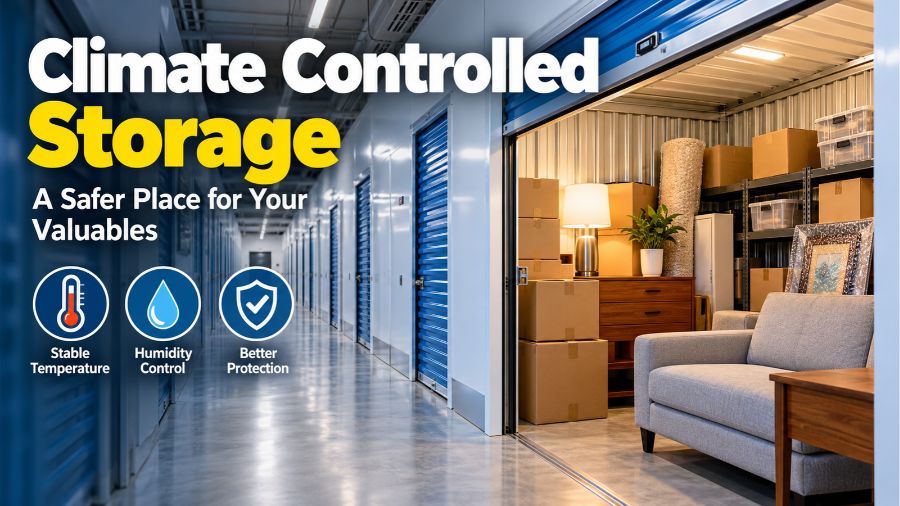
Climate controlled storage is a type of self-storage designed to maintain more stable indoor temperatures than conventional storage units. Facilities may use heating, air conditioning, insulation, and ventilation to reduce the effects of outdoor weather. Some also regulate humidity, which is particularly important for belongings that can deteriorate when exposed to excessive moisture. The exact conditions vary by provider, so the term does not guarantee a particular temperature range or humidity level. For customers, the main advantage is a more controlled environment for possessions that may be vulnerable to seasonal temperature changes, dampness, or prolonged exposure to unsuitable conditions.
How Does Climate Controlled Storage Work?
Climate-controlled facilities use building design and environmental management equipment to limit fluctuations in the storage environment. Insulated walls and ceilings help reduce heat transfer, while heating and cooling equipment can maintain temperatures within a facility’s chosen operating range. Where humidity management is provided, dehumidifiers or integrated HVAC systems may help remove excess moisture from the air. Sensors and thermostats can monitor conditions, although the frequency of monitoring and the availability of recorded readings differ between facilities. Effective performance also depends on maintenance, insulation quality, door openings, local weather, and how densely units are packed. A well-managed facility aims to reduce environmental stress on stored belongings rather than eliminate every possible source of damage.
Why Is Climate Controlled Storage Important?
Environmental conditions can affect materials in different ways. Wood may expand or contract as moisture levels change, paper can deteriorate under unsuitable conditions, and metal components may corrode when exposed to moisture. Fabrics, leather, photographs, electronics, and musical instruments can also be vulnerable to certain combinations of heat and humidity. Stable conditions can reduce these risks, particularly when items remain stored for months rather than days. Climate control is not a substitute for proper packaging, pest prevention, security, or insurance, but it can form an important part of a sensible storage plan. Its value depends on what you are storing, how long it will remain in storage, and the environmental conditions in your area.
What Items Should Be Stored in a Climate-Controlled Unit?
Climate-controlled storage is particularly useful for belongings that may be damaged by large temperature swings or excessive moisture. Choosing this type of unit can be worthwhile when the replacement cost, sentimental value, or condition of your possessions matters more than the additional rental expense.
Wooden Furniture and Leather Items
Wooden tables, cabinets, desks, wardrobes, and antique furniture can react to changing humidity by swelling, shrinking, cracking, or developing loose joints. Leather sofas, chairs, and accessories may also deteriorate when stored in excessively dry or damp conditions. Before placing furniture in storage, clean it using suitable products, allow it to dry completely, and cover it with breathable protective material. Avoid wrapping wooden or leather furniture tightly in plastic for long periods because trapped moisture can encourage mold. Climate control helps reduce environmental fluctuations, but it cannot reverse existing damage or replace appropriate furniture care.
Electronics and Computer Equipment
Computers, monitors, televisions, gaming consoles, cameras, and other electronic devices may be vulnerable to moisture, corrosion, and temperature extremes. A climate-controlled environment can help reduce these risks, especially when electronics are stored for an extended period. Before packing devices, disconnect cables, remove batteries when the manufacturer’s instructions permit, and place equipment in suitable protective packaging. Keep original boxes when available, and avoid sealing equipment while it is damp. When electronics have been exposed to significant temperature changes, allow them to acclimatize before switching them on, following the manufacturer’s guidance. Climate control does not guarantee that electronic devices will remain functional indefinitely.
Important Documents, Books, and Photographs
Paper documents, books, photographs, certificates, and family records can deteriorate when exposed to moisture, heat, light, or pests. A suitable storage environment can help slow some forms of deterioration, particularly when temperature and humidity remain reasonably stable. Place documents in archival-quality folders or boxes appropriate for the materials, and keep them away from exterior walls and potential water sources. Valuable photographs and historical records may require more specialized preservation conditions than a standard self-storage facility provides. For irreplaceable documents, consider digitizing them as an additional safeguard and confirm whether the storage provider can maintain the environmental conditions the collection needs.
Clothing, Fabrics, and Household Textiles
Clothing, curtains, bedding, upholstered items, and other textiles may develop unpleasant odors, mildew, or moisture damage when stored in unsuitable conditions. Climate-controlled storage can be useful for seasonal wardrobes, wedding garments, expensive fabrics, and household textiles that will not be needed for several months. Wash or dry-clean items as appropriate before packing, and make sure everything is completely dry. Use clean containers or breathable garment covers suited to the material, and avoid packing fabrics so tightly that air circulation becomes impossible. Climate control cannot compensate for storing dirty, damp, or pest-infested clothing, so preparation remains essential.
Musical Instruments, Artwork, and Collectibles
Musical instruments made from wood, including guitars, violins, and pianos, can respond to changes in temperature and humidity. Artwork, collectible items, antiques, and delicate decorative objects may also require stable environmental conditions. These belongings can be especially sensitive when their materials combine wood, paper, adhesives, paint, leather, or metal. Use appropriate protective cases and packing materials, and ask the facility about its actual temperature and humidity limits. High-value paintings, rare collectibles, and historically significant objects may need specialist storage rather than a general-purpose unit. Climate control is a useful precaution, but it does not replace professional conservation advice for particularly valuable pieces.
What Are the Main Benefits of Climate Controlled Storage?
The primary benefit of climate-controlled storage is a more stable environment for possessions that are sensitive to heat, cold, or moisture. This can be valuable during a house move, an extended renovation, a relocation abroad, or a period when a property must be cleared. Indoor facilities may also provide more convenient access and additional protection from direct exposure to outdoor weather, depending on their design. Another advantage is the opportunity to store a wider variety of household belongings together without exposing everything to the same environmental extremes found in an uninsulated shed or garage. However, the benefits depend on facility quality, maintenance, packaging, and the specific items being stored. Choosing climate control should therefore be based on actual storage needs rather than the assumption that every possession requires it.
Climate Controlled Storage vs. Standard Storage
Standard storage units are often suitable for durable belongings that are not particularly sensitive to temperature fluctuations or humidity. Garden tools, certain plastic containers, outdoor equipment, and robust household items may not need the additional environmental management of a climate-controlled facility. Climate-controlled units are generally more appropriate for furniture, electronics, documents, and other possessions that can be affected by changing conditions. They may cost more, but the extra expense can be reasonable when the potential cost of repairing or replacing stored belongings is significant. Neither option is automatically better for every situation. Compare the local climate, length of storage, item value, security arrangements, and facility specifications before making a decision.
How Much Does Climate Controlled Storage Cost?
The cost of climate-controlled storage depends on the unit’s dimensions, location, rental duration, accessibility, security features, and the facility’s environmental management systems. In the United States, published industry data for September 2026 placed the average monthly asking rate for a 10-by-10-foot climate-controlled unit at approximately $134, compared with $119 for a similar standard unit. These are national averages rather than guaranteed prices, and actual quotations can differ considerably between cities and providers. Small lockers may be relatively affordable, while larger units capable of holding the contents of several rooms can cost substantially more. Customers should also check for administrative charges, deposits, insurance requirements, promotional pricing, and potential rent increases.
Factors That Influence Storage Prices
Location is a major influence because storage demand, land costs, and local competition differ between markets. Unit size is another important factor, as larger spaces generally command higher monthly rents. Indoor access, extended opening hours, advanced security systems, and specialized humidity management can also affect the final price. Rental duration may influence available discounts, while seasonal demand can change advertised rates. A low introductory offer is not necessarily the cheapest long-term choice if the regular rate is significantly higher. Request a complete quotation that explains recurring rent, mandatory fees, insurance arrangements, payment terms, and the notice required to end the rental agreement.
How to Estimate the Right Budget
Start by estimating the volume of belongings you need to store rather than automatically renting a large unit. List major furniture pieces, count boxes, and ask the provider which unit dimensions are suitable for your inventory. Consider whether you need regular access, since an inconvenient layout can make a smaller unit less practical. Then compare the total expected cost over your planned rental period, including any mandatory extras. It is sensible to leave enough room for safe access rather than filling every available space. The goal is to find an appropriately sized unit with suitable environmental conditions, not simply the cheapest advertised price.
How to Choose the Right Climate Controlled Storage Facility
Selecting a suitable facility requires more than checking whether its website advertises climate control. Ask what temperature range the facility aims to maintain, whether humidity is actively monitored, and how staff respond when equipment fails. Find out whether conditions are managed continuously or only during staffed hours, and whether monitoring records are available. Inspect the building for visible dampness, musty odors, water stains, poor ventilation, and signs of pest activity. A clean appearance is useful but does not prove that environmental conditions are consistently maintained. You should also evaluate security, access procedures, customer support, rental terms, and the facility’s approach to emergencies before committing to a unit.
Check Temperature and Humidity Management
Temperature control and humidity control are related but different features. Air conditioning may lower temperature without maintaining the humidity level required by sensitive belongings. Conversely, a facility that manages humidity may not provide the same temperature stability as a fully conditioned indoor unit. Ask the provider to explain its system in clear terms and whether it can accommodate your particular storage needs. If you are storing valuable artwork, instruments, archival documents, or specialist equipment, request suitable environmental specifications instead of relying on general marketing language. For ordinary household belongings, a well-maintained facility with clearly explained operating conditions may be sufficient.
Review Security and Access Arrangements
A storage facility should have security measures appropriate to the value and type of items you plan to keep there. Look for controlled entry, suitable locks, surveillance where provided, adequate lighting, and clear procedures for reporting incidents. Ask whether you will have a private unit, how access credentials are managed, and whether staff can enter units under specified contractual or emergency circumstances. Review opening hours and any restrictions on visiting outside normal business times. Security features reduce some risks but cannot guarantee that theft or damage will never occur. Keep an inventory, photograph valuable belongings, and understand your responsibilities under the rental agreement.
Understand Insurance and Rental Terms
Before signing a contract, establish whether stored belongings are covered by your existing home insurance or whether separate storage coverage is required. Do not assume that the facility’s building insurance covers the personal possessions inside your unit. Check exclusions, limits, deductibles, and requirements relating to water damage, mold, theft, and improperly packed items. Read the contract’s cancellation policy, payment schedule, late-payment provisions, and procedures for dealing with abandoned property. If you are storing expensive or irreplaceable possessions, make sure the coverage is appropriate for their value. Written confirmation is preferable to relying on informal assurances from sales staff.
How to Prepare Belongings for Climate Controlled Storage
Good preparation helps protect belongings regardless of the storage environment. Clean items before packing, ensure that they are completely dry, and use boxes or containers suitable for their weight and material. Wrap fragile objects individually and label containers clearly so that they can be identified without repeatedly unpacking them. Place heavy boxes near the bottom of stable stacks, and avoid creating piles that could fall when the unit is accessed. Keep belongings off the floor where possible, using suitable shelving or pallets permitted by the facility. Leave enough space to inspect and retrieve items safely. Never store prohibited, hazardous, leaking, or perishable materials, and follow the provider’s rules concerning batteries, chemicals, and other restricted goods.
Pack Furniture and Appliances Correctly
Empty furniture drawers where necessary, remove detachable components, and protect corners and delicate surfaces with suitable padding. Disassemble larger pieces when practical, keeping screws and fittings in labelled bags. Clean appliances thoroughly and make sure they are completely dry before storage. Refrigerators and freezers should be prepared according to their manufacturers’ instructions, including appropriate cleaning and ventilation arrangements where relevant. Avoid placing heavy items directly on fragile furniture or stacking belongings in ways that could cause structural damage. Even in a climate-controlled unit, pressure, dust, pests, and careless handling can damage possessions, so physical protection remains important.
Keep an Inventory and Inspect Stored Items
Create a written or digital inventory that records the contents of each box, identifies valuable items, and includes photographs when useful. Keep a copy outside the storage unit so that you can access it if belongings are lost or damaged. Label boxes on more than one side, and place frequently needed items where they can be reached without moving heavy furniture. If your agreement permits regular visits, inspect the unit periodically for signs of moisture, pests, unusual odors, or packaging deterioration. Contact the facility promptly if you notice a problem. Regular checks can help identify issues early, although they cannot replace reliable building maintenance and environmental monitoring.
Common Mistakes to Avoid When Renting Climate Controlled Storage
One common mistake is assuming that every climate-controlled unit provides identical temperature and humidity conditions. Facilities differ in their equipment, maintenance standards, and monitoring practices, so it is important to verify the details before renting. Another mistake is packing belongings while they are still damp, which can trap moisture and encourage mold growth even in a conditioned building. Choosing an oversized unit can also increase expenses unnecessarily, while overfilling a small unit can restrict access and make inspection difficult. Some renters overlook insurance exclusions, promotional pricing conditions, or restrictions on stored items. Avoid these problems by preparing belongings properly, reviewing the contract, and selecting a facility based on documented capabilities rather than advertising alone.
Is Climate Controlled Storage Worth the Extra Cost?
Climate-controlled storage can be worth the additional expense when you need to protect belongings that are sensitive to temperature changes or moisture. For example, storing valuable wooden furniture, family photographs, computers, or musical instruments for several months may justify paying more for a suitable environment. However, durable items that tolerate local weather conditions may be adequately protected in standard storage, provided they are packed and stored correctly. The decision should reflect the value of the items, the length of storage, local environmental conditions, and the difference in rental prices. Compare the likely cost of environmental damage with the additional rent, while remembering that climate control reduces certain risks rather than eliminating them completely.
Who Benefits Most from Climate Controlled Storage?
Climate-controlled storage can serve homeowners, renters, students, collectors, businesses, and people relocating to another city or country. Homeowners may use it during renovations, while renters can store furniture between leases. Students may need temporary space for books, computers, and personal belongings during holidays or study abroad. Businesses can use suitable units for office furniture, paper records, display materials, and selected equipment, provided the facility permits commercial storage and meets any relevant requirements. Collectors and musicians may need more carefully managed environments for items sensitive to humidity or temperature fluctuations. The best option depends on the possessions being stored and the environmental conditions required to preserve them.
Conclusion
Climate Controlled Storage offers a practical solution for protecting temperature- and moisture-sensitive belongings during moves, renovations, business transitions, and long-term storage. Its main advantages include more stable environmental conditions and reduced exposure to certain forms of heat- and humidity-related damage. However, facilities vary in their capabilities, and climate control does not replace appropriate packing, security, insurance, or regular inspection. Before renting, compare unit sizes, actual temperature and humidity management, security measures, contract terms, and total costs. By matching the storage environment to the items you own, you can make a more informed decision and balance protection with affordability.
FAQs
1. What is climate controlled storage?
Climate controlled storage uses systems such as heating, air conditioning, insulation, and sometimes dehumidification to maintain more stable environmental conditions for stored belongings.
2. Is climate controlled storage better than regular storage?
It is often better for temperature-sensitive or moisture-sensitive belongings, while standard storage may be sufficient for durable items that tolerate local environmental conditions.
3. How much does climate controlled storage cost?
Costs depend on location, unit size, demand, and facility features. Compare current local quotations, additional fees, insurance requirements, and regular rental rates.
4. What items should go in climate controlled storage?
Common choices include wooden furniture, electronics, photographs, books, important documents, musical instruments, leather goods, artwork, and other belongings sensitive to environmental changes.
5. Does climate controlled storage prevent mold?
It can reduce mold risk when humidity is properly managed, but damp belongings, leaks, poor maintenance, and unsuitable packaging can still cause mold growth.
6. How do I choose a climate controlled storage facility?
Compare temperature and humidity specifications, building maintenance, security, access hours, insurance requirements, customer reviews, unit sizes, and the complete rental agreement before booking.
More read: Best Beaches Near Barcelona