Foodie Co: Complete Guide to Its Food Manufacturing and Business Services
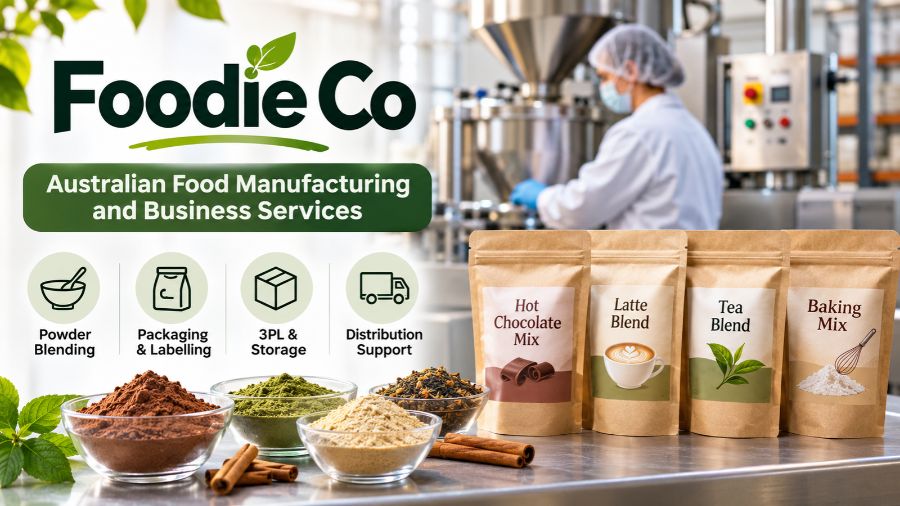
Foodie Co is an Australian food manufacturing and distribution company helping startups and small businesses turn food and beverage ideas into market-ready products. Based in Dingley Village, Victoria, the company focuses on powder blending, product development, packaging, third-party logistics (3PL), and retail distribution. Unlike a traditional food retailer or restaurant, Foodie Co operates primarily as a business-to-business (B2B) service provider, supporting brands that need manufacturing expertise without establishing their own production facilities. Understanding its services, manufacturing approach, business model, and potential benefits can help entrepreneurs determine whether the company is a suitable partner for launching or expanding a food business.
What Is Foodie Co?
Foodie Co is a Melbourne-area food manufacturing and distribution business specialising in powdered food and beverage products. Its official business website, foodieco.com.au, presents the company as a manufacturing partner for startups, emerging brands, and established small businesses. Its services cover several stages of the product journey, including sourcing ingredients, creating product formulations, blending powders, packaging finished products, storing inventory, and supporting distribution. The company aims to address a common challenge for smaller food businesses: finding manufacturers willing to accommodate relatively low production volumes rather than requiring the large minimum orders often associated with established manufacturing operations. Its service model allows businesses to explore outsourced production and logistics instead of investing immediately in their own manufacturing equipment and warehouse infrastructure.
Where Is Foodie Co Located?
Foodie Co operates from Dingley Village in Victoria, Australia, within the greater Melbourne metropolitan area. Its published warehouse address is 1/25–41 Redwood Drive, Dingley Village, VIC 3172. This location supports its manufacturing, warehousing, and distribution activities. The company also publishes contact information for businesses interested in discussing product development, wholesale supplies, and manufacturing requirements. Its Australian location is particularly relevant to food entrepreneurs seeking a local manufacturing and distribution partner. However, businesses outside Australia should confirm international shipping arrangements, export capabilities, applicable food regulations, and any additional logistics costs before considering a commercial relationship.
What Products Does Foodie Co Manufacture?
Foodie Co focuses primarily on dry powder blending and packaging, serving businesses that want to develop powdered food, beverage, and related products. Its published product categories demonstrate an emphasis on ingredients and formulations that can be blended, processed, and packaged for wholesale or retail distribution. The suitability of a particular product depends on its ingredients, formulation, manufacturing requirements, and the company’s available production capabilities.
Hot Chocolate and Drinking Chocolate Mixes
Hot chocolate and drinking chocolate mixes are among the product categories identified by Foodie Co. These products can combine cocoa or chocolate-based ingredients with sweeteners and other formulation components to create convenient beverage mixes. For businesses developing their own hot chocolate brands, outsourced powder blending can provide an alternative to purchasing industrial mixing equipment and managing production independently. Packaging options and ingredient specifications can also influence the finished product’s appearance, storage requirements, and suitability for different retail channels.
Latte and Beverage Blends
Latte blends and other powdered beverage formulations are another part of the company’s manufacturing offering. These products may require carefully selected ingredients to achieve consistent flavour, texture, and mixing characteristics. Businesses exploring this category should establish their desired formulation, serving size, ingredient specifications, and packaging requirements before production. The final manufacturing arrangement should also address product consistency and any testing necessary for the intended market.
Tea Blends and Extract Powders
Foodie Co also identifies tea blends and tea extract powders among its product-related categories. Powdered tea ingredients can be used in beverage mixes and other food applications, depending on their specifications. Ingredient sourcing, quality documentation, storage conditions, and formulation compatibility are important considerations when developing these products. Businesses should confirm which ingredients and processing requirements the manufacturer can accommodate.
Baking Mixes, Spices, and Nutrition Products
The company’s published manufacturing information also mentions baking mixes, spices, and nutrition or supplement products. These categories can involve different ingredient combinations and production requirements, making product-specific discussions important. For example, a baking mix may require consistent proportions of flour and other dry ingredients, while a spice blend may depend on accurate measurements and suitable packaging to preserve product quality. Nutrition-related products may require additional attention to ingredient verification, permitted claims, labelling, and applicable regulatory requirements.
How Does Foodie Co’s Manufacturing Process Work?
Foodie Co describes its service model through four connected stages: creating, producing, providing third-party logistics, and distributing products. Businesses can explore the complete process or discuss individual services depending on their existing product development progress and operational needs. This flexible approach is intended to help smaller brands access manufacturing support without having to coordinate every production and supply-chain activity independently.
Product Creation and Development
The first stage involves discussing the product concept and determining the requirements for manufacturing. A business may approach Foodie Co with an established recipe or an early product idea that needs further development. Relevant considerations include ingredient selection, formulation requirements, intended serving sizes, target customers, and expected production volumes. Businesses should clarify whether formulation assistance is included in a proposed service and whether development, testing, or ingredient sourcing involves separate charges.
Powder Blending and Production
After the product requirements have been established, the manufacturing stage involves combining the required dry ingredients into the intended formulation. Powder blending requires attention to ingredient proportions and batch consistency because variations can affect the final product’s flavour, texture, and performance. Foodie Co promotes small-batch through larger-scale powder blending solutions, although actual production capacity and minimum order quantities should be confirmed for each project.
Packaging and Preparation
Once a product has been manufactured, suitable packaging is necessary to prepare it for storage and distribution. Foodie Co identifies composite tins, heat-sealed pouches, and bags among its packaging options. The appropriate format depends on product characteristics, packaging dimensions, customer preferences, shelf-life requirements, and distribution arrangements. Businesses should also clarify responsibilities for label preparation, ingredient declarations, nutritional information, packaging compliance, and final product approval.
Storage and Distribution
The final stages can involve inventory storage, order fulfilment, freight arrangements, and distribution. Rather than managing every logistical activity independently, businesses can discuss using Foodie Co’s additional services to support the movement of finished products. This arrangement may be particularly useful for smaller brands that want to concentrate on product development, marketing, and customer acquisition while outsourcing selected operational responsibilities.
What Are Foodie Co’s Main Business Services?
Foodie Co’s business model extends beyond manufacturing powdered products. Its website describes additional services designed to support brands as they move from product development to commercial distribution. These services are particularly relevant to entrepreneurs who need several supply-chain activities handled through one business relationship.
Third-Party Logistics (3PL)
Third-party logistics refers to outsourcing selected storage, fulfilment, and shipping operations to an external provider. Foodie Co advertises 3PL services covering storage needs, B2C and B2B sales fulfilment, and freight requirements. For a growing food brand, outsourcing these responsibilities can reduce the need to arrange warehouse facilities, manage dispatch operations, and coordinate individual shipping processes internally. However, the precise services, costs, inventory responsibilities, delivery targets, and returns procedures should be established in a written agreement before entering a partnership.
Retail and Food-Service Distribution
Foodie Co also describes a distribution service focused on helping food brands reach potential retail and food-service customers. Its published information identifies health-food stores, independent supermarkets, studios, and cafés among the channels it serves. Distribution can be an important part of commercial growth because manufacturing a product does not automatically create access to retail shelves or wholesale buyers. Brands should nevertheless understand the commercial arrangements, distribution coverage, pricing requirements, and retailer responsibilities involved before relying on this service.
Raw Material Sourcing
Ingredient sourcing is another area highlighted by the company. Its published raw-material information includes cocoa and cacao powders, coconut sugar, sweeteners, salts, spices, dried fruit powders, and tea extracts. Access to relevant ingredients can simplify the early stages of product development, particularly for businesses that are unfamiliar with specialist food ingredient suppliers. However, buyers should request ingredient specifications, relevant certificates, origin information, pricing, and availability to ensure that materials meet their product requirements.
What Are the Benefits of Using Foodie Co?
Foodie Co’s integrated service model may offer several practical advantages to small food businesses. Its focus on startups and smaller production requirements addresses a challenge faced by entrepreneurs who cannot immediately justify the investment associated with independent manufacturing facilities. Access to powder blending, packaging, ingredient sourcing, logistics, and distribution through one provider may also simplify supplier coordination. For businesses with limited operational resources, outsourcing selected activities can create more time for brand development, sales, customer relationships, and marketing. However, these benefits depend on the actual commercial agreement, production suitability, service quality, and total operating costs rather than the advertised availability of services alone.
What Should Businesses Consider Before Working With Foodie Co?
Choosing a manufacturing partner requires more than comparing product prices or advertised services. Food businesses should evaluate whether a provider can meet their production specifications, quality expectations, regulatory responsibilities, and commercial requirements. Although Foodie Co publishes information about its manufacturing and logistics capabilities, individual businesses should request project-specific details before making a commitment.
Production Costs and Minimum Order Quantities
Manufacturing costs can include ingredient sourcing, formulation, production, packaging, setup, storage, and transportation. Businesses should request an itemised quotation that explains these expenses and identifies any minimum order quantities. A relatively low initial production requirement may be attractive, but the complete cost per finished unit is more useful when evaluating profitability and future growth.
Quality Assurance and Food Safety
Food manufacturing requires appropriate controls to maintain product consistency and protect consumers. Businesses should ask about ingredient verification, batch records, traceability, production hygiene, contamination controls, and procedures for handling complaints or rejected products. They should also confirm which food safety standards and certifications currently apply to the manufacturer’s operations and whether the proposed product falls within their scope.
Organic Certification and Product Claims
Foodie Co describes itself as a certified organic manufacturer. However, businesses should not assume that every ingredient or finished product automatically qualifies for organic claims simply because a manufacturer advertises organic certification. The relevant certificate, certification body, validity period, and approved scope should be checked. Product labels and marketing claims must also comply with the requirements of the markets where the goods will be sold.
Packaging and Regulatory Responsibilities
Packaging and labelling decisions can influence product protection, shelf life, customer experience, and regulatory compliance. Businesses should establish who is responsible for checking ingredient declarations, allergen information, nutrition panels, product claims, and packaging artwork. These responsibilities should be documented clearly rather than assumed to be included in a general manufacturing agreement.
Foodie Co Compared With In-House Food Manufacturing
The decision between outsourcing production and establishing an in-house manufacturing operation depends on a company’s financial position, production requirements, expected sales, and long-term objectives. Working with an external manufacturer may reduce the initial investment in equipment, facilities, staffing, and production systems. It can also provide access to existing operational capabilities that would otherwise take time and resources to develop. On the other hand, in-house manufacturing offers more direct control over production schedules, equipment, and daily operations. It may become more attractive when a business reaches sufficient production volume to justify its infrastructure and staffing costs. Foodie Co’s model is particularly relevant to businesses evaluating outsourced powder blending and associated logistics, but a proper comparison should include total costs, production capacity, quality responsibilities, contractual flexibility, and supplier dependency.
Who Can Benefit Most From Foodie Co’s Services?
Foodie Co’s published services are primarily relevant to startups, small food manufacturers, beverage brands, and businesses developing powdered products. Entrepreneurs launching hot chocolate mixes, latte blends, tea products, baking mixes, spices, or certain nutrition products may find its manufacturing offering worth investigating. Established brands can also explore outsourced production or logistics when they need additional capacity or want to simplify selected operational activities. Retailers, cafés, and food-service businesses may have separate reasons to investigate its distribution and wholesale-related services. However, suitability depends on the exact product, required production volume, ingredient specifications, regulatory needs, and commercial terms. Businesses developing products that require specialised processing beyond dry powder blending should confirm technical compatibility before treating Foodie Co as a potential manufacturing solution.
Conclusion
Foodie Co is an Australian food manufacturing and distribution business offering powder blending, product development, packaging, ingredient sourcing, third-party logistics, and retail distribution support. Its focus on startups and small businesses makes its service model relevant to entrepreneurs who want to develop powdered food and beverage products without immediately establishing their own production facilities. Its combination of manufacturing and supply-chain services may simplify operations, although the value of working with the company depends on production suitability, quality controls, certification requirements, pricing, and contractual responsibilities. For businesses exploring outsourced food manufacturing in Australia, understanding these factors provides a more reliable foundation for evaluating Foodie Co as a potential commercial partner.
FAQs
What type of company is Foodie Co?
Foodie Co is an Australian food manufacturing and distribution business specialising in powdered products, packaging, ingredient sourcing, third-party logistics, and support for emerging food brands.
Where is Foodie Co located in Australia?
Foodie Co operates from Dingley Village, Victoria, near Melbourne. Its published warehouse address is 1/25–41 Redwood Drive, Dingley Village, VIC 3172.
Does Foodie Co manufacture products for startups?
Yes, Foodie Co specifically promotes manufacturing services for startups and small businesses, offering powder blending and packaging solutions with production volumes discussed individually.
What products can Foodie Co manufacture?
Its published product categories include hot chocolate mixes, latte blends, tea blends, baking mixes, spices, and certain nutrition and supplement powder products.
Does Foodie Co provide warehousing and distribution?
Yes, the company advertises third-party logistics covering storage, B2C and B2B fulfilment, freight services, and distribution support for selected retail and food-service channels.
Is Foodie Co a certified organic manufacturer?
Foodie Co describes itself as a certified organic manufacturer. Prospective customers should independently verify its current certification, approved scope, and applicable product requirements.
More read: Joi Database