Best Travel Wallets: 10 Smart Picks for Secure and Organised Travel
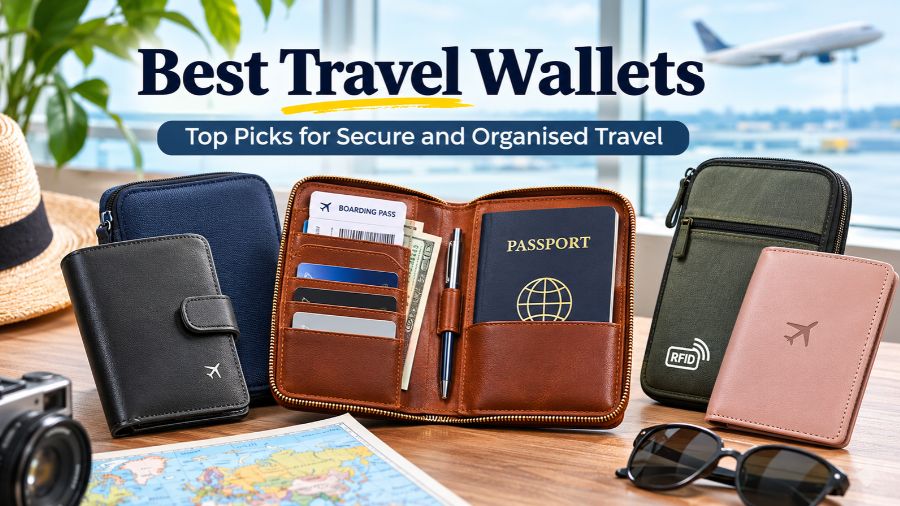
Best Travel Wallets are designed to help travellers keep passports, payment cards, cash, boarding passes and other important documents organised in one convenient place. Choosing the right option can make airport journeys, international trips and everyday travel more manageable, especially when carrying multiple currencies or important identification. From premium leather designs to compact RFID-blocking passport holders and anti-theft organisers, this guide explores the features worth considering, popular products available in 2026, their advantages and limitations, and how to select a travel wallet that suits your journey.
What Makes a Good Travel Wallet?
A good travel wallet combines practical organisation, convenient access and suitable protection for essential travel documents. Unlike an ordinary wallet, which is generally designed around payment cards and everyday cash, a dedicated travel wallet may include passport compartments, boarding-pass sleeves, currency sections, SIM card storage and additional pockets for tickets or identification. The best design depends on how someone travels: occasional holidaymakers may prefer a lightweight passport holder, while frequent international travellers may benefit from a larger organiser. Material quality, closure design, internal capacity and portability are equally important because a wallet that becomes bulky when fully packed can be inconvenient to carry.
10 Best Travel Wallets to Consider in 2026
The market offers several travel wallet styles, from traditional leather bifolds to zip-around organisers and concealed neck pouches. The following products represent different travel needs rather than a laboratory-tested ranking; their suitability depends on individual preferences, available features and budget.
1. Bellroy Travel Wallet
Best for premium everyday travel organisation
The Bellroy Travel Wallet is a premium option for travellers who want a traditional wallet with additional passport and document storage. Its design combines card compartments, a passport section, currency storage and a dedicated space for a spare SIM card. A small included pen is another useful detail when completing travel forms or writing information during a journey. RFID protection adds another layer of consideration for people carrying compatible contactless cards and electronic passports. Its main disadvantage is the premium price, so occasional travellers may find a simpler passport holder more economical.
2. Leatherology Zip Around Travel Wallet
Best for high storage capacity
The Leatherology Zip Around Travel Wallet is designed for people who prefer carrying several travel essentials together. Its spacious layout includes multiple card slots, larger compartments for passports and boarding passes, an identification window, a coin pocket and a pen loop. The zip-around closure helps keep loose contents inside when the wallet is stored in a handbag or carry-on bag. Full-grain leather gives it a more traditional appearance, although its larger dimensions may make it unsuitable for small pockets or compact crossbody bags.
3. Pacsafe RFIDsafe Travel Organizer
Best for security-conscious travellers
The Pacsafe RFIDsafe Travel Organizer is worth considering for travellers who prioritise organised storage and additional security features. Pacsafe specialises in travel security products, and its organiser range includes designs intended to protect personal belongings and make documents easier to manage. Depending on the specific model, travellers can find compartments for passports, cards, cash and other essentials. Buyers should check the exact model specifications because RFID protection, closure systems and anti-theft features are not necessarily identical across the entire range. Its practical design may be less attractive to people who prefer a slim traditional leather wallet.
4. Zero Grid RFID Passport Wallet
Best for compact passport protection
The Zero Grid RFID Passport Wallet is aimed at travellers looking for a straightforward way to carry passports, payment cards and small travel documents. Its lightweight organiser-style construction makes it a practical alternative to larger leather wallets. RFID-blocking material is an additional feature for people who want to reduce unauthorised radio-frequency reading risks. However, buyers should consider its actual storage capacity, dimensions and closure before purchasing, particularly if they need space for several passports or larger boarding documents.
5. Thule Aion Travel Organizer
Best for organised travel accessories
The Thule Aion Travel Organizer is an option for people who want more than a basic passport sleeve. Thule is known for travel and carrying equipment, and its organiser products are designed around practical storage. A travel organiser can be particularly useful when managing several small items that would otherwise become scattered throughout a backpack. Before choosing this model, check whether its dimensions and internal compartments suit your passport, payment cards and document requirements. Its larger organiser format may not appeal to travellers who prefer carrying only a few essentials.
6. Away Travel Wallet
Best for modern travel design
The Away Travel Wallet combines passport storage with compartments for payment cards, cash and smaller travel essentials. Its design is intended to work for both airport journeys and everyday use, making it worth considering for people who prefer a dedicated travel accessory that does not look excessively bulky. Multiple passport compartments are particularly useful for travellers who regularly carry more than one passport. Its magnetic closure and overall layout should be checked against personal preferences, especially for anyone who prefers a fully zipped organiser.
7. Quince RFID Blocking Passport Holder
Best for a simple passport holder
The Quince RFID Blocking Passport Holder is a practical choice for people who want to protect and organise a passport without carrying a large document wallet. Its compact format is suitable for travellers who keep most of their cards and cash in a separate everyday wallet. RFID-blocking construction is an additional feature, although it should not be treated as a replacement for ordinary precautions against theft or document loss. Its smaller storage capacity makes it less suitable for families or people who need to carry several passports together.
8. Coach Outlet Corner Zip Wristlet
Best for stylish compact carrying
The Coach Outlet Corner Zip Wristlet offers a more fashion-oriented approach to travel organisation. Its zip-top design and wrist strap make it convenient for carrying everyday essentials while sightseeing, shopping or moving between destinations. Depending on the version and dimensions, it may accommodate a passport, cards and smaller personal belongings. However, it is primarily a wristlet rather than a dedicated document organiser, so buyers should check the available space before expecting it to hold boarding passes, multiple passports or larger travel papers.
9. Valante Travel Document Organizer
Best for families and group travel
The Valante Travel Document Organizer is designed for travellers who need to manage documents for more than one person. Its larger format offers dedicated storage for multiple passports, cards, cash and other travel paperwork. This can be useful for parents travelling with children or groups who prefer keeping important documents together. The trade-off is portability: a large organiser is less convenient than a slim wallet when moving around a destination. It is generally better suited to a carry-on bag than a trouser pocket.
10. Peak Design Passport Wallet
Best for minimalist travel organisation
The Peak Design Passport Wallet is worth investigating for travellers who prefer functional accessories with a minimalist appearance. A compact passport wallet can help keep essential documents together without the bulk of a full-size travel organiser. Its suitability depends on how much storage the individual needs and whether its material and closure meet personal expectations. Travellers who carry several cards, cash currencies and multiple passports should compare its capacity with larger zip-around alternatives before making a purchase.
How to Choose the Best Travel Wallet
Choosing the right travel wallet requires considering the type of journey, the number of documents being carried and how frequently the wallet will be used. A product with numerous compartments may seem attractive, but additional storage is not always necessary. Someone taking a short holiday may need only a passport sleeve and a few card slots, whereas a frequent international traveller might prefer a larger organiser. The most useful purchase balances security, accessibility, material quality and size without making everyday movement unnecessarily difficult.
Consider Your Travel Requirements
Start by identifying what you normally carry when travelling. If you regularly use a passport, boarding passes, international payment cards and different currencies, choose a wallet with separate compartments for each item. Families may need additional passport sleeves, while business travellers may appreciate dedicated sections for receipts, identification and travel documents. Minimalist travellers can avoid unnecessary bulk by selecting a compact bifold or passport holder.
Check the Wallet’s Size and Capacity
Dimensions are important because travel wallets are often larger than standard everyday wallets. Before purchasing, check whether the product can accommodate your passport without bending its cover or damaging its pages. Consider the number of card slots, currency compartments and document pockets, particularly if you expect to carry more items during longer trips. A wallet that looks compact when empty may become considerably thicker when fully loaded.
Choose Durable Materials
Leather, recycled polyester, nylon and coated fabrics are common materials used in travel accessories. Leather can offer a classic appearance and may develop character with use, but it requires suitable care and can be heavier than some synthetic alternatives. Nylon is generally lightweight and practical for travel organisers, while coated fabrics may offer additional resistance to surface moisture. The best material depends on your preferred appearance, maintenance requirements and expected frequency of use.
Examine the Closure and Security Design
A secure closure helps prevent cards, cash and documents from falling out when a wallet is moved between bags or pockets. Zippers provide an enclosed design, while magnetic and snap closures offer convenient access. Some travel organisers also include wrist straps or attachment points. However, no wallet should be considered completely theft-proof. Travellers should keep valuable documents concealed and avoid leaving their passports or payment cards unattended.
Understanding RFID Protection in Travel Wallets
RFID stands for Radio Frequency Identification, a technology that allows compatible electronic devices to communicate using radio waves. Some passports and contactless payment cards contain electronic components that can communicate with compatible readers. RFID-blocking travel wallets use shielding materials intended to restrict certain radio-frequency signals from reaching the protected contents. This feature may provide additional reassurance, particularly for travellers carrying several contactless cards. However, RFID protection does not prevent physical theft, card misuse through every possible method or online fraud. It is also important to recognise that not every passport or payment card uses the same technology, so RFID protection should be considered an additional feature rather than the main reason for purchasing a wallet.
Is RFID Blocking Really Necessary?
RFID blocking can be a useful additional feature, but it is not essential for every traveller. The actual risk depends on the type of card or document, its technology and the circumstances in which it is carried. Travellers should not assume that every nearby person can easily access their financial information through contactless technology. Basic precautions, including monitoring bank transactions, protecting PINs and keeping payment cards secure, remain important regardless of wallet design.
Different Types of Travel Wallets Explained
Travel wallets are available in several formats, each designed around a different balance of portability, storage and accessibility. Understanding these differences helps buyers avoid purchasing an organiser that is either unnecessarily large or too limited for their requirements.
Passport Holders
Passport holders are among the simplest travel accessories. They are generally designed to protect a passport cover and may include additional card slots or small pockets for travel documents. Their compact construction makes them suitable for people who already carry a separate everyday wallet. Some models include RFID-blocking materials, while others focus primarily on appearance and document protection.
Zip-Around Travel Wallets
Zip-around wallets provide enclosed storage for passports, cards, coins, currency and other small essentials. Their main advantage is that the zipper helps keep contents together when travelling. These wallets are often larger than standard bifolds, making them more suitable for handbags, backpacks and carry-on luggage. They can be particularly useful for longer journeys involving several documents or different currencies.
Neck Wallets
A neck wallet is designed to hang from an adjustable strap and can be worn underneath clothing. It typically provides storage for passports, cash and payment cards. This format may be useful in crowded destinations or during journeys when keeping essential documents close to the body is important. However, comfort, breathability and strap quality should be considered before purchasing, particularly in hot climates.
Money Belts
Money belts are designed to sit around the waist, often underneath clothing. They provide a discreet place to store cash, cards and selected documents. Unlike traditional wallets, they prioritise concealed carrying rather than convenient access. They can be useful for travellers who want to separate emergency money from their everyday spending wallet, although they may feel uncomfortable during extended periods of use.
Travel Wallet vs Regular Wallet: Which Is Better?
A regular wallet is generally designed for everyday transactions, with compartments for payment cards, identification and cash. A dedicated travel wallet provides additional space for passports, boarding passes, foreign currencies and other travel documents. Neither option is automatically better because the right choice depends on individual requirements. Someone taking a short domestic trip may be perfectly comfortable using an ordinary wallet, while an international traveller carrying multiple documents may benefit from a dedicated organiser. Some premium travel wallets also work as everyday wallets, offering a practical middle ground for people who do not want to carry separate accessories.
Advantages and Disadvantages of Travel Wallets
Travel wallets can make organising important documents easier, reduce the likelihood of misplacing small essentials and provide a convenient location for passports, cards and cash. Models with multiple compartments can also help separate different currencies and family members’ documents. Additional features such as RFID-blocking materials, zip closures and concealed carrying options may offer further convenience. However, travel wallets also have limitations. Larger models can become bulky, premium leather options may be expensive, and carrying every valuable document in one place can create a single point of loss. Choosing a suitable size and keeping backup copies of essential documents separately can help address these concerns.
Tips for Keeping Your Travel Wallet Safe
A travel wallet is most useful when combined with sensible document and payment-card security practices. Keep your passport in a secure location when it is not required for identification, and avoid displaying cash or valuable documents unnecessarily in crowded places. Consider keeping emergency cash separately from your main wallet so that losing one item does not leave you without access to funds. Digital copies of important travel documents can also be useful, provided they are stored securely. Before leaving accommodation, check that your passport, payment cards and other essential items are accounted for.
Conclusion
The best travel wallet is not necessarily the most expensive or feature-packed option; it is the one that provides the right combination of organisation, portability, durability and security for your travel habits. Premium options such as the Bellroy Travel Wallet suit people looking for a versatile leather design, while larger organisers from Leatherology and Valante offer more room for documents and family travel essentials. Compact passport holders and concealed carrying options may be more appropriate for minimalist travellers. By comparing materials, storage capacity, closure systems and RFID features, buyers can make a more informed decision and choose an accessory that makes travelling more organised and convenient.
FAQs
1. What is the best travel wallet for international travel?
A travel wallet with passport storage, multiple card slots, currency compartments and secure closure is ideal for international journeys involving several documents and payment methods.
2. Are RFID-blocking travel wallets worth buying?
RFID-blocking wallets provide additional shielding for compatible electronic cards and passports, although they cannot replace ordinary precautions against theft or financial fraud.
3. Can a travel wallet hold multiple passports?
Some larger travel organisers accommodate multiple passports, but capacity varies by model. Always check the manufacturer’s specifications before purchasing one for family travel.
4. Is leather better than nylon for travel wallets?
Leather offers a traditional appearance and durability, while nylon is generally lighter and easier to maintain, making the better choice dependent on personal preferences.
5. Should I use a separate travel wallet?
A separate travel wallet can keep passports, foreign currency and travel documents organised while reducing the need to carry unnecessary everyday belongings.
6. What should I keep inside a travel wallet?
Keep your passport, essential payment cards, limited cash, identification and relevant travel documents inside, avoiding unnecessary valuables that increase the consequences of loss.
More read: Sisal Carpet