Bread Flour: Complete Guide to Protein Content, Uses, Benefits and Baking Tips
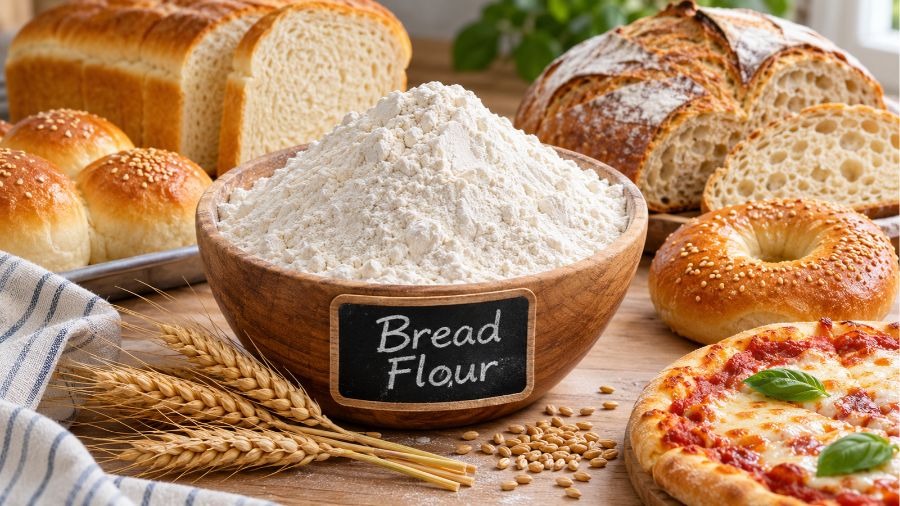
Bread Flour is a specialized type of wheat flour used to make bread, pizza dough, bagels, sourdough, and other baked products that require strength and elasticity. Its higher protein content helps develop gluten, giving dough the structure needed to trap air, rise properly, and produce a chewy texture. Whether you are a beginner learning to bake at home or an experienced baker exploring different flour varieties, understanding bread flour can help you achieve better results. This guide explains what bread flour is, how it is made, how it compares with all-purpose flour, its nutritional characteristics, and how to select, substitute, and store it correctly.
What Is Bread Flour?
Bread flour is a refined or whole-grain wheat flour specifically milled for recipes that depend on strong gluten development. It is generally produced using hard wheat varieties, which naturally contain more protein than the softer wheat commonly used for cake and pastry flour. According to the Wheat Foods Council, bread flour typically contains approximately 12–14% protein, although the precise amount varies between products and manufacturers. When water is added, two wheat proteins called glutenin and gliadin interact to form gluten, a stretchy network that gives dough its strength. This structure helps retain carbon dioxide produced during fermentation, allowing dough to expand without losing its shape. Bread flour is widely used in commercial bakeries and home kitchens because its properties support consistent results in many yeast-based recipes.
How Is Bread Flour Made?
Bread flour begins with selected wheat grains, particularly hard wheat varieties valued for their protein content and baking performance. During commercial milling, wheat is cleaned to remove impurities before being conditioned with moisture to prepare it for processing. The grain passes through a series of rollers that separate the endosperm from the bran and germ, depending on the type of flour being produced. The endosperm is then gradually reduced into fine particles and sifted to achieve the desired texture. Manufacturers may blend flour from different wheat varieties to achieve consistent protein levels and baking characteristics. Some products are also enriched with selected nutrients, depending on local food regulations and manufacturing practices. The resulting flour is packaged for retail customers, restaurants, and commercial bakeries. Although manufacturing methods can differ, the main objective is to produce flour with sufficient protein and gluten-forming potential for strong, elastic dough.
Understanding Bread Flour Protein Content
Protein content is one of the most important characteristics to examine when selecting flour for baking. Bread flour generally contains 12–14% protein, while some well-known products have a more precisely specified percentage. For example, King Arthur Baking identifies its bread flour as containing 12.7% protein. These figures are not universal standards for every manufacturer, so checking the packaging is important when consistent baking performance matters. Protein itself does not directly create a finished loaf’s height or softness; instead, it provides the building blocks needed for gluten development. The amount of water, mixing technique, fermentation time, dough temperature, and baking conditions also influence the final result. A flour with higher protein content can be particularly useful for recipes containing substantial amounts of water because its stronger dough structure can support more moisture. However, choosing the highest-protein flour is not automatically the best decision for every recipe, as different baked goods require different textures and levels of elasticity.
How Gluten Develops in Bread Dough
Gluten development begins when wheat flour comes into contact with water and the proteins glutenin and gliadin combine to form an interconnected network. Kneading, folding, and mixing help organize and strengthen this structure, making the dough more elastic and capable of stretching. During fermentation, yeast produces carbon dioxide, which becomes trapped inside the developing gluten network. These expanding gas pockets cause the dough to rise and contribute to the internal structure of the finished bread. When the dough enters the oven, heat causes additional expansion before the structure sets. Strong gluten development is particularly valuable for tall sandwich loaves, artisan bread, and other products that need to retain their shape. However, excessive mixing or unsuitable fermentation conditions can negatively affect dough quality, so gluten development must be balanced with the requirements of the recipe.
Bread Flour vs. All-Purpose Flour
Bread flour and all-purpose flour may look similar, but their protein levels and baking performance can produce noticeably different results. Bread flour generally contains more protein, making it better suited to recipes that require strong gluten development, elasticity, and a chewy interior. All-purpose flour has a moderate protein content and is designed to work across a wider range of recipes, including cookies, cakes, muffins, biscuits, and certain breads. For example, a loaf prepared with bread flour may have a stronger structure and a chewier texture, while the same recipe made with all-purpose flour may produce a softer or tighter crumb. The difference is especially noticeable in high-hydration doughs, where bread flour can provide additional strength and help make the dough easier to handle. Neither option is universally superior because the ideal flour depends on the desired outcome. Following the flour recommendation in a tested recipe is generally the most reliable approach, particularly when preparing unfamiliar baked products.
Bread Flour vs. Cake Flour
Cake flour is designed to produce delicate, tender baked goods rather than the chewy structure associated with yeast bread. It generally contains less protein than bread flour, which limits gluten development and helps create a fine, soft crumb. Bread flour works in the opposite direction by providing more protein and greater gluten-forming potential. Using bread flour in a traditional sponge cake may produce a tougher or denser texture than intended, particularly if the batter is mixed excessively. Similarly, using cake flour for a tall yeast loaf can result in insufficient structural strength. These differences explain why professional baking recipes specify particular flour varieties instead of treating every wheat flour as interchangeable.
Best Uses of Bread Flour in Everyday Baking
Bread flour is especially useful in recipes where dough needs to stretch, rise, and maintain its shape during fermentation and baking. Traditional sandwich bread is one of its most common applications because the stronger gluten structure supports a well-shaped loaf that can be sliced easily. Artisan sourdough benefits from the flour’s ability to support fermentation and retain gas, while pizza dough uses its elasticity to develop a chewy crust. Bagels are another popular application because their characteristic dense and chewy texture benefits from strong dough. Bread flour can also be used for focaccia, dinner rolls, baguettes, bread machine recipes, and certain types of flatbread. Even some cookie recipes use it intentionally to create a chewier texture. However, it is not necessarily the ideal option for delicate pastries, tender cakes, or recipes where minimal gluten development is important. Selecting the right flour for the intended product helps maintain the balance between structure, softness, and flavour.
Bread Flour for Sourdough Bread
Sourdough bread relies on a fermented starter containing naturally occurring yeast and bacteria rather than relying exclusively on commercial baker’s yeast. Bread flour can help support this fermentation process by developing a strong dough structure capable of holding the gas produced by the starter. It is particularly useful for recipes involving higher hydration, where the dough needs sufficient strength to maintain its shape. The flour also helps bakers develop an open crumb with visible air pockets when hydration, fermentation, shaping, and baking are properly managed. However, bread flour alone does not guarantee successful sourdough. Starter activity, temperature, fermentation timing, flour quality, and handling techniques all influence the finished loaf. Bakers can also combine bread flour with whole wheat or rye flour to introduce additional flavour and variety while maintaining sufficient structural strength.
Bread Flour for Pizza Dough and Bagels
Pizza dough and bagels are two products where the elasticity of bread flour can make a noticeable difference. In pizza preparation, the flour helps create dough that can stretch during shaping without tearing easily, while its gluten structure contributes to a chewy crust. The final texture still depends on hydration, fermentation, oven temperature, and baking technique. Bagels require particularly strong dough because their characteristic texture is dense and chewy rather than light and airy. Bread flour supports this structure and provides the elasticity needed during shaping. Although other wheat flours can sometimes be used, bread flour is a practical choice for both recipes because it offers a useful balance of strength, flexibility, and moisture absorption.
Benefits of Using Bread Flour
One of the biggest advantages of bread flour is its ability to produce strong dough that can retain gas during fermentation. This helps yeast breads rise and maintain their shape, particularly when preparing taller loaves or recipes with substantial water content. Its gluten-forming proteins also contribute to a chewy texture that many people prefer in artisan bread, bagels, and pizza crusts. Another advantage is its versatility across different yeast-based recipes, allowing home bakers to use one flour for several products. Bread flour can also improve handling in certain doughs because its stronger structure makes stretching and shaping more manageable. Nevertheless, these benefits depend on selecting a suitable product and following an appropriate recipe. Higher protein content does not automatically mean better bread, and the additional strength may be undesirable when a recipe is intended to produce a delicate, tender result.
Can You Substitute All-Purpose Flour for Bread Flour?
All-purpose flour can replace bread flour in many homemade bread recipes, although the final texture and dough consistency may change. Because all-purpose flour generally contains less protein, it may develop a weaker gluten network under identical mixing and hydration conditions. This can affect the loaf’s height, internal air pockets, chewiness, and ability to retain its shape. However, all-purpose flour is still capable of producing excellent homemade bread, particularly in recipes that do not require extremely strong dough. When making a substitution, it is sensible to begin with slightly less water if the dough appears excessively wet, then adjust gradually according to its consistency. Bakers should also avoid assuming that every flour brand behaves identically, since protein content and milling characteristics vary. For the most predictable outcome, use the flour specified in the recipe whenever possible. Substitution is a practical alternative when necessary, but it may require adjustments to mixing, hydration, and handling.
Can You Make Bread Flour at Home?
It is possible to approximate bread flour at home by combining all-purpose flour with vital wheat gluten, a concentrated wheat protein ingredient commonly used in baking. This approach increases the flour’s overall protein content and can improve its gluten-forming potential. However, the correct quantity depends on the protein percentage of the original flour and the target level. Adding too much vital wheat gluten may produce excessively strong or rubbery dough, so measurements should be calculated rather than guessed. Homemade mixtures may also behave differently from commercially milled bread flour because wheat varieties, milling methods, and other flour characteristics influence performance. For occasional baking, a carefully prepared mixture can be useful when dedicated bread flour is unavailable. However, purchasing a properly labelled bread flour product is generally more convenient for bakers who regularly prepare yeast-based recipes and want consistent results.
How to Choose the Best Bread Flour
Choosing suitable bread flour involves examining more than the product name printed on its packaging. Protein percentage is a useful starting point, with approximately 12–14% being a common range for bread flour. However, the intended recipe should determine the final selection because some breads benefit from stronger flour while others require a softer structure. Unbleached bread flour is a common choice for many home-baking recipes, while whole wheat bread flour provides a different flavour and nutritional profile. Buyers should also check ingredient information, packaging condition, manufacturing details, and the best-before date. In Pakistan and other markets where imported flour products may be available, product names and protein specifications can vary between manufacturers. If a product is labelled strong flour, baker’s flour, or bread flour, checking its actual protein percentage is more useful than relying on the name alone. Consistency between batches is another important consideration for anyone who bakes regularly.
Is Bread Flour Healthy?
Bread flour provides carbohydrates and plant-based protein, making it an energy-containing ingredient used in many everyday foods. Its nutritional value depends on whether it is refined or whole grain, whether it is enriched, and what other ingredients are included in the finished recipe. Refined white bread flour is generally lower in dietary fibre than whole wheat flour because much of the bran and germ is removed during milling. Whole wheat bread flour retains more of the original grain components and can provide additional fibre and naturally occurring nutrients. However, bread flour should not automatically be considered healthier simply because it contains more protein than all-purpose flour. The protein difference mainly affects baking performance and gluten development rather than making the finished product nutritionally superior. People with coeliac disease or a medically required gluten-free diet should avoid conventional wheat bread flour because it contains gluten. Anyone managing a specific dietary condition should consider the complete nutritional composition of the food rather than evaluating flour protein alone.
How to Store Bread Flour Properly
Proper storage helps maintain flour quality, freshness, and baking performance over time. Bread flour should be kept in a clean, airtight container that protects it from moisture, insects, and strong surrounding odours. A cool, dry pantry away from direct sunlight is generally suitable for unopened or regularly used flour, provided the manufacturer’s storage instructions are followed. In warmer or more humid environments, such as parts of Pakistan, extra attention to moisture protection is particularly important. Refrigeration or freezing may be useful for longer storage, but flour should be sealed carefully to prevent condensation when it is brought back to room temperature. Always check the packaging for the best-before date and inspect the flour for unusual smells, visible insects, or signs of moisture damage before use. Whole wheat flour may require more careful storage because its naturally occurring oils can deteriorate more quickly than those in refined white flour. Good storage practices help reduce waste and maintain more predictable baking results.
Common Bread Flour Baking Mistakes to Avoid
Using bread flour does not automatically guarantee a successful loaf because several preparation mistakes can affect the final result. One common problem is adding too much water without considering the flour’s absorption capacity, which can make dough difficult to handle. Another is insufficient gluten development, which may leave the dough weak and unable to retain fermentation gases effectively. Excessive kneading can also create problems, particularly when working with enriched doughs or using powerful mixers. Incorrect fermentation timing is another important issue because underproofed dough may not expand sufficiently, while overproofed dough can lose strength and collapse during baking. Bakers should also avoid measuring flour inaccurately by relying only on tightly packed measuring cups, as this can introduce significant variation. Using a kitchen scale, following the recipe’s hydration guidance, observing dough development, and allowing adequate fermentation time are practical ways to improve consistency. Paying attention to these details is often more important than simply choosing a flour with a higher protein percentage.
The Future of Bread Flour and Home Baking
Bread flour continues to play an important role in modern baking as home cooks and professional bakeries explore different grains, fermentation methods, and bread styles. Interest in sourdough, artisan loaves, whole-grain baking, and homemade pizza has encouraged more consumers to learn about flour characteristics rather than choosing products solely by price or appearance. Manufacturers also offer different flour formulations to meet the needs of commercial bakeries, home bakers, and specialty food producers. Whole wheat varieties, organic options, and products made from different wheat cultivars provide additional choices for people interested in flavour, texture, and ingredient composition. At the same time, greater awareness of protein content and gluten development is helping bakers understand why different flour varieties behave differently. Future developments will continue to depend on agricultural conditions, milling technology, consumer preferences, and food manufacturing practices. Bread flour is likely to remain a fundamental ingredient because its functional properties make it valuable for producing a wide range of traditional and modern baked goods.
Conclusion
Bread flour is an essential baking ingredient valued for its higher protein content, gluten-forming potential, and ability to produce strong, elastic dough. It is particularly suitable for sandwich bread, sourdough, pizza, bagels, and other recipes that benefit from a chewy texture and reliable structure. Understanding how it differs from all-purpose and cake flour makes it easier to select the right product for different baking needs. Although substitutions are possible, protein content, hydration, fermentation, and preparation techniques all influence the finished result. Choosing suitable flour, measuring ingredients accurately, and storing products correctly can help home bakers achieve more consistent results while making better use of this versatile wheat ingredient.
FAQs
1. What Is Bread Flour Used For?
Bread flour is primarily used for making yeast-based baked goods, including sandwich bread, sourdough, pizza dough, bagels, baguettes, and dinner rolls.
2. What Is the Protein Content of Bread Flour?
Bread flour typically contains 12–14% protein, although the exact percentage varies depending on wheat varieties, manufacturers, and milling processes.
3. Can I Use All-Purpose Flour Instead of Bread Flour?
Yes, all-purpose flour can replace bread flour in many recipes, but the finished bread may have a softer texture and less chewiness.
4. Is Bread Flour the Same as Strong Flour?
Yes, bread flour is commonly called strong flour or baker’s flour because its relatively high protein content supports stronger gluten development in dough.
5. Can Bread Flour Be Used for Making Pizza?
Yes, bread flour works well for pizza dough because its gluten structure provides elasticity, making the dough easier to stretch and producing a chewy crust.
6. Is Bread Flour Suitable for People Avoiding Gluten?
No, conventional bread flour contains wheat proteins that form gluten, making it unsuitable for people with coeliac disease or medically required gluten-free diets.
More read: Best Pens for Journaling