Chromtex: Meaning, Uses, Benefits, and Why the Name Causes Confusion
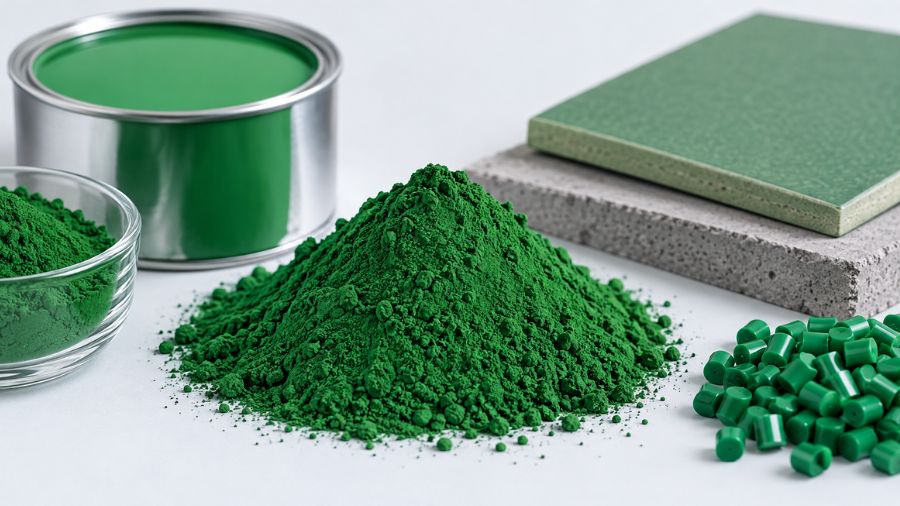
Chromtex is a term that can lead you in several directions when you search for it online. Some pages connect the name with textiles and chemical processing, while others use it in connection with industrial pigments. The most clearly documented current commercial use is CHROMTEX™, a range of synthetic chrome oxide green pigments offered by the Polish company ZWUKSO. The manufacturer describes these pigments as finely milled chromium(III) oxide products designed for coloring paints, plastics, construction materials, rubber, flooring, enamel frits, and colored glass.
Because the word looks like it could be related to textiles, it is also frequently confused with Chromatex Chemicals Pvt. Ltd., a separate Pakistani company involved in textile auxiliary chemicals. Understanding this spelling difference is important if you are researching Chromtex for industrial, commercial, or technical purposes. This guide explains what Chromtex most reliably refers to, how it is used, its main characteristics, and why so much conflicting information appears online.
What Is Chromtex?
When written as CHROMTEX™, the term refers to a commercial range of synthetic chrome oxide green pigments. ZWUKSO describes the material as a finely milled inorganic pigment based on chromium(III) oxide, with the chemical formula Cr₂O₃. The manufacturer highlights its coloring power, hiding power, and dispersibility, which are important characteristics when a pigment needs to be incorporated consistently into another material.
In simple terms, Chromtex is not a fabric or a standalone textile material. It is a pigment used to give industrial products a durable green appearance. This distinction matters because many general websites have recently described Chromtex as a broad textile technology without identifying a corresponding manufacturer or technical product standard. The strongest direct product evidence instead points toward the chrome oxide green pigment range.
The Company Behind CHROMTEX™
CHROMTEX™ is listed by ZWUKSO, a Polish company specializing in inorganic pigments. Its product portfolio includes several categories of pigments, including titanium dioxide, iron oxide, chrome oxide green, liquid pigments, granular pigments, and micronized products. The company says it has operated since 1989 and focuses heavily on the production, import, and distribution of inorganic coloring materials.
The official product information is particularly useful because it removes much of the uncertainty surrounding the name. Instead of describing Chromtex as a vague material technology, ZWUKSO identifies CHROMTEX™ specifically as chrome oxide green. This makes the manufacturer’s documentation a more reliable starting point than generic articles that assign the term broader meanings.
What Is Chrome Oxide Green?
Chrome oxide green is an inorganic pigment based on chromium(III) oxide, or Cr₂O₃. It is used when manufacturers need a green colorant that can perform in demanding industrial applications. Unlike a simple dye that dissolves into a material, an inorganic pigment is generally dispersed throughout a product to provide color and opacity.
The properties of chrome oxide green make it useful in products where color consistency and durability are important. ZWUKSO specifically describes its CHROMTEX™ material as having good coloring power, high hiding power, and good dispersibility. These characteristics can make the pigment suitable for different manufacturing processes where a strong and consistent green shade is required.
How Chromtex Is Used in Paints
One of the documented applications for CHROMTEX™ is paint manufacturing. Green pigments are used in architectural coatings, industrial coatings, primers, ground paints, fillers, and other formulations where the final product requires a stable green appearance.
A pigment’s performance in paint depends on more than simply its color. Manufacturers also need to consider how easily it disperses, how much pigment is required to achieve the desired shade, how well it covers the underlying surface, and how the finished coating behaves over time. The manufacturer’s emphasis on coloring power, hiding power, and dispersibility shows why CHROMTEX™ can be relevant to professional coating formulations.
Chromtex in Plastics
Plastic manufacturers can also use inorganic pigments to add color to polymer-based products. In this setting, the pigment needs to work properly with the selected plastic formulation and processing conditions.
CHROMTEX™ is specifically listed for pigmenting plastics. This makes it relevant to manufacturers producing green plastic components, molded products, profiles, or other polymer-based items. The exact grade and formulation requirements can vary according to the polymer, processing temperature, desired shade, and manufacturing method, so industrial users should consult the appropriate technical documentation before selecting a grade.
Construction Applications of Chromtex
Construction products are another important application area. According to ZWUKSO, CHROMTEX™ can be used in colored concrete roofing products, bricks, tiles, and facade mixtures. This is an interesting application because construction materials can be exposed to outdoor conditions, moisture, temperature changes, and sunlight.
For these products, manufacturers are generally looking for pigments that can produce a consistent color without compromising the intended characteristics of the finished material. Chrome oxide green therefore provides an industrial coloring option for manufacturers producing green or green-toned construction products.
Chromtex for Rubber Products
CHROMTEX™ is also documented for use in rubber products. Coloring rubber is common in applications where appearance, identification, branding, or product differentiation matters.
The pigment must be compatible with the particular rubber formulation and manufacturing process. This is why industrial buyers should not assume that every grade is interchangeable. A suitable product should be selected according to the technical requirements of the rubber compound, processing conditions, and desired final appearance.
Use in Flooring Materials
Flooring is another area listed by the manufacturer. Green pigments can be incorporated into flooring products where color is part of the visual design or functional appearance of the finished surface.
In commercial and industrial environments, flooring products may need to combine appearance with resistance to wear and environmental exposure. The choice of pigment therefore becomes part of a larger formulation decision rather than simply a question of finding a green powder. CHROMTEX™ is positioned as one industrial pigment option for these applications.
Chromtex and Colored Glass
Another documented application is colored glass. In glass manufacturing, pigments and coloring compounds need to tolerate the conditions associated with glass processing while producing the intended final shade.
The fact that ZWUKSO lists colored glass among CHROMTEX™ applications demonstrates the material’s broader industrial role. It is not limited to paints or construction products; the pigment can also be considered for applications where an inorganic green colorant is required.
CHROMTEX™ Grades
ZWUKSO’s product page lists multiple CHROMTEX™ grades, including CHROMTEX GA-U, GA-R, GN, GA, GA-3, GA-6, GA-40, and GA-60. The existence of several grades is important because it shows that CHROMTEX™ is not simply one identical powder sold under different names.
Different industrial applications can have different requirements for color strength, particle characteristics, dispersion, and processing performance. Buyers should therefore identify the grade that matches their application rather than selecting a product solely because it is described as chrome oxide green. The current manufacturer documentation and technical data sheets should be checked before purchasing.
Why Pigment Dispersibility Matters
Dispersibility is an important concept when working with industrial pigments. A pigment needs to distribute properly throughout the material in which it is being incorporated. Poor dispersion can produce uneven color, visible particles, inconsistent coverage, or other formulation problems.
ZWUKSO specifically highlights good dispersibility as one of the characteristics of its CHROMTEX™ chrome oxide green products. For manufacturers, this can be an important consideration because pigment performance depends not only on the chemical identity of the colorant but also on how effectively it behaves during processing.
Why Hiding Power Is Important
Hiding power refers broadly to a pigment’s ability to cover or obscure the underlying surface. This matters particularly in coatings and paints, where manufacturers want the desired color to appear consistently without requiring excessive amounts of pigment.
A pigment with strong hiding performance can influence formulation efficiency and the visual quality of the finished coating. CHROMTEX™ is described by ZWUKSO as having high hiding power, which is one reason it is suitable for several coating and construction-related applications.
Chromtex vs. Chromatex
One of the biggest reasons for confusion around the keyword is the similarity between Chromtex and Chromatex. They may look almost identical at first glance, but they should not automatically be treated as the same name.
CHROMTEX™ is documented by ZWUKSO as a chrome oxide green pigment range. Chromatex Chemicals Pvt. Ltd., on the other hand, is associated with textile auxiliary chemicals in Pakistan. Recent online articles have sometimes mixed the two identities, creating descriptions that combine pigment manufacturing with textile processing even though the names and documented businesses are different.
What Does Chromatex Chemicals Do?
Chromatex Chemicals is a separate company whose activities are connected to textile processing. Its products are associated with stages such as pretreatment, dyeing, and finishing.
That distinction is useful for anyone searching for industrial chemicals. A textile manufacturer looking for auxiliary chemicals should not assume that a search result mentioning “Chromtex” refers to the CHROMTEX™ pigment series. Likewise, a paint or construction manufacturer looking for chrome oxide green should verify that the supplier is actually offering the appropriate pigment rather than a textile-processing chemical.
Why Online Information About Chromtex Is Confusing
Search engines currently return many articles that use Chromtex as if it were a broad term for textile technology, advanced fabric processing, or material engineering. Some of these pages provide general explanations but do not identify a specific manufacturer, product specification, patent, or recognized industry standard behind the broader definition.
At the same time, the official ZWUKSO documentation provides a very specific and verifiable identity: CHROMTEX™ is a chrome oxide green pigment range.
This is a useful lesson when researching unfamiliar industrial keywords. Repeated claims across multiple websites do not necessarily establish that a term has an official technical meaning. Checking the manufacturer’s own catalog is usually a much stronger way to determine what a branded product actually is.
Is Chromtex a Textile Technology?
Based on the strongest current manufacturer evidence, CHROMTEX™ should not be described as a universal textile technology. The official ZWUKSO product documentation identifies it as a chrome oxide green pigment and lists applications such as paints, plastics, concrete, bricks, tiles, rubber, flooring, enamel frits, and colored glass.
The textile association probably comes partly from the similar spelling of Chromatex, combined with the natural assumption that “tex” means textiles. However, a similar name does not establish that two products are connected. Anyone writing about Chromtex should make this distinction clear rather than repeating unsupported descriptions.
What Buyers Should Check Before Purchasing
Industrial buyers should start by confirming exactly which product they need. If the requirement is a green inorganic pigment, they should verify that the supplier is offering chrome oxide green and identify the appropriate CHROMTEX™ grade or an equivalent product.
Technical documentation is equally important. Buyers should review the current technical data sheet and safety data sheet, check packaging and delivery requirements, and confirm compatibility with their intended application. ZWUKSO currently lists CHROMTEX™ in 25-kilogram bags and 1,000-kilogram big-bags, although commercial details can change and should be confirmed directly with the supplier.
Safety and Responsible Industrial Handling
Chrome oxide green should be treated as an industrial chemical pigment rather than an ordinary consumer colorant. Safe handling depends on the specific formulation, workplace conditions, exposure controls, and applicable regulations.
Businesses using CHROMTEX™ should rely on the current safety data sheet supplied for the exact product grade. Appropriate workplace procedures can include controlled handling, suitable personal protective equipment, dust management, proper storage, and training for employees who work with powdered materials. The exact precautions should always come from the relevant supplier documentation and local occupational-safety requirements.
The Future of Industrial Pigments
Industrial pigment technology continues to matter because manufacturers increasingly need materials that combine reliable color with efficient processing and consistent production. Paints, plastics, construction materials, rubber products, flooring, and glass all depend on carefully selected colorants.
Products such as CHROMTEX™ illustrate how a seemingly simple color can involve considerable material science. The final result depends on pigment chemistry, particle characteristics, dispersion, formulation compatibility, processing conditions, and quality control. As manufacturers pursue more consistent and efficient production, these technical factors remain important.
How to Understand the Keyword Chromtex
The easiest way to understand the term is to separate the verified product identity from the unrelated or confusing uses appearing online. If you see CHROMTEX™ in an industrial pigment context, the documented meaning is synthetic chrome oxide green from ZWUKSO. If you see Chromatex in a Pakistani textile context, you are dealing with a different business and product category.
This simple spelling check can prevent major research mistakes. It can also help buyers find the right supplier, compare the correct products, and avoid relying on articles that combine unrelated information.
Conclusion
Chromtex is a keyword with an unusually confusing online footprint, but its clearest current commercial identity is relatively straightforward. CHROMTEX™ is a range of synthetic chrome oxide green pigments documented by ZWUKSO, with applications including paints, plastics, concrete, bricks, tiles, rubber, flooring, enamel frits, and colored glass.
The biggest source of confusion is the similar name Chromatex, which is associated with a separate Pakistani textile-chemical company. These names should not be treated as interchangeable simply because they look similar.
For anyone researching Chromtex, the safest approach is to start with primary manufacturer information, verify the exact spelling, identify the product category, and check the technical and safety documentation for the specific grade. In short, when the term refers to CHROMTEX™, think chrome oxide green industrial pigment, not a universal textile technology.
More read: Bug Ralbel28.2.5