Scrubber Cap Explained: Key Uses, Types, Benefits, and Buying Tips
What Is a Scrubber Cap?
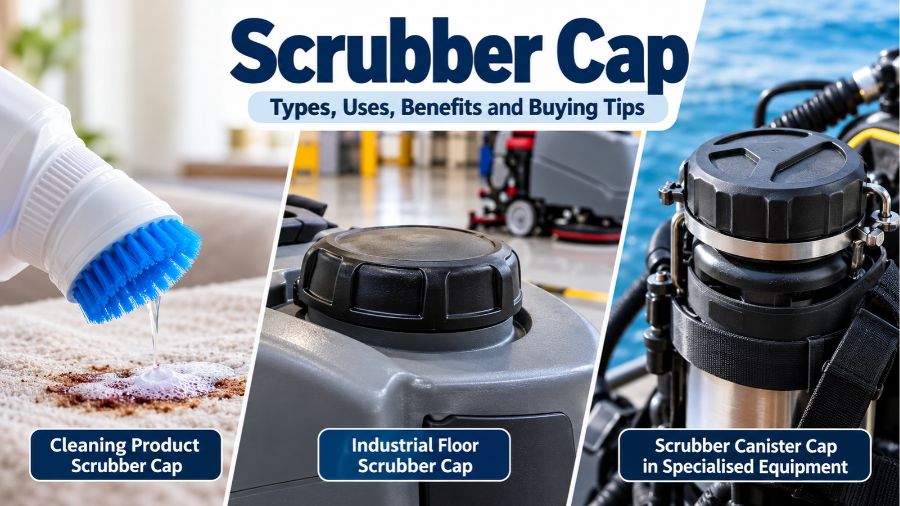
A scrubber cap is a component or attachment whose design and purpose depend on the product it belongs to. In household cleaning, it can describe a dispensing cap with a built-in scrubbing surface that helps users apply liquid cleaning products and work them into stains. In industrial cleaning equipment, the term may refer to a removable tank cover or closure. In specialised breathing equipment, a cap may seal a scrubber canister. These products are not interchangeable, despite sharing similar terminology. The most reliable way to identify a scrubber cap is to examine its intended application, shape, connection mechanism, material, and the equipment or container for which it was designed.
Understanding the Different Types of Scrubber Caps
Scrubber caps do not belong to one universal product category. Their construction varies according to whether they dispense cleaning liquid, close a machine reservoir, or form part of a technical system. Recognising the main types makes it easier to understand product descriptions and determine which features matter for a particular application.
Cleaning Product Scrubber Caps
A cleaning product scrubber cap combines a dispensing mechanism with a textured or brush-like surface. Some designs allow liquid to flow through an opening before the attached scrubbing area is used to loosen dirt or stains. The concept is particularly useful for products intended for spot cleaning, where users want to apply a controlled quantity of liquid directly to a small area. Depending on the design, the scrubbing surface may consist of raised plastic features, textured edges, or bristle-like elements. Not every cleaning bottle includes this feature, so buyers should check the product description rather than assume that any dispensing cap can also be used for scrubbing.
Industrial Floor Scrubber Caps
Industrial floor-cleaning machines often contain separate tanks for clean solution and recovered wastewater. Each tank requires an appropriate closure or access cover, and a replacement cap must match the equipment’s design. Depending on the model, a cap may help prevent splashing, limit contamination, and maintain the intended closure of the reservoir. Some assemblies may also incorporate ventilation or other specialised features. These components are designed around particular machines, so dimensions, attachment points, seals, and manufacturer specifications are more important than the generic name printed in an online listing.
Scrubber Canister Caps in Specialised Equipment
In closed-circuit rebreathers used for technical diving, a scrubber canister contains absorbent material that removes carbon dioxide from the breathing gas. The canister’s closures form part of a safety-critical assembly and must maintain the sealing performance required by the equipment. A cap for this application is fundamentally different from a household cleaning attachment or floor scrubber tank lid. Its suitability depends on the exact rebreather design, specified seals, pressure requirements, and manufacturer-approved components. Because a failure can expose a diver to dangerous carbon dioxide accumulation, improvised replacements or unverified modifications are inappropriate.
How Does a Scrubber Cap Work?
The operating principle depends on the product category, but most scrubber caps provide a controlled interface between a user and a container or system. A household cleaning cap may release liquid through an opening and provide a surface for mechanical scrubbing. An industrial tank cap closes a reservoir and may incorporate a seal to reduce leakage. A specialised canister closure maintains the integrity of an enclosed system. In each case, the cap must perform its intended function without interfering with the rest of the product. Understanding the mechanism helps users recognise why seemingly similar caps may differ significantly in construction and compatibility.
Liquid Dispensing and Surface Cleaning
A dispensing scrubber cap allows users to apply cleaning solution near the area that needs attention. The user opens or activates the dispensing mechanism, directs the liquid onto the target surface, and uses the cap’s scrubbing element where the product instructions permit. This arrangement can reduce the need to switch between a separate bottle and cleaning brush. However, the amount of liquid released, the strength of the scrubbing surface, and the type of stain all influence the result. A cap designed for fabric stain treatment may not be suitable for delicate upholstery, painted surfaces, or materials that can scratch easily.
Sealing and Leak Prevention
A tank or canister cap usually works by creating a closure between two mating surfaces. Depending on the design, this may involve threads, a fitted lid, a gasket, or an O-ring. Correct alignment and an undamaged sealing surface help the closure perform as intended. Dirt trapped around the opening, worn seals, cracked plastic, or cross-threading can interfere with the fit. Tightening a cap excessively is not necessarily a solution because it may damage the threads or deform the seal. Users should follow the equipment manufacturer’s installation and maintenance instructions.
Common Materials Used in Scrubber Caps
Manufacturers select materials according to the product’s intended environment, mechanical demands, and exposure to liquids or chemicals. Plastic is common in household dispensing caps and cleaning machine closures because it can be moulded into different shapes and produced with integrated features. Elastomers may be used for flexible seals, while specialised equipment may require materials selected for particular pressure, temperature, or chemical-resistance requirements. Reusable cleaning attachments may include different materials for their contact surfaces and structural components. Material suitability cannot be established by appearance alone; users should verify chemical compatibility, operating limits, and the manufacturer’s recommendations for the specific product.
Plastic and Polymer Components
Plastic caps can be lightweight, practical to handle, and suitable for mass production. Their moulded construction can incorporate threads, dispensing openings, textured surfaces, and other functional details. Different polymers have different strengths, flexibility, temperature limits, and resistance to chemicals. Consequently, a plastic cap suitable for an ordinary detergent bottle may not be suitable for a concentrated industrial chemical or a pressure-sensitive application. Buyers should not assume that all plastic components have the same performance characteristics simply because they look alike.
Rubber and Elastomer Seals
Some closures use rubber or other elastomeric materials to improve the seal between mating components. These materials can compress against a surface and help accommodate small variations in fit. Their performance depends on the specific compound, the liquid or gas involved, temperature, and exposure duration. Seals can deteriorate, harden, swell, or crack when used outside their intended conditions. If a cap relies on a replaceable gasket or O-ring, the replacement must meet the required specification rather than merely fit into the available space.
Key Benefits of Using a Scrubber Cap
The main advantage of a scrubber cap is that it can combine functions or simplify access to a container or system. A cleaning attachment may make it easier to dispense a product and work on a stain without handling a separate brush. A properly fitted industrial closure can help control spills and protect the contents of a reservoir from unwanted debris. A correctly specified technical closure helps preserve the integrity of its equipment assembly. The practical benefit depends on the design, quality, condition, and intended use of the product. No single advantage applies equally to every item described by the term.
Greater Convenience During Cleaning
For household cleaning tasks, an integrated dispensing and scrubbing design can make targeted application more convenient. Users can work on a small area without pouring cleaning solution onto a separate cloth or brush first. This can be particularly helpful when following a product’s instructions for treating localised marks. Convenience does not mean that less effort or less cleaning solution will always be required, however. Results depend on the cleaning formulation, the material being treated, and the type of soil or stain.
Better Control of Liquid Application
A well-designed dispensing mechanism can help direct cleaning liquid towards the intended area. Controlled application may reduce unnecessary splashing and help prevent excessive wetting of nearby surfaces. The degree of control varies between products, and some caps may release liquid more freely than others. Users should test an unfamiliar cleaning product according to its instructions, especially when applying it to coloured fabrics, porous materials, or finishes that may react to the formulation.
Protection of Equipment Contents
For tank closures, a suitable cap can help prevent accidental spills and limit the entry of unwanted material when the equipment is stored or transported as intended. A cap with the correct seal may also be important for maintaining the equipment’s specified operating conditions. These benefits depend on proper installation and routine inspection. A damaged cap, missing gasket, or incompatible replacement can undermine the closure, even if the component appears to sit correctly on the opening.
Where Are Scrubber Caps Used?
The applications of scrubber caps vary across household cleaning, commercial maintenance, and specialised technical equipment. Household users may encounter the term when shopping for stain removers or other liquid cleaning products. Cleaning professionals may encounter it while identifying replacement parts for floor scrubbers. Technical divers may encounter related terminology when examining the closures used on rebreather scrubber canisters. These applications have different performance requirements and safety considerations, so product descriptions should always be interpreted in context. Identifying the original equipment or container is the most useful starting point when searching for a particular part.
Household Cleaning and Laundry
In household cleaning, a scrubber cap may be designed to help apply stain-removal products to garments, upholstery, or other compatible surfaces. Its integrated contact surface can provide localised mechanical action while the cleaning liquid helps loosen the stain. Users should check whether the formulation and attachment are suitable for the material they intend to treat. Delicate fabrics, unstable dyes, and special finishes may require a different cleaning method. Following the product label is more reliable than assuming that a scrubber attachment is safe for every surface.
Commercial and Industrial Cleaning
Commercial cleaning equipment uses tank closures and access covers as part of its liquid-handling system. A missing or damaged closure can create practical problems, including leakage, interrupted cleaning operations, and the need for additional maintenance. The correct replacement depends on the machine model and the function of the specific opening. Operators should consult the equipment manual or an authorised parts supplier when the cap’s identity is uncertain. A general-purpose lid should not be substituted for a component that incorporates a vent, seal, or other model-specific feature.
Technical and Specialised Equipment
In specialised equipment, caps may serve as structural parts of an enclosed assembly rather than ordinary consumer accessories. Their dimensions, locking mechanism, sealing material, and approved operating limits can be essential to safe performance. Rebreather scrubber closures are one example where component compatibility matters particularly strongly. Users should rely on the manufacturer’s documentation and approved servicing procedures rather than general advice about ordinary bottle caps. The same principle applies to any component that forms part of a pressure-sensitive or life-support system.
How to Choose the Right Scrubber Cap
Choosing the right scrubber cap starts with identifying the product for which it is intended. Buyers should determine whether they need a cleaning attachment, a replacement tank closure, or a component for specialised equipment. Once the category is clear, they can compare the original part number, dimensions, attachment method, material, and any relevant sealing or operating requirements. Product photographs can help with identification, but visual similarity alone is insufficient. A reliable purchase should be supported by clear specifications and confirmation that the component is compatible with the original product.
Check Compatibility and Dimensions
Compatibility is often the most important purchasing consideration. A cap may look similar to the original part but differ in thread size, opening diameter, depth, locking mechanism, or seal placement. These differences can prevent proper fitting or create leakage. When replacing a cap, use the equipment model number and original part reference whenever possible. If those details are unavailable, compare the manufacturer’s technical specifications and consult a qualified supplier before ordering. Avoid relying solely on measurements taken from a worn or damaged component, as its original shape may have changed.
Consider Material and Durability
The right material depends on how the cap will be used. A household cleaning attachment needs to be compatible with its cleaning formulation and the surfaces it contacts. An industrial tank closure may need to tolerate repeated handling, exposure to cleaning chemicals, and routine washing. A technical component may have additional requirements specified by its manufacturer. Durability should therefore be evaluated in relation to the intended application rather than based only on thickness, weight, or appearance.
Evaluate Ease of Cleaning and Maintenance
Cleaning attachments can accumulate detergent residue, dirt, fibres, and other debris around their dispensing openings or scrubbing surfaces. A design that can be cleaned according to its manufacturer’s instructions may be easier to maintain over time. Tank caps and sealing components also require inspection for residue, damaged threads, and worn seals. Maintenance procedures should match the product category, particularly where disassembly or chemical exposure could damage the component. Components used in specialised equipment must be serviced only through approved procedures.
Common Problems With Scrubber Caps
Scrubber caps can develop problems through wear, incorrect handling, incompatible chemicals, or unsuitable replacement parts. Cleaning attachments may become clogged or lose the effectiveness of their contact surfaces. Industrial closures may crack, loosen, or leak when their seals deteriorate. In technical equipment, damaged closures can compromise the integrity of the assembly. Recognising the type of problem is important because the appropriate response differs by application. Ordinary cleaning and inspection may be sufficient for a household attachment, while an industrial machine or safety-critical system may require a specified replacement part or professional inspection.
Leaking or Poor-Fitting Caps
A leaking closure may have damaged threads, a worn gasket, contamination around the sealing surface, or a cap that does not match the container. Users should stop using a defective closure where leakage could create a hazard, inspect it according to the product instructions, and replace damaged parts with compatible components. Applying extra force is not a dependable repair and may worsen the damage. For specialised equipment, follow the manufacturer’s fault-finding and servicing instructions instead of attempting an improvised fix.
Clogged Dispensing Openings
A cleaning-product cap may stop dispensing properly when dried residue or other material blocks the opening. Whether the cap can be rinsed or cleaned depends on the cleaning formulation and the manufacturer’s directions. Users should never clear an opening by mixing cleaning chemicals or using an unsuitable sharp tool. If the attachment cannot be cleaned safely or the dispensing mechanism is damaged, replacing it may be more appropriate. Any cleaning method must be compatible with the product and its intended use.
Cracks and Material Deterioration
Cracks, warping, brittleness, and changes in the condition of a seal can reduce a cap’s ability to function properly. Chemical exposure, ageing, heat, physical impact, and repeated handling may contribute to deterioration, depending on the material. A visibly damaged component should not be assumed safe merely because it still attaches to the container. Replace it with the correct part, particularly if the cap is responsible for containing liquid or maintaining a technical seal.
Scrubber Cap Maintenance and Care
Maintenance depends on the type of scrubber cap and the manufacturer’s instructions. A reusable household cleaning attachment may require rinsing, residue removal, and drying after use if those steps are permitted for the product. Industrial closures should be checked for wear, contamination, and damage during routine equipment maintenance. Seals should be inspected and replaced according to the specified service requirements. Caps used in specialised systems require the appropriate technical procedures and may not be suitable for user disassembly. Consistent care can help identify deterioration early, but cleaning cannot restore a cracked body, damaged thread, or failed seal.
Advantages and Limitations of Scrubber Caps
Scrubber caps can improve convenience, simplify cleaning, or provide a practical closure for a reservoir, but their value depends on the application. Integrated cleaning attachments reduce the need to handle separate tools, although their scrubbing performance may be limited by the shape and material of the contact surface. Replacement closures can help restore equipment functionality, but only when they match the original specifications. Specialised caps may be essential to safe operation while requiring professional servicing and precise compatibility. Understanding these limitations helps buyers choose a suitable product without assuming that all scrubber caps offer the same benefits.
Conclusion
A scrubber cap can refer to an integrated cleaning attachment, an industrial cleaning-machine closure, or a cap used in specialised equipment. Although these products share a name, their designs, purposes, and safety requirements differ considerably. The most effective way to identify the correct item is to establish its intended application, confirm compatibility, review material requirements, and follow the manufacturer’s maintenance guidance. By understanding these distinctions, consumers and equipment operators can make more informed purchasing decisions, avoid incompatible replacements, and use each product according to its intended function.
FAQs
1. What is a scrubber cap used for?
A scrubber cap may dispense cleaning liquid while providing a scrubbing surface, close a cleaning machine’s tank, or seal a specialised equipment canister.
2. Is a scrubber cap the same as a scrub cap?
No. A scrubber cap usually refers to a functional product component, while a scrub cap generally means headwear worn by healthcare professionals.
3. Can a scrubber cap be reused?
Some scrubber caps are reusable, while others are designed for specific disposable products. Always follow the manufacturer’s cleaning, replacement, and maintenance instructions.
4. How do I choose the correct scrubber cap?
Identify the intended product, check its model and part number, and verify dimensions, attachment type, material compatibility, and any required sealing specifications.
5. Why does a scrubber cap leak?
Leaks can result from damaged threads, worn seals, cracks, contamination, or incompatible parts. Inspect the closure and replace defective components appropriately.
6. Where can I buy a replacement scrubber cap?
Replacement scrubber caps may be available from equipment manufacturers, authorised parts dealers, cleaning supply stores, and retailers selling compatible household cleaning products.
More read: BuckViz Boots