Eleksan: Inside Turkey’s Industrial Automation and Engineering Specialist
What Is Eleksan?
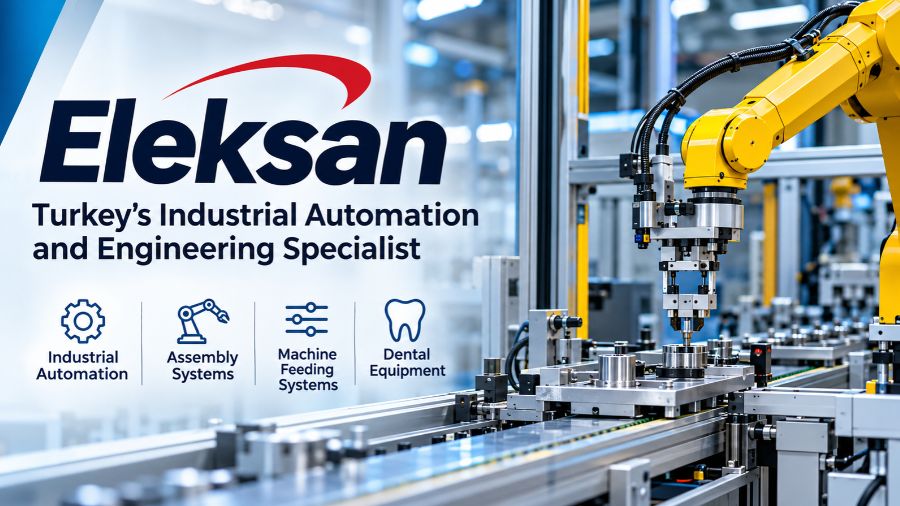
Eleksan Ltd. is a Turkish engineering and technology business that provides industrial automation solutions, electromechanical products, and specialised equipment for different professional markets. Founded in Istanbul in 1970, the company initially concentrated on manufacturing electrical components, including power potentiometers, resistors, and contact assemblies. Over time, its activities expanded into custom-designed machinery, automated production systems, and medical-related equipment. Rather than focusing on a single product category, Eleksan developed expertise across several industries where technical reliability, precision, and specialised manufacturing capabilities are important. Its business model combines engineering, product development, manufacturing, distribution, and technical support, allowing it to serve organisations with different operational requirements.
The History and Development of Eleksan
Eleksan’s development began in 1970, when founder Murat Tansever established the company in Istanbul, Turkey. During its early years, the business focused on producing power potentiometers, resistors, and spare contact assemblies for electrical equipment. These products helped establish its technical foundation and introduced the company to industrial customers requiring specialised electrical components. As the Turkish manufacturing industry developed, Eleksan gradually expanded its activities beyond its original product range.
Expansion into Industrial Automation
A significant development took place around 1990, when Eleksan began concentrating more heavily on engineering and manufacturing specialised machinery. Its expanded product range included custom-built machines, screwdriving stations, and automatically fed presses. This transition represented an important change in the company’s business direction, moving beyond individual electrical components towards complete manufacturing solutions. By developing equipment around specific production requirements, Eleksan positioned itself to support businesses looking to improve manufacturing processes and operational efficiency.
Development of Manufacturing Facilities
As its operations expanded, Eleksan invested in additional manufacturing capacity. According to the company’s historical information, it established a facility in the Dudullu Organised Industrial Zone, featuring approximately 2,100 square metres of enclosed space and 750 square metres of outdoor space. The company moved into this facility in 1998. Its history also reports that it completed more than 200 automation projects after establishing operations there. This expansion provided additional space and resources for engineering, machinery production, assembly, and other manufacturing activities.
Expansion into Medical Technology
Eleksan also developed a presence in the dental equipment sector. Its medical-related activities began in 1995, when the company started working with products and equipment designed for dental applications. In 2005, it entered a joint venture with Italian precision attachment manufacturer Rhein’83 to establish a medical training facility at its premises. The facility supported educational activities for dentists and dental technicians, focusing on the correct use and manufacturing techniques associated with relevant dental products. This development demonstrated how the company’s technical and distribution capabilities could be applied beyond conventional industrial manufacturing.
Eleksan’s Main Products and Services
Eleksan operates across several technology-related areas, with industrial automation and electromechanical engineering forming important parts of its business. Its product and service offerings reflect a combination of in-house engineering, specialised manufacturing, and relationships with other technology providers.
Industrial Automation Systems
Industrial automation is one of Eleksan’s principal areas of activity. The company develops specialised automated production solutions for businesses operating in industries such as automotive manufacturing, household appliances, and medical equipment production. These solutions are designed around individual production requirements rather than relying exclusively on standard machinery. Depending on the application, automation projects can involve assembly equipment, automated workpiece handling, production platforms, and integrated machinery. Such systems can help manufacturers improve consistency, reduce repetitive manual operations, and organise production workflows more efficiently.
Assembly Systems
Assembly systems are designed to bring multiple components together to create a finished product or subassembly. Eleksan describes solutions ranging from operator-assisted semi-automatic equipment to fully automated, high-capacity production lines. The complexity of an assembly system depends on the products being manufactured, the number of components involved, and the required production process. These systems can incorporate specialised assembly technologies to support accurate positioning, fastening, and component handling. For manufacturers producing large quantities of similar products, appropriately designed assembly equipment can improve repeatability and help maintain consistent production standards.
Machine Feeding Systems
Machine feeding systems support automated manufacturing by supplying workpieces to industrial equipment and removing them when operations are complete. These systems are particularly relevant to machinery such as CNC machines and injection moulding equipment. Automating material handling can reduce the need for operators to perform repetitive loading and unloading tasks. It can also help manufacturers maintain a more consistent workflow between production stages. The design of a suitable feeding system depends on the workpiece dimensions, machine requirements, production speed, and safety considerations.
Electromechanical Products
Eleksan has a long history of working with electromechanical technologies. Its traditional product portfolio includes power resistors and other specialised electrical components. These products are relevant to industrial applications where electrical resistance, energy handling, and dependable component performance are important. The company also provides products designed around particular technical requirements rather than limiting its activities to standard catalogue components. Its historical experience in this area forms an important part of its broader engineering background.
Industries Served by Eleksan
Eleksan’s activities extend across multiple sectors that depend on specialised equipment, engineering expertise, and reliable technical solutions. Its different business units reflect the company’s approach of applying established technical knowledge to specific industry requirements.
Automotive Manufacturing
Automotive production involves complex manufacturing operations, including component assembly, material handling, and quality-controlled production processes. Automation can help automotive manufacturers improve consistency and coordinate different stages of production. Eleksan identifies the automotive industry among the sectors served by its automation activities. Its specialised machinery and production systems are relevant to manufacturers seeking equipment designed around particular components and operational workflows.
Household Appliance Manufacturing
The household appliance industry requires efficient production systems for products that contain numerous mechanical and electrical components. Automated assembly equipment can support repeatable manufacturing processes and reduce inconsistencies during production. Eleksan identifies white goods, including household appliance manufacturing, as one of its target industries. Its engineering capabilities can be applied to machinery and production systems designed for the assembly and handling of appliance components.
Dental and Medical Applications
The dental sector represents another important part of Eleksan’s business history. Its activities include dental laboratory equipment, attachment systems, and products associated with dental applications. The company has also worked with international brands and developed training activities through its partnership with Rhein’83. This combination of equipment distribution, technical support, and educational activities illustrates how specialised engineering businesses can serve professional markets requiring specific knowledge and product expertise.
Renewable Energy and Other Technologies
Eleksan’s corporate information also identifies renewable energy among its areas of activity. However, publicly available company information does not provide enough detail to establish the complete scope, capacity, or current specifications of its renewable energy projects. It is therefore important to distinguish the company’s stated involvement in this sector from independently verified details about particular installations or technologies.
How Eleksan’s Automation Approach Works
Industrial automation projects generally begin with an understanding of the manufacturing process that needs improvement. Eleksan describes an approach based on examining production requirements, identifying operational bottlenecks, and developing equipment around individual customer needs. This can involve several engineering disciplines, including mechanical design, electrical systems, machinery manufacturing, automation integration, and software development. By coordinating these activities, an engineering company can develop a solution that connects different production stages rather than simply supplying an individual machine. The final design must consider production capacity, equipment compatibility, operator safety, maintenance requirements, and the expected operating environment.
Custom Engineering and Machine Design
Custom engineering is particularly useful when standard commercial machinery cannot meet a manufacturer’s production requirements. Different products may require specialised positioning, fastening, feeding, or assembly operations. Eleksan’s automation activities include the development of customised production equipment, with design and manufacturing processes intended to address individual customer specifications. This approach can provide greater flexibility than purchasing general-purpose machinery, although it also requires careful planning, technical evaluation, and investment before implementation.
Integration of Production Technologies
A manufacturing system often requires several technologies to work together. Mechanical equipment, electrical controls, sensors, feeding mechanisms, and software may all contribute to the overall process. Eleksan describes capabilities covering different stages of automation development, including three-dimensional design, CNC manufacturing, feeder production, assembly, electrical cabling, and software development. Bringing these disciplines together can simplify coordination between project stages and support the development of integrated production systems.
Benefits of Industrial Automation Solutions
Industrial automation offers several potential advantages for manufacturers when systems are properly designed and implemented. One important benefit is production consistency, because automated equipment can repeat defined operations under controlled conditions. Automation can also reduce the time employees spend on repetitive activities, allowing workers to focus on supervision, quality checks, maintenance, and other responsibilities. In suitable applications, improved material handling and coordinated production stages can reduce unnecessary delays. However, these benefits depend on the equipment, manufacturing environment, operator training, and maintenance arrangements. Automation should therefore be evaluated according to measurable operational needs rather than treated as an automatic improvement for every business.
Challenges and Limitations of Automation
Despite its advantages, industrial automation introduces technical and financial challenges. Custom machinery can require substantial initial investment, particularly when a project involves several production stages or specialised equipment. Businesses must also consider installation requirements, staff training, equipment maintenance, spare parts, and compatibility with existing machinery. Another important challenge is flexibility: equipment designed for one product or production process may require modifications when manufacturing requirements change. Software integration and operational safety also need careful attention. For these reasons, manufacturers should assess the expected benefits, implementation costs, long-term support requirements, and potential production disruptions before investing in a new automation system.
Eleksan’s Position in the Turkish Technology Industry
Turkey has an established manufacturing base covering automotive production, household appliances, machinery, electrical equipment, and other industrial sectors. Businesses operating in these industries require engineering companies capable of developing specialised machinery and supporting production processes. Eleksan’s history since 1970 places it among the established Turkish businesses working in industrial technology and engineering. Its combination of automation, electromechanical products, and dental-related activities gives it a broader business profile than a company focused exclusively on one machinery category. Nevertheless, publicly available information is not sufficient to establish its current market share, international ranking, or position relative to every competing automation manufacturer.
Is Eleksan the Same as Other Companies Using the Name?
The name Eleksan is not exclusive to one business, which can create confusion during online research. The Turkish market includes several businesses using similar names in different industries. For example, Eleksan Ltd. at eleksan.com focuses on industrial automation, electromechanical products, and dental-related activities. A separate business operating through eleksan.net presents poultry farming equipment, including feeding and watering systems. Another similarly named company, Eleksan Ltd. Şti., operates in automatic door and gate automation through eleksan.com.tr. These businesses should not automatically be treated as divisions of the same organisation. Readers researching a supplier, manufacturer, or business partnership should verify the company’s full legal name, business address, product portfolio, and official contact information before making decisions.
The Future of Industrial Automation and Eleksan
The manufacturing industry continues to explore automation technologies to improve productivity, production quality, and operational efficiency. Robotics, connected machinery, advanced sensors, industrial software, and data-driven production management are changing how modern factories operate. For established engineering businesses such as Eleksan, these developments create opportunities to apply existing manufacturing knowledge to increasingly sophisticated production requirements. However, future growth will depend on factors such as research and development, investment, customer demand, technical capabilities, and the ability to support evolving industrial standards. Without detailed public announcements about specific future projects, it would be premature to predict Eleksan’s expansion plans or claim that it is adopting particular emerging technologies.
Conclusion
Eleksan is an established Turkish engineering and technology company with a history dating back to 1970. From its early production of electrical components to its later development of specialised machinery, industrial automation systems, and dental-related products, the company has expanded into several technical markets. Its experience in custom engineering, production equipment, and electromechanical technologies highlights the importance of specialised solutions in modern manufacturing. Although several unrelated businesses use the Eleksan name, the original Eleksan Ltd. has a distinct industrial history and business profile. Understanding this distinction, alongside its documented activities and limitations in publicly available information, provides a more accurate picture of the company’s place in Turkey’s technology and manufacturing landscape.
FAQs
1. What is Eleksan?
Eleksan Ltd. is a Turkish engineering company established in 1970, specialising in industrial automation, electromechanical products, and dental-related equipment.
2. Who founded Eleksan?
Eleksan Ltd. was founded by Murat Tansever in Istanbul, Turkey, in 1970, initially focusing on electrical components and specialised manufacturing products.
3. What products does Eleksan manufacture?
Eleksan’s activities include custom automation machinery, assembly systems, machine feeding equipment, power resistors, and selected dental laboratory products.
4. Which industries does Eleksan serve?
The company’s automation activities target automotive, household appliance, and medical manufacturing, while its broader business portfolio includes dental and renewable energy activities.
5. Is Eleksan a Turkish company?
Yes, Eleksan Ltd. was established in Istanbul, Turkey, and has developed its engineering and manufacturing activities within the Turkish industrial sector.
6. Is Eleksan involved in industrial automation?
Yes, industrial automation is a major part of its business, including customised machinery, automated assembly systems, machine feeding equipment, and integrated production solutions.
More read: 832 Area Code