EDIO: How This AI-Powered Platform Is Transforming Language Learning
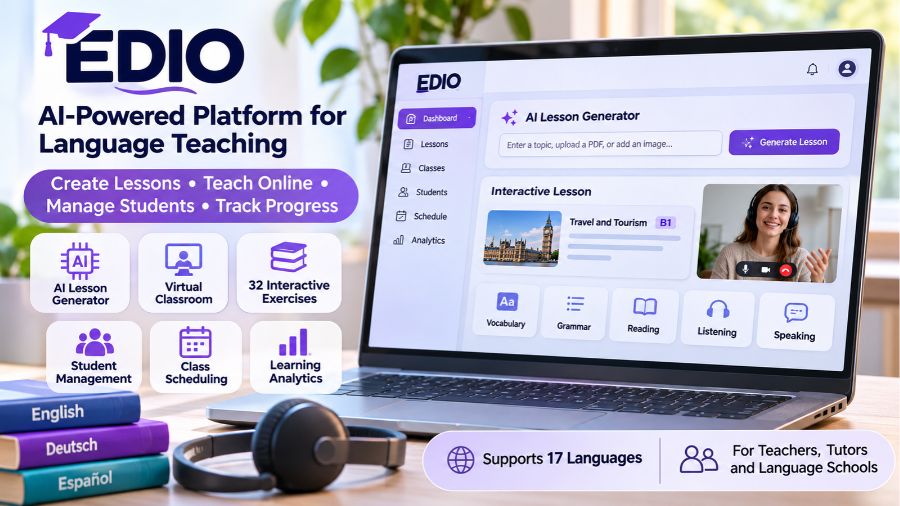
EDIO is an AI-powered language teaching platform designed to help language schools, independent teachers, and educational institutions create interactive lessons, manage students, and deliver online classes more efficiently. Rather than functioning as a simple AI writing assistant or traditional learning management system, EDIO combines lesson generation, virtual classrooms, student management, scheduling, and learning activities in one environment. Its approach reflects a growing shift towards personalized digital education, where teachers can spend less time preparing materials and more time helping students develop practical language skills.
What Is EDIO?
EDIO is an educational technology platform available through edio.ai that focuses on language schools and language teachers. Its primary purpose is to simplify the process of preparing lessons, conducting online classes, assigning homework, and monitoring student progress. The platform combines artificial intelligence with classroom management tools, making it useful for educators who want to organize their teaching activities without relying on several disconnected applications.
Unlike general-purpose AI chatbots, EDIO is designed around the actual workflow of language education. Teachers can generate structured learning materials, organize lessons into chapters, include interactive exercises, and use the same materials during live classes or independent study. This makes it particularly relevant for schools that teach English, German, Polish, Spanish, and other languages.
Who Owns EDIO?
EDIO is operated by POLEDIO Sp. z o.o., a registered company based in Katowice, Poland. The company’s official terms of use identify POLEDIO as the legal operator of the platform and provide its registered business information. This is useful for understanding that EDIO is not simply an independent AI tool or a generic educational website; it is a commercial software service developed specifically for language education.
The company positions its product around the needs of language schools, tutoring businesses, and educators who deliver online or hybrid lessons. Its business model combines subscription-based access with additional services and AI credits. This approach allows educational organizations to use the platform as part of their regular teaching operations rather than treating it as a one-time lesson-generation tool.
How Does EDIO Work?
EDIO brings several stages of language teaching into a connected digital environment. Teachers can prepare materials, arrange classes, invite students, deliver interactive lessons, and review learning progress. The AI tools help with content preparation, while the classroom and management features support the practical side of running an educational business.
AI-Powered Lesson Generation
One of EDIO’s central features is its AI lesson generator. Teachers can enter a subject, upload a PDF document, or provide an image containing educational material. The platform then uses the supplied information to create a structured lesson containing chapters, explanations, vocabulary, and interactive exercises. Teachers can select the language being taught, the students’ language for translations and explanations, and an appropriate proficiency level.
The generated material is designed to be editable rather than a fixed document. Educators can change chapters, improve explanations, replace exercises, and add their own teaching content before sharing a lesson with students. This is particularly useful when a teacher needs to adapt existing course materials for a particular group instead of preparing everything from the beginning.
Interactive Virtual Classrooms
EDIO also provides a virtual classroom where teachers and students can work through the same lesson in real time. Student answers appear on the teacher’s screen, allowing educators to follow progress while an activity is taking place. Many exercises include automatic answer checking, which makes it easier to identify mistakes and provide immediate guidance.
The classroom also includes tools for vocabulary, messaging, attendance, teacher notes, and homework. Teachers can organize the lesson into chapters and guide students towards particular exercises. Importantly, EDIO’s help documentation explains that video meetings can use an external meeting link, such as Zoom or Google Meet. This means schools should distinguish between EDIO’s shared teaching workspace and the separate video-conferencing service used for calls.
Student and School Management
For language schools, managing teachers and students can become complicated as the number of classes increases. EDIO addresses this challenge through school management features that bring scheduling, student records, lesson balances, communication, and performance information together.
School owners and administrators can organize teaching teams, while teachers can access their assigned classes and student information. Students can also view their learning materials, class schedules, completed lessons, and progress. Bringing these activities into one platform can reduce the need to maintain separate spreadsheets and communication systems for everyday administrative work.
Key Features of the EDIO Platform
EDIO offers more than AI-generated educational content. Its feature set covers lesson preparation, interactive learning, classroom communication, and school administration. The platform’s official feature documentation describes 32 interactive exercise types, organized into different groups, although feature availability and plan limits should be checked before purchasing a subscription.
32 Interactive Exercise Types
One of the platform’s notable capabilities is its collection of interactive exercises. These include quizzes, matching activities, fill-in-the-blank questions, drag-and-drop tasks, vocabulary activities, grammar exercises, and speaking games. Teachers can combine different activities within a single lesson to create a more varied learning experience.
The platform also supports media-based learning through pictures, GIFs, audio, video, and PDF materials. Some exercises are automatically checked, while writing and speaking activities can be submitted for teacher review. This distinction matters because not every language skill can be evaluated accurately through multiple-choice questions or automated answer checking.
Support for 17 Languages
EDIO advertises support for 17 languages, making it relevant to schools that teach more than one language. Teachers can choose the language of instruction and the language used for student explanations or translations. This can help educators prepare lessons for learners with different language backgrounds.
The platform also provides proficiency-level options for AI-generated lessons. Its lesson generator documentation describes levels from A1 to C1, while certain ready-made English lesson materials cover the same range. Teachers should still review generated content to ensure that vocabulary, grammar, and difficulty are appropriate for their students.
Lesson Scheduling and Communication
Scheduling is another important feature for tutoring businesses and language schools. Teachers can arrange recurring or individual classes, manage their availability, and access scheduled lessons from the platform. Students can see their upcoming classes, making it easier to coordinate regular teaching sessions.
Built-in messaging also gives teachers and students a way to communicate without constantly switching between different applications. For organizations with several educators, having scheduling and communication connected to classroom management can make daily operations more organized.
Student Progress and Analytics
EDIO includes analytics features that help schools understand student participation and teaching activity. School administrators can review attendance, completed lessons, lesson duration, feedback, and student performance information. Teachers can also use individual student records to understand where additional support may be necessary.
These tools can be valuable for educational businesses that want to monitor service quality rather than simply count the number of lessons delivered. However, analytics should support professional teaching judgment instead of replacing direct assessment, individual feedback, and communication with students.
How Much Does EDIO Cost?
EDIO uses a subscription model based primarily on the number of students included in a school’s virtual classes. Its published entry-level pricing starts at €20 per month for five students, with larger plans available for organizations managing more learners. The platform also advertises annual billing, which offers a discount compared with paying monthly.
Subscription plans include monthly AI credits that can be used for different content-generation activities. According to the platform’s billing documentation, generating a complete lesson costs 10 credits, while creating a lesson with an AI-generated cover costs 20 credits. Generating individual exercises requires fewer credits, allowing teachers to choose between creating an entire lesson and improving specific sections.
Additional services, including online course invitations and white-label branding, may involve separate charges. Published prices are net amounts, meaning applicable VAT may be added at checkout. Since subscription plans and credit allowances can change, prospective customers should confirm the latest pricing directly through the official pricing page before making a purchasing decision.
Benefits of Using EDIO for Language Education
EDIO’s biggest potential benefit is the way it combines lesson creation and classroom management. Teachers who currently use separate applications for worksheets, quizzes, scheduling, homework, and student records may find it convenient to bring these activities into one environment. This can make the teaching process more consistent and reduce unnecessary administrative work.
Another advantage is the ability to create lessons from existing educational materials. Rather than manually converting every PDF or textbook exercise into an online activity, teachers can use the AI generator to build an editable lesson structure. The interactive exercise library also provides different ways to practice grammar, vocabulary, reading, listening, and speaking.
For language schools, shared materials can help maintain a consistent teaching approach across different educators. Administrators can organize resources and monitor student activity, while teachers retain the ability to adapt lessons to individual learning requirements. The platform’s white-label option may also appeal to schools that want educational software presented under their own branding.
However, these benefits depend on how effectively an organization uses the available tools. AI-generated lessons still require human review, and moving an entire school to a new platform involves training, configuration, and changes to established workflows.
Is EDIO Suitable for Teachers and Language Schools?
EDIO appears particularly relevant to independent language teachers, online tutors, and small or medium-sized language schools that need both educational tools and administrative support. Individual teachers can use the lesson generator and interactive classroom, while school owners can benefit from student management, scheduling, and analytics.
It may also suit organizations that provide remote language courses or structured online tutoring programs. Its ability to organize learning materials, assign homework, and track student participation makes it more comprehensive than a standalone quiz generator. Schools that already have extensive teaching systems, however, should evaluate whether EDIO’s features integrate with their existing processes before switching.
For students, the platform provides access to class materials, interactive exercises, vocabulary tools, and learning progress information. Its value depends on the quality of the teacher’s materials and the structure of the lessons rather than the software alone.
EDIO vs Traditional Language Teaching Tools
Traditional language teaching often involves several separate tools. A teacher might prepare worksheets in a document editor, create quizzes on another website, schedule classes through a calendar, conduct video meetings through a conferencing application, and track attendance in a spreadsheet. Although this approach offers flexibility, it can create extra work and make information difficult to manage.
EDIO takes a more integrated approach by connecting lesson preparation, interactive exercises, virtual classroom activities, and student management. Its AI generator adds another layer by helping educators create teaching materials from topics and existing documents. This makes the platform particularly interesting for schools looking to modernize their digital teaching workflow.
Nevertheless, an all-in-one system is not automatically better for every organization. Some educators may prefer specialized applications because they provide particular features or greater flexibility. Others may already have established workflows that would be expensive or inconvenient to replace. The best choice depends on class size, teaching requirements, existing software, and the amount of administrative work a school wants to consolidate.
Limitations and Things to Consider Before Using EDIO
Although EDIO offers a broad collection of educational features, prospective users should consider several practical limitations. First, AI-generated content is not guaranteed to be perfect. Language exercises may require corrections, contextual adjustments, or changes in difficulty before they are suitable for a particular student group. Teachers should review generated materials rather than relying entirely on automated content creation.
Second, AI credits are limited by the subscription allowance. Schools that frequently generate complete lessons, images, and additional exercises should estimate their monthly usage before selecting a plan. Additional costs for services such as white-label branding and online course invitations should also be considered.
Another consideration is the platform’s learning curve. Teachers who are accustomed to traditional teaching methods may need time to understand the lesson editor, classroom features, and administrative tools. Schools should also evaluate how the platform fits their existing video-conferencing, payment, and student-management processes.
Finally, organizations handling student information should review the platform’s privacy policy, data-processing arrangements, and applicable data protection requirements. This is particularly important for schools working with children or students in different countries.
The Future of EDIO and AI-Powered Language Learning
Artificial intelligence is becoming an increasingly important part of digital education. Tools that can generate exercises, adapt educational materials, and provide immediate feedback are changing how teachers prepare and deliver lessons. EDIO represents this development by combining AI-assisted content creation with practical classroom and school-management features.
Its continued development will likely depend on how effectively it responds to teachers’ needs, improves its educational tools, and supports different teaching environments. Greater personalization, improved learning analytics, and more flexible content-generation options are important areas for educational technology platforms generally.
For EDIO, maintaining a balance between automation and human teaching expertise will remain important. AI can reduce repetitive preparation work, but meaningful language education still requires conversation, cultural understanding, personalized feedback, and guidance from qualified educators. Platforms that support these activities rather than attempting to replace teachers are likely to offer greater long-term value.
Conclusion
EDIO is an interesting example of how artificial intelligence and educational software can work together to improve language teaching. Its combination of AI lesson generation, interactive exercises, virtual classrooms, scheduling, and student analytics makes it a practical option for language schools and independent educators. Its subscription-based pricing also provides an entry point for smaller teaching businesses. However, users should evaluate AI credit limits, additional costs, privacy arrangements, and compatibility with existing systems before committing. Ultimately, EDIO’s value lies in helping educators organize their work and create engaging learning experiences while keeping teachers at the center of education.
FAQs
1. What is EDIO used for?
EDIO is used to create interactive language lessons, conduct online classes, manage students, organize schedules, assign homework, and monitor educational progress.
2. Is EDIO an AI-powered platform?
Yes, EDIO uses artificial intelligence to generate lessons, exercises, images, and educational materials from topics, uploaded PDFs, and images.
3. How much does EDIO cost?
EDIO’s published entry-level subscription starts at €20 monthly for five students, with larger plans and additional services available.
4. Does EDIO support multiple languages?
Yes, EDIO advertises support for 17 languages, allowing teachers to prepare multilingual learning materials and explanations for different student groups.
5. Can independent teachers use EDIO?
Yes, independent teachers and online tutors can use EDIO to prepare lessons, teach students interactively, assign homework, and organize classes.
6. Does EDIO offer a free trial?
Yes, EDIO advertises a seven-day free trial with included AI credits and no credit card requirement when starting the trial.
More read: Smart Square