Parakordas Explained: Essential Uses, Types, Strength and Buying Tips
What Is Parakordas?
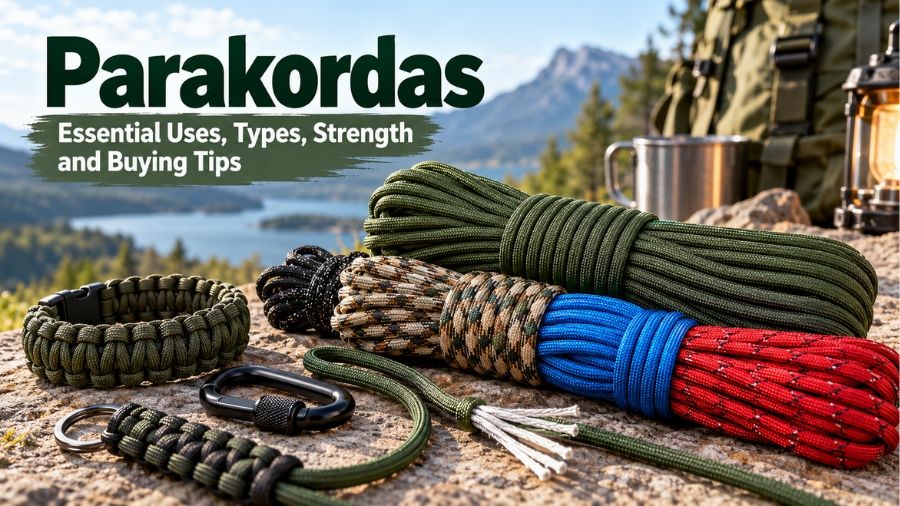
Parakordas refers to paracord, short for parachute cord, a synthetic rope commonly manufactured from nylon. Traditional paracord typically features a braided outer sheath surrounding an inner core made of several yarn bundles, creating a flexible cord that is relatively strong for its size and weight. Although its original purpose was associated with parachute equipment, its combination of portability, flexibility, and versatility has made it useful for numerous civilian applications. Depending on its construction and intended purpose, paracord can be used for securing lightweight equipment, making decorative bracelets, repairing outdoor gear, organizing cables, and completing small household projects. However, the term alone does not establish a particular strength rating or manufacturing standard, so buyers should examine the specifications of the actual cord they intend to purchase.
The History and Origin of Parakordas
Paracord became associated with military parachutes during the Second World War, when nylon cords were used as suspension lines connecting parachute canopies to their users. Nylon offered useful characteristics compared with many traditional natural-fibre materials, including flexibility, relatively low weight, and resistance to rot and mildew. After landing, military personnel could reuse available cord for practical tasks rather than treating it as single-purpose equipment. This adaptability helped establish paracord as a general utility material beyond its original application. Following the war, surplus supplies and commercially manufactured versions became available to civilian users. Over time, paracord developed a following among campers, outdoor enthusiasts, craftspeople, and people interested in emergency preparedness. Its popularity also expanded into fashion and handmade products, particularly woven bracelets, keychains, belts, and decorative tool wraps.
How Is Parakordas Made?
Paracord is generally produced by combining a protective braided sheath with a central core, although the exact construction varies between products. The outer layer helps protect the internal yarns against abrasion and handling, while the core contributes to the cord’s overall structure and tensile performance. Nylon is commonly used because it offers flexibility, useful strength, and resistance to moisture-related deterioration under many ordinary conditions. Some products use alternative synthetic fibres or different core arrangements, so not every cord marketed as paracord has identical characteristics.
The Outer Sheath
The outer sheath is the braided covering visible on the finished cord. It helps hold the core together, provides a practical surface for tying knots, and protects the inner fibres from direct contact with rough surfaces. Manufacturers offer sheaths in numerous colours, camouflage patterns, reflective designs, and decorative combinations. The sheath’s quality, braid construction, and resistance to abrasion can influence how the cord performs during repeated use. A colourful appearance, however, does not automatically indicate superior strength or durability.
The Inner Core
The core consists of internal yarns that contribute to the cord’s construction and load-bearing performance. A common Type III 550 paracord design contains seven core strands, although the precise construction should be confirmed against the manufacturer’s specifications. In some situations, individual core strands can be removed and used separately for lightweight tasks such as simple repairs or tying small objects. Removing the core also changes the cord’s structure and load-bearing characteristics, so the modified cord should not be assumed to retain its original rated strength.
Why Construction Matters
Two cords with similar diameters can have different performance characteristics because their materials, sheath construction, core arrangement, manufacturing quality, and testing standards may differ. A product described simply as strong paracord does not provide enough information to establish its safe working capacity. Buyers should look for a clearly stated product type, documented breaking strength, intended application, and any applicable manufacturing specification. These details are especially important when the cord will be used outdoors or for tasks involving significant loads.
Different Types of Parakordas
Paracord is available in multiple types, diameters, constructions, and strength ratings. Military-style classifications include Types I, IA, II, IIA, III, and IV, while commercial sellers also offer micro cord, accessory cord, and other products designed for particular crafts or applications. These descriptions should not be treated as interchangeable: a military specification defines particular construction and performance requirements, whereas a commercial product label may follow a manufacturer’s own naming system.
Type I Paracord
Type I paracord is a relatively lightweight option suited to smaller projects where a thin, flexible cord is more useful than a thicker utility line. Depending on the specification and product construction, it may be suitable for lightweight decorative work, lanyards, and compact accessories. Buyers should check the exact specification rather than assuming every product labelled Type I has identical construction or breaking strength.
Type II Paracord
Type II paracord offers a middle ground between thinner accessory cord and thicker general-purpose varieties. Its precise dimensions, core arrangement, and strength depend on the applicable specification and manufacturer. It may be useful for crafts, lanyards, equipment organisation, and selected lightweight utility tasks. The most appropriate choice depends on the actual load requirements rather than the type number alone.
Type III or 550 Paracord
Type III, commonly called 550 paracord, is one of the best-known varieties. The 550 designation refers to a nominal minimum breaking strength of 550 pounds under the relevant specification, equivalent to approximately 249 kilograms-force. It is commonly used for bracelets, keychains, camping accessories, gear repairs, and general-purpose tying. However, the figure describes breaking strength under specified testing conditions, not a recommended working load. Knots, abrasion, shock loading, environmental conditions, and product quality can all affect performance.
Type IV Paracord
Type IV military-specification paracord is designed with a heavier-duty construction than the more familiar Type III variety. Its specific construction and performance requirements depend on the relevant specification. It may be appropriate where a particular project requires cord meeting those requirements, but selecting it solely because it has a higher type number is not sufficient. The published technical data should always match the intended application.
Micro Cord and Accessory Cord
Micro cord and other thin accessory cords are useful for decorative weaving, jewellery, small keychains, lightweight lanyards, and detailed craft projects. They can be easier to work with when thicker paracord would create excessive bulk. However, thin decorative cord should not automatically be considered a substitute for full-size paracord. Its materials, construction, and strength may differ substantially from standard military-style varieties.
Common Uses of Parakordas
Parakordas is valued because one compact length of cord can serve several practical purposes. Its flexibility and relatively low weight make it convenient to carry, while its availability in different colours and constructions allows it to suit functional and decorative projects. The best applications are those that match the cord’s documented specifications, because not every paracord product is suitable for heavy loads, safety-critical equipment, or prolonged exposure to demanding conditions.
Camping and Outdoor Activities
Campers frequently use paracord for securing lightweight tarpaulins, organising equipment, attaching accessories, and completing simple repairs. It can help keep loose gear together or provide a convenient line for hanging lightweight items at a campsite. Reflective varieties may also improve visibility when a line crosses a frequently used area after dark. Nevertheless, paracord should not automatically replace purpose-designed tent guy lines, climbing ropes, or other equipment with specific safety requirements. Its suitability depends on the application, weather conditions, and manufacturer’s instructions.
Survival and Emergency Kits
Paracord is sometimes included in emergency kits because a compact coil can support a variety of simple utility tasks. It may help secure loose equipment, repair a torn non-critical item, tie bundles, or organise supplies when conventional materials are unavailable. Survival bracelets provide a wearable way to carry a short length of cord, although the amount available depends on the bracelet’s size and weave. Paracord is only one component of preparedness, not a complete survival solution. It does not replace clean drinking water, first-aid supplies, suitable clothing, communication equipment, or appropriate emergency training.
Bracelets and Fashion Accessories
Paracord bracelets combine decorative weaving with a practical material. Makers can create them in solid colours, multicoloured patterns, camouflage designs, or combinations featuring buckles and other accessories. When necessary, some bracelets can be unravelled to provide usable cord. Their appeal extends beyond outdoor enthusiasts because they are relatively accessible projects for beginners who want to learn knotting and weaving techniques. However, decorative survival bracelets should not be confused with certified safety equipment, and the presence of cord does not guarantee that it will be appropriate for every emergency.
DIY Crafts and Handmade Gifts
Paracord is popular among people who enjoy making handmade accessories because it is available in many colours and supports numerous weaving patterns. Beginners can start with simple keychains or zipper pulls before progressing to more complex designs such as woven straps and decorative handles. Handmade products can be customised for different colours, sizes, and personal preferences. For sellers, paracord crafts can also provide an opportunity to develop distinctive products, provided they accurately describe materials, workmanship, and intended use.
Household Organisation and Minor Repairs
Around the home, paracord can help bundle lightweight objects, organise outdoor equipment, secure loose items temporarily, and replace worn decorative cords where the application permits. It can also be used to create simple hanging loops or organise accessories in garages and workshops. Before using it for a repair, consider whether the cord will experience heat, chemicals, sharp edges, prolonged sunlight, or significant tension. Some jobs require a material specifically designed for those conditions, making ordinary paracord an unsuitable choice.
Pet Accessories
Some craftspeople use paracord to make decorative collars, leads, and other pet accessories. Its range of colours and weaving patterns makes it attractive for personalised products. However, suitability depends on the cord’s construction, the quality of the stitching or knots, the hardware, and the animal’s size and behaviour. A decorative cord product should not be assumed safe for restraining a strong animal merely because its material has a high advertised breaking strength. Products used to control pets should be designed and tested for the intended load and application.
What Does 550 Strength Mean?
The term 550 paracord refers to a nominal minimum breaking strength of 550 pounds under the applicable specification and testing conditions. This is approximately 249 kilograms-force, but it does not mean that the cord can safely support a 249-kilogram object in every real-world situation. Breaking strength describes the load at which a sample fails during a specified test; it is not the same as a safe working load. Knots can reduce strength, repeated abrasion can damage fibres, and sudden impacts can create loads much greater than a steady static weight. Commercial cords labelled 550 may also differ in quality and construction, so the label alone should not be treated as proof of compliance with a military specification.
Breaking Strength Versus Working Load
Breaking strength indicates the approximate force at failure under defined test conditions. Working load refers to the load permitted during actual use, accounting for suitable safety factors and the application involved. These values are not interchangeable. A cord may fail at a much lower load than its advertised breaking strength when it is knotted, damaged, exposed to sharp edges, or subjected to sudden movement. For lifting, overhead suspension, climbing, fall protection, or other safety-critical applications, use appropriately certified equipment with a documented working-load rating rather than relying on a general paracord strength claim.
Factors That Affect Performance
The actual performance of paracord depends on its materials, manufacturing consistency, condition, knot choice, and exposure to environmental stresses. Abrasion can wear down the sheath, while cuts or damaged internal strands may compromise the cord’s integrity. Ultraviolet exposure can degrade some synthetic materials over time, and chemicals or extreme temperatures may affect the cord depending on its composition. Even a correctly manufactured cord can become unsuitable after significant wear. Inspect it before use and replace it if you find serious damage, deterioration, or unexplained changes in its appearance.
Advantages and Disadvantages of Parakordas
Paracord’s main advantage is its versatility: a relatively small amount can support a wide range of lightweight utility and craft tasks. It is generally easy to carry, comes in many colours, and can be tied into numerous knots and weaving patterns. Nylon versions often offer useful flexibility and resistance to rot and mildew compared with many natural-fibre cords. On the other hand, flexibility can allow stretch where a more stable line is needed, and performance varies between products. Paracord can also be damaged by abrasion, heat, chemicals, and prolonged environmental exposure. It is not universally suitable for heavy loads or safety-critical tasks, and poor-quality products may fail to meet their advertised specifications. Understanding these limitations helps users take advantage of its versatility without overestimating its capabilities.
How to Choose the Right Parakordas
Choosing suitable paracord begins with identifying the task. Decorative jewellery and small keychains may require only thin accessory cord, while general outdoor projects may benefit from a thicker variety with clearly documented construction. Buyers should examine the material, diameter, core structure, breaking-strength rating, and any applicable manufacturing standard. They should also consider whether the cord will be exposed to moisture, sunlight, friction, chemicals, or repeated tension. Colour and pattern are useful for personalisation, but they should be secondary to suitability and quality. For applications involving lifting or human safety, choose equipment specifically rated and certified for that purpose rather than treating paracord as a universal rope.
Check Material and Construction
Look for a clear description of whether the cord is made from nylon, polyester, or another fibre. Nylon commonly offers flexibility and some stretch, whereas polyester generally has lower stretch under comparable conditions and may perform differently in outdoor environments. The actual result depends on the complete construction, not simply the fibre name. Check whether the product has an inner core, how it is assembled, and whether the manufacturer provides meaningful technical specifications.
Verify the Strength Rating
A trustworthy product description should explain the stated breaking strength and, where relevant, identify the standard against which the cord has been manufactured or tested. Do not assume that every cord labelled 550 has been independently tested or manufactured to a particular military specification. If reliable strength information is unavailable, restrict the product to low-risk uses for which failure would not create a hazard. Never estimate a safe working load by simply dividing or converting an advertised breaking-strength figure without considering the application and appropriate safety factors.
Choose the Right Length and Colour
Paracord is sold in individual lengths, bundles, and larger spools. The most practical option depends on how frequently it will be used and how much material a project requires. Short lengths are convenient for small craft projects, while a spool can be more economical for frequent use. Colour can improve visibility, support camouflage preferences, or help distinguish different pieces of equipment. Reflective designs may be useful in selected outdoor settings, but their visibility depends on lighting and the product’s reflective construction.
Consider Quality and Price
A low price can be attractive, but the cheapest cord is not necessarily the best value if its construction is inconsistent or its specifications are unclear. Compare products based on material, length, construction, verified performance information, and intended application rather than price alone. For craft projects, colour consistency and ease of weaving may be important. For outdoor utility work, durability and clear product specifications may matter more. Reputable sellers should provide enough information for buyers to understand what they are purchasing without making unsupported claims about strength or safety.
How to Maintain and Store Parakordas
Proper care can help preserve paracord’s usefulness over time. Store it in a clean, dry location away from unnecessary sunlight, excessive heat, sharp objects, and chemicals that could damage the fibres. After outdoor use, remove dirt and allow wet cord to dry thoroughly before storing it, following the manufacturer’s cleaning instructions. Check for cuts, fraying, flattened sections, damaged sheath fibres, or other signs of deterioration before reusing it. Cord that has been heavily loaded, chemically contaminated, or significantly damaged should not be trusted for demanding applications. If its history is unknown and failure could cause injury, replace it rather than relying on its original advertised strength.
Is Parakordas Suitable for Beginners?
Paracord is an accessible material for beginners interested in crafts, practical knotting, and basic outdoor equipment organisation. Its flexibility makes it suitable for learning simple knots and weaving patterns, while its availability in different colours allows users to experiment with designs. A beginner can start with a small quantity and practise making a keychain or bracelet before attempting more complicated projects. Learning how to measure cord, secure ends, inspect the material, and choose suitable knots can improve results. Beginners should also understand the distinction between decorative projects and load-bearing applications, because a successful bracelet or keychain does not demonstrate that a particular cord or knot is safe for heavy-duty use.
The Future of Parakordas in Outdoor Gear and Crafting
Paracord continues to serve both practical and creative purposes because its basic characteristics suit a wide variety of lightweight applications. Manufacturers and craftspeople can differentiate products through new colours, reflective patterns, alternative fibres, specialised constructions, and combinations with buckles or other accessories. Outdoor enthusiasts may value compact utility cord, while hobbyists may prefer decorative materials for personalised products. Nevertheless, product innovation does not eliminate the need for reliable specifications and appropriate use. The most useful developments are those that improve a cord’s suitability for a defined purpose while clearly communicating its construction, limitations, and performance. For consumers, understanding these details will remain more valuable than relying on marketing labels alone.
Conclusion
Parakordas, commonly understood as paracord or parachute cord, is a versatile synthetic cord with roots in military parachute equipment and a wide range of modern applications. Its lightweight construction, flexibility, and availability in numerous designs make it useful for camping accessories, household organisation, handmade crafts, and selected emergency tasks. However, different products can vary significantly in materials, construction, and strength, and the popular 550 rating describes breaking strength rather than a universally safe working load. By checking product specifications, matching the cord to the intended task, and maintaining it properly, buyers can make informed decisions and use paracord effectively without overlooking its limitations.
FAQs
1. What does parakordas mean in English?
Parakordas is a Lithuanian term for paracord, or parachute cord, a lightweight synthetic cord commonly used for crafts, camping accessories, and general utility tasks.
2. Is parakordas the same as paracord?
Yes, parakordas refers to paracord in Lithuanian usage. Both terms describe parachute-style utility cord, although individual products may differ in materials and construction.
3. How strong is 550 paracord?
Type III 550 paracord has a nominal minimum breaking strength of 550 pounds under the relevant specification, but this does not establish its safe working load.
4. What is parakordas commonly used for?
Parakordas is commonly used for bracelets, keychains, camping accessories, lightweight repairs, equipment organisation, decorative weaving, and other tasks suited to the cord’s specifications.
5. Is paracord waterproof?
Nylon paracord generally tolerates moisture and resists rot and mildew, but it is not waterproof equipment and may absorb water or deteriorate under certain conditions.
6. How can you identify good-quality paracord?
Look for clearly documented materials, core construction, breaking strength, manufacturing standards, and intended uses. Avoid relying on appearance or advertised strength alone when comparing products.
More read: Climate Controlled Storage