Skibbel: Features, Privacy, Safety and How This Online Chat Platform Works
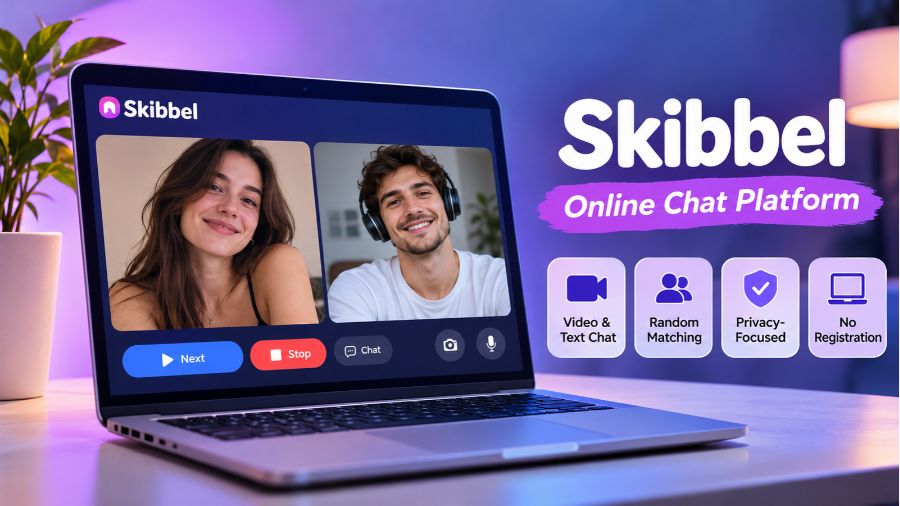
Skibbel is an online peer-to-peer chat platform that allows adults to connect with strangers through text and video conversations directly from a web browser. Designed around instant access and minimal registration requirements, the platform focuses on real-time communication, user preferences and privacy-conscious technology. Understanding how Skibbel works, what features it offers, how it handles personal information and what safety limitations users should consider can help readers decide whether this platform meets their expectations.
What Is Skibbel?
Skibbel is a browser-based adult chat platform designed to connect users with other people for real-time online conversations. Unlike traditional social networks that rely on personal profiles, friend lists and long-term connections, it focuses on spontaneous interactions between strangers. The platform advertises free access, instant connections and no mandatory account registration. Users can select matching preferences and communicate through supported chat features without installing a dedicated application. Its main distinguishing feature is its use of peer-to-peer communication technology, which is intended to transfer conversations and media directly between connected users rather than storing that content on the platform’s servers.
How Does Skibbel Work?
Skibbel uses a real-time matching and communication approach to connect people who are available to chat. The platform’s stated process involves selecting preferences, finding a compatible online participant and establishing a communication session through the browser. WebRTC, or Web Real-Time Communication, is the underlying technology identified in its privacy documentation. WebRTC supports real-time audio, video and data exchange between browsers, although connection setup may still require intermediary servers. This approach can reduce the need to route conversation content through a central server, but it does not eliminate every privacy or security consideration associated with online communication.
Key Features of Skibbel
Skibbel promotes simplicity, accessibility and spontaneous communication rather than a traditional social networking experience. Its official information highlights several features intended to make connecting with other people straightforward, including free access, browser-based functionality, preference-based matching and peer-to-peer communication. These features may appeal to adults who prefer quick conversations without creating another social media account, although the actual experience can depend on user availability, internet connectivity, browser compatibility and the quality of matching.
Free Access Without Mandatory Registration
One of Skibbel’s advertised advantages is that users can access its chat service without purchasing a subscription or completing a conventional registration process. The platform states that an email address, telephone number and account creation are not required to begin chatting. It also advertises access to its available features without paid upgrades. However, these are claims published by the service itself rather than independently audited pricing guarantees, so users should check the current website before relying on them.
Real-Time Matching Preferences
Skibbel describes a matching system that considers user-selected preferences, including age range, gender and interests. The purpose is to connect people with other participants who are currently available and whose preferences are compatible. This approach can make random conversations feel more relevant than completely unrestricted matching. Nevertheless, preference-based matching does not guarantee that every connection will meet expectations. Actual results may vary according to the number of active participants, selected settings and availability of suitable matches.
Text and Video Communication
The platform is designed for online conversations through supported text and video communication features. This gives users different ways to interact depending on their preferences, equipment and internet connection. Text chat can be useful when someone does not want to enable a camera or microphone, while video communication provides a more direct conversational experience. Users should remember that enabling a camera or microphone gives another participant access to whatever they choose to share during the session.
Browser-Based Access
Skibbel does not require users to download a dedicated application according to its published FAQ. Instead, the service is designed to operate through modern web browsers. This can make access more convenient because users can visit the platform using compatible desktop computers, laptops, tablets and smartphones. Browser-based access also avoids the need to install additional software, although users still need a reliable internet connection and must grant the appropriate camera and microphone permissions when using video features.
How WebRTC Technology Supports Skibbel
WebRTC is an important part of Skibbel’s technical approach because it enables real-time communication between compatible browsers and devices. WebRTC stands for Web Real-Time Communication and is an open technology framework used for exchanging audio, video and other data without requiring users to install separate communication software. In a typical peer-to-peer connection, servers may help participants discover one another and establish a session, while the actual communication can travel directly between their devices. This architecture can reduce central handling of conversation content, but its privacy benefits depend on implementation, network configuration and the security of participating devices.
Understanding Peer-to-Peer Communication
Peer-to-peer communication, commonly shortened to P2P, allows two connected devices to exchange information directly rather than relying entirely on a central server to transfer every message or media stream. For a service such as Skibbel, this approach is intended to keep conversations between participants instead of storing their content on the platform’s infrastructure. However, direct communication does not mean that no servers are involved. Signaling services and network connection mechanisms may still be necessary to establish communication, particularly when users are behind routers, firewalls or restrictive networks.
What WebRTC Encryption Means
WebRTC supports encryption for data transmitted through its communication channels. This helps protect information while it travels between connected devices. However, encryption should not be confused with complete anonymity or protection against every possible threat. A recipient can still record a screen, capture video or save information shared during a conversation. Malware, compromised devices and unsafe browser extensions can also create privacy risks. Users should therefore treat encryption as one security layer rather than a guarantee that shared information can never be exposed.
Is Skibbel Free to Use?
Skibbel advertises itself as a free online chat platform, with no subscription payments, premium membership requirements or paid feature upgrades. Its FAQ states that users can access the service without providing payment information or registering an account. This can make the platform accessible to people who want to try browser-based communication without committing to a recurring subscription. However, free access does not automatically establish that a service has no commercial interests, advertising arrangements or operational costs. Users should review the current website’s disclosures and avoid entering payment information if an unexpected request appears.
Is Skibbel Available on Mobile Devices?
Skibbel’s browser-based design is intended to support mobile access without requiring a separate application. Users can visit the website using a compatible mobile browser and access its available communication features. This arrangement may be convenient for people who prefer using smartphones rather than desktop computers. The quality of a mobile session, however, depends on several factors, including device performance, browser permissions, camera quality, available bandwidth and network stability. For a smoother experience, users should keep their browser updated and use a reliable internet connection.
Using Skibbel on Android
Android users can access browser-based services through compatible browsers such as Chrome and Firefox. When using video communication, the browser may request permission to access the camera and microphone. Users should grant these permissions only when they understand why they are required. It is also sensible to review browser permissions after finishing a session, particularly when using a shared or borrowed smartphone. Skibbel’s browser-based approach means that installing an unofficial application is unnecessary for its advertised basic access.
Using Skibbel on iPhone
iPhone users can access compatible web services through Safari and other supported browsers. Video communication depends on browser support, device permissions and network conditions. If the camera or microphone does not work, checking website permissions and updating the browser or operating system may help resolve the issue. Users should also avoid downloading unofficial applications that claim to provide special Skibbel features, particularly when their developers and permissions cannot be verified.
Skibbel Privacy Policy and Data Collection
Privacy is one of the main themes in Skibbel’s published information. Its privacy policy, updated on February 7, 2026, states that the platform uses WebRTC for peer-to-peer communication and does not store chat messages, shared photos or videos on its servers. It also identifies profile settings and IP addresses as information that the service collects. The policy explains that limited information is used for service operation, matching, security and legal obligations. Importantly, the platform’s privacy claims should be understood as statements made by its operator, not as independently verified findings from a security audit.
Does Skibbel Store Messages and Videos?
According to its privacy policy, Skibbel does not store messages, photos or videos exchanged between connected users on its servers. Its stated P2P architecture transfers this communication directly between participants. This can reduce the amount of conversation content held centrally by the service. However, it cannot prevent another participant from recording or capturing content on their own device. Users should never assume that a video conversation or private message is impossible to save simply because the platform does not store it.
What Personal Information Does Skibbel Collect?
Skibbel identifies profile settings and IP addresses among the information it collects. Its documentation also explains that these details may support matching, service functionality and security. The FAQ adds that user IDs and IP addresses may be retained for up to six months to meet legal requirements. This retention detail is important because avoiding account registration does not mean that a user leaves no technical information behind. There is also a difference in detail between the privacy policy and FAQ, so readers should consult the latest versions of both documents when assessing data retention.
Can Users Delete Their Information?
Skibbel’s privacy policy states that users can update profile settings and request account deletion to remove information stored on its servers. Its FAQ also explains that browser-stored information can be removed through browser settings or the website’s deletion option. Private browsing may automatically clear local browsing data when the session ends, depending on browser settings. However, clearing local data does not necessarily erase server-side records that may be retained under the platform’s stated policies or applicable legal requirements.
Is Skibbel Safe to Use?
Skibbel incorporates privacy-oriented features, including WebRTC encryption and a stated policy of not storing chat content on its servers. Nevertheless, no random chat service should be considered completely risk-free. Users communicate with strangers whose identities and intentions may be difficult to verify. Another participant may record a conversation, misuse shared information or attempt to move communication to an unsafe website. The platform’s FAQ describes an option to report inappropriate users, but it also acknowledges that conversations are not stored for later review. Adults considering the service should understand these limitations before enabling their camera or sharing personal information.
Potential Privacy Risks
A peer-to-peer connection does not remove every possible privacy concern. IP addresses may reveal information about a user’s network connection, and the service itself acknowledges collecting this information. Participants may also use screenshots, screen recording or external devices to preserve content shared during a session. Users should avoid disclosing their home address, workplace, financial details, passwords or other identifying information. They should also be cautious about opening links or downloading files sent by unfamiliar people.
Reporting Inappropriate Behaviour
Skibbel’s FAQ states that users can report problematic participants through their profiles during a chat. The platform also explains that because it does not store messages, it cannot review conversations in the same way as a service that retains chat histories. This creates a practical limitation for investigating complaints because evidence may not be available on the platform. Users who encounter threats, harassment or suspected criminal activity should preserve any relevant evidence safely and consider contacting the appropriate authorities.
Advantages and Limitations of Skibbel
Skibbel’s main strengths are its straightforward access model, browser-based operation and stated peer-to-peer communication architecture. People who dislike creating accounts may appreciate the ability to begin chatting without providing an email address or telephone number. Its preference-based matching can also make spontaneous interactions more relevant. On the other hand, the experience depends on other participants being online, and random communication introduces uncertainty about behaviour and conversation quality. Its limited retention of conversation content may appeal to privacy-conscious users but can also make investigating reported incidents more difficult. These trade-offs mean that convenience should be considered alongside personal safety and realistic privacy expectations.
Skibbel Compared With Traditional Social Networking Platforms
Traditional social networks generally focus on persistent profiles, followers, friends, published content and ongoing communication between people who may already know one another. Skibbel takes a different approach by emphasizing spontaneous conversations with strangers. Its advertised no-registration model also reduces the amount of information users need to provide when getting started. However, this simplicity comes with fewer conventional social networking features, such as established friend networks and long-term content histories. The two approaches serve different purposes, and the more suitable option depends on whether someone wants ongoing social connections or temporary online conversations.
Who Is Skibbel Designed For?
Skibbel is positioned as an adult-oriented chat service for people interested in spontaneous online communication. Its features may appeal to adults who prefer browser-based access, do not want to create another account and are comfortable interacting with unfamiliar participants. It may also attract users who value a service that says it avoids storing conversation content centrally. However, it is not a substitute for professional communication platforms, established friendship networks or services that provide stronger identity verification and extensive moderation. Anyone uncomfortable with random online interactions may prefer a more structured communication environment.
Conclusion
Skibbel is a browser-based adult chat platform that focuses on spontaneous conversations, preference-based matching and peer-to-peer communication. Its no-registration approach, advertised free access and WebRTC technology distinguish it from conventional social networking services. However, its privacy claims should not be interpreted as complete anonymity or guaranteed protection against misuse. IP address collection, possible data retention and the risk of other participants recording conversations remain important considerations. Ultimately, Skibbel offers a convenient approach to online communication, but understanding its technical limitations and practising responsible online behaviour are essential before using the service.
FAQs
1. What is Skibbel used for?
Skibbel is used for connecting adults with strangers through browser-based text and video conversations, using real-time matching and peer-to-peer communication.
2. Is Skibbel completely free?
Yes, Skibbel advertises free access without subscriptions or premium upgrades, allowing users to access its available chat features without payment.
3. Does Skibbel require registration?
No, Skibbel states that users can start chatting without creating an account, providing an email address or entering a telephone number.
4. Is Skibbel available on mobile phones?
Yes, Skibbel supports mobile browsers, allowing compatible Android and iPhone devices to access its chat features without installing a dedicated application.
5. Does Skibbel save private conversations?
Skibbel states that messages, photos and videos are not stored on its servers, although other participants may independently record shared content.
6. Is Skibbel safe for online chatting?
Skibbel offers privacy-oriented technology, but users should avoid sharing personal information, remain cautious with strangers and understand the risks of video communication.
More read: Messonde