Pumice Stone Pumice: Uses, Benefits, Safety and Practical Guide
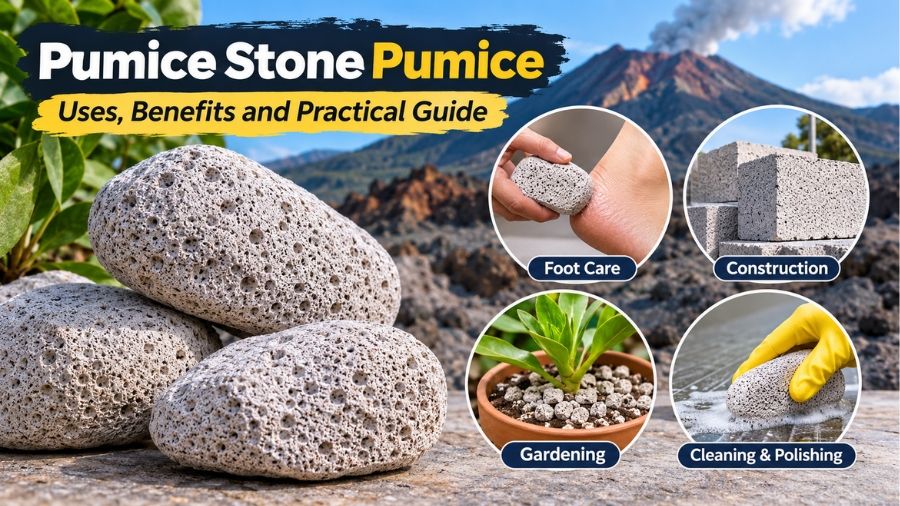
Pumice Stone Pumice is a naturally occurring volcanic rock known for its lightweight structure, rough texture, and wide range of practical applications. Formed when gas-rich molten lava cools rapidly, this porous material has become valuable in personal care, construction, gardening, cleaning, and several industrial processes. From smoothing rough feet to improving soil drainage and manufacturing lightweight building materials, pumice offers applications that extend far beyond its familiar use as a beauty tool. Understanding how pumice forms, what makes it different from other volcanic rocks, and how it is used can help consumers, gardeners, and businesses appreciate its versatility and practical value.
What Is Pumice Stone Pumice?
Pumice is a naturally formed volcanic rock classified as an extrusive igneous rock, meaning it develops from molten material that reaches Earth’s surface. During certain volcanic eruptions, gas-rich lava cools and solidifies rapidly, trapping numerous gas bubbles within the material. These trapped bubbles create the distinctive holes and cavities responsible for pumice’s lightweight, porous structure. Depending on its mineral composition and formation conditions, natural pumice can appear white, cream, grey, pale yellow, or light brown. Its rough surface makes it useful for abrasion, while its numerous internal spaces contribute to its absorbent properties. Unlike many ordinary rocks, pumice can have a density low enough to float on water, making it particularly interesting from a geological perspective. The material is extracted from volcanic deposits and processed into different sizes for consumer and industrial applications. Although pumice stone is commonly associated with foot care, its natural characteristics make it an important industrial mineral used in several commercial sectors.
How Is Pumice Formed?
The formation of pumice begins deep beneath the Earth’s surface, where molten rock contains dissolved gases under high pressure. When this magma rises toward the surface during volcanic activity, the pressure decreases, allowing dissolved gases to expand and form bubbles. If the resulting lava cools quickly, these bubbles become trapped as the material solidifies, producing a lightweight volcanic rock filled with interconnected or isolated cavities. The cooling process and composition of the original magma influence the final appearance, texture, and physical properties of the pumice. Volcanic eruptions capable of producing pumice can generate substantial deposits, sometimes spreading fragments over large areas. These deposits may later be collected through mining operations and processed for different uses. The smaller fragments and fine particles are also commercially useful. Fine-grained pumice is commonly known as pumicite, a related volcanic material generally consisting of particles smaller than four millimetres. Both materials have commercial importance, although their particle sizes make them suitable for somewhat different applications.
Physical Properties and Characteristics of Pumice
The most recognizable characteristic of pumice is its highly porous structure, which gives the rock its unusual combination of low weight and abrasive texture. Its surface contains numerous irregular cavities formed by escaping volcanic gases, creating a naturally rough material that can gradually wear down softer substances. Natural pumice is generally lightweight compared with many other rocks, although its density varies depending on the size and distribution of its pores. Its mineral composition also varies according to the volcanic source from which it originates. Pumice is typically rich in silica and may contain different proportions of other minerals and volcanic glass. It does not have a single fixed colour, hardness, or particle size because geological formation conditions differ between deposits. Another important characteristic is its ability to retain spaces for air and water, which explains its usefulness in horticulture and filtration. Its combination of porosity, low density, and abrasive properties makes pumice a versatile raw material for manufacturers, gardeners, and consumers.
Main Uses of Pumice Stone Pumice
Pumice has applications across several industries because its physical structure can be adapted to different requirements through crushing, screening, grinding, and other processing methods. The personal care market uses shaped pumice stones to remove accumulated dead skin, while manufacturers use finer particles in abrasive and polishing products. Construction companies incorporate suitable pumice aggregates into lightweight concrete and building products, helping reduce material weight. In gardening, horticultural pumice is mixed into growing media to improve aeration and drainage. Industrial applications also include absorbent materials, filtration aids, and denim stonewashing. These uses demonstrate that pumice is not simply a bathroom accessory but an established industrial mineral with a broad commercial market. The United States Geological Survey identifies lightweight building products as a major application, alongside abrasives, concrete products, horticulture, filtration, and other industrial uses. Its suitability for different purposes depends on particle size, quality, processing requirements, and the intended application.
Pumice Stone for Foot Care
One of the most familiar applications of pumice is removing accumulated dead skin from the feet. Its naturally abrasive surface helps gradually reduce thickened skin, particularly around the heels, where dryness and repeated pressure can contribute to rough patches and calluses. When used appropriately, a pumice stone can help make the skin feel smoother without requiring complicated equipment. The stone works through gentle mechanical exfoliation rather than chemical treatment. However, it should not be treated as a solution for every foot condition. Excessive rubbing can damage healthy skin, cause bleeding, and increase the risk of infection. People should avoid using it on open wounds, irritated areas, or painful skin conditions. Individuals with diabetes, reduced sensation, or circulation problems should seek professional guidance before attempting to remove calluses themselves because minor injuries can become serious complications.
Pumice in Construction and Building Materials
The construction industry uses pumice because its lightweight structure makes it suitable for manufacturing certain building products. When processed into appropriately sized aggregates, pumice can be incorporated into lightweight concrete, masonry blocks, and other construction materials. Reducing the weight of building components can offer practical advantages in transportation, handling, and structural design. Pumice-based materials may also provide useful thermal and acoustic properties, depending on their formulation and construction. Manufacturers must consider factors such as aggregate grading, water absorption, compressive strength, and the intended performance of the finished product. Pumice is not automatically suitable for every construction application, and its properties should be evaluated against relevant building standards. Nevertheless, its naturally low density makes it a useful alternative to heavier conventional aggregates in selected building projects.
Pumice for Gardening and Plant Care
Horticultural pumice is widely used as a soil amendment because its porous particles help create air spaces within growing media. Healthy plant roots require oxygen, and compacted soil can restrict airflow while allowing excess water to accumulate around the root system. Adding appropriately sized pumice can improve the physical structure of certain potting mixtures, supporting drainage and aeration. It is particularly useful in growing conditions where a lightweight, mineral-based amendment is preferred. Gardeners may incorporate it into mixes for succulents, cacti, and other plants that require well-draining growing conditions. Unlike organic amendments that gradually decompose, pumice is a mineral material that generally retains its physical structure over time. However, it does not replace fertiliser or provide all the nutrients plants require. The correct proportion depends on the plant species, existing soil characteristics, container design, and watering practices.
Pumice in Cleaning and Polishing
The abrasive characteristics of pumice make it useful in cleaning and polishing applications. Finely ground pumice can be incorporated into selected cleaning compounds and polishing products where controlled abrasion is required. Its particles help remove certain surface deposits and imperfections through mechanical action. Some formulations are designed for cleaning hard surfaces, while others are used for specialised polishing tasks. Pumice is also associated with heavy-duty hand-cleaning products used to remove stubborn workplace residues. However, abrasive materials must be matched carefully to the surface being treated. Using an unsuitable grade or applying excessive pressure can scratch delicate finishes, coatings, or polished materials. For this reason, manufacturers produce different particle sizes and formulations for particular applications rather than treating all pumice products as interchangeable cleaning tools.
Benefits of Using Pumice Stone
Pumice offers several advantages because it is naturally lightweight, porous, and available in different particle sizes. In personal care, it provides a simple mechanical method of reducing rough, thickened skin when used carefully. In construction, its low density makes it useful for selected lightweight aggregates and building products. Gardeners benefit from its ability to improve growing-medium structure, while industrial manufacturers value its abrasive and absorbent characteristics. Another advantage is its versatility: the same geological material can be processed into shaped stones, granules, or fine powder according to the intended purpose. Natural pumice is also a mineral material rather than an organic substance that rapidly decomposes, which can be beneficial in applications requiring relatively stable particles. Despite these advantages, the benefits depend on the quality of the material and the way it is used. A product designed for gardening, for example, should not automatically be considered suitable for skincare or industrial polishing.
Different Types of Pumice Products
Pumice is commercially available in several forms, and understanding these differences helps buyers select the right material for their requirements. Natural pumice stones are generally sold as individual pieces for personal grooming, while manufactured versions may have handles, shaped surfaces, or different levels of roughness. Horticultural pumice is usually sold as loose granules in various particle sizes, allowing gardeners to mix it with potting soil and other growing materials. Industrial pumice is available in crushed, graded, or powdered forms depending on its intended application. Pumicite represents a finer-grained form of volcanic material and is particularly relevant to applications that require small particles. Product quality can vary according to the original deposit, processing methods, cleanliness, and particle distribution. Buyers should therefore pay attention to product descriptions and intended-use specifications rather than assuming that every product labelled pumice has identical characteristics.
How to Choose the Right Pumice Stone
Choosing an appropriate pumice product starts with identifying its intended application. For foot care, consumers should look for a comfortable, manageable stone with a suitable abrasive surface and no sharp edges that could injure the skin. A product that is excessively rough may remove too much skin, particularly when used without sufficient care. Gardeners should consider particle size, cleanliness, and the drainage characteristics required by their growing medium. For construction and industrial applications, buyers should evaluate technical specifications, including grading, density, moisture content, and material consistency. It is also important to purchase from suppliers who clearly identify the product’s intended use and provide relevant quality information. Natural colour alone is not a reliable indication of quality because different volcanic deposits produce different appearances. Ultimately, the most suitable pumice is the one whose physical properties meet the requirements of the particular task.
Safety Considerations and Possible Limitations
Although pumice is a naturally occurring material, its use still requires appropriate precautions. When applied to skin, excessive friction can remove too much tissue and lead to irritation, bleeding, or infection. Consumers should use gentle pressure and avoid damaged or sensitive areas. People with diabetes, peripheral arterial disease, circulation problems, or reduced foot sensation should consult a healthcare professional before attempting home treatment of corns and calluses. Fine pumice powder also requires careful handling because airborne dust can irritate the respiratory system. Industrial workers should follow workplace safety instructions and use appropriate protective equipment when handling dusty material. In gardening, pumice cannot compensate for incorrect watering, unsuitable containers, or poor plant-care practices. Its performance also varies between deposits and product grades. These limitations do not remove its practical value, but they demonstrate why choosing the correct product and following suitable handling procedures are important.
Environmental and Commercial Importance of Pumice
Pumice has commercial importance as an industrial mineral because it supplies raw material for construction, horticulture, cleaning, and manufacturing. Mining operations extract it from naturally occurring volcanic deposits, after which the material is processed into different grades. Its relatively low weight can provide logistical advantages in certain applications, although transportation distances, processing requirements, and local availability influence its overall environmental footprint. Mining can also disturb landscapes and surrounding ecosystems, making responsible extraction, land management, and rehabilitation important considerations. The commercial market depends on demand from industries that use lightweight aggregates, abrasives, filtration materials, and other pumice-based products. Businesses sourcing the material should assess consistency, supply reliability, transportation costs, and compliance with relevant product specifications. Since pumice deposits are geographically associated with volcanic activity, the location of suitable resources can influence regional supply chains and the economics of commercial production.
Conclusion
Pumice Stone Pumice is a versatile natural volcanic material whose importance extends well beyond personal foot care. Its porous structure, lightweight composition, and abrasive properties make it valuable in construction, gardening, cleaning, polishing, and industrial manufacturing. Understanding its formation, physical characteristics, commercial forms, and practical limitations helps consumers and businesses choose suitable products for their needs. While pumice provides useful benefits across several applications, responsible handling and correct product selection remain essential. Its combination of natural availability and adaptable physical properties continues to make it an important material in everyday products and specialised industrial processes.
FAQs
1. What is pumice stone made of?
Pumice is a natural volcanic rock formed when gas-rich lava cools rapidly, trapping bubbles that create its characteristic lightweight, porous structure.
2. Can pumice stone float on water?
Yes, some pumice pieces can float because their numerous air-filled pores reduce their overall density below that of water.
3. Is pumice stone good for removing dead skin?
Yes, gentle rubbing can remove accumulated dead skin and reduce rough calluses, provided the stone is used carefully on healthy skin.
4. Can pumice be used for gardening?
Yes, horticultural pumice improves growing-medium aeration and drainage, making it useful in potting mixtures for plants requiring well-drained conditions.
5. What is the difference between pumice and pumicite?
Pumice generally refers to porous volcanic rock, while pumicite describes its finer-grained material consisting of volcanic particles smaller than four millimetres.
6. Is pumice stone safe for everyday use?
Not necessarily. Excessive exfoliation can damage skin, and people with diabetes or circulation problems should seek professional guidance before using it.
More read: Bread Flour